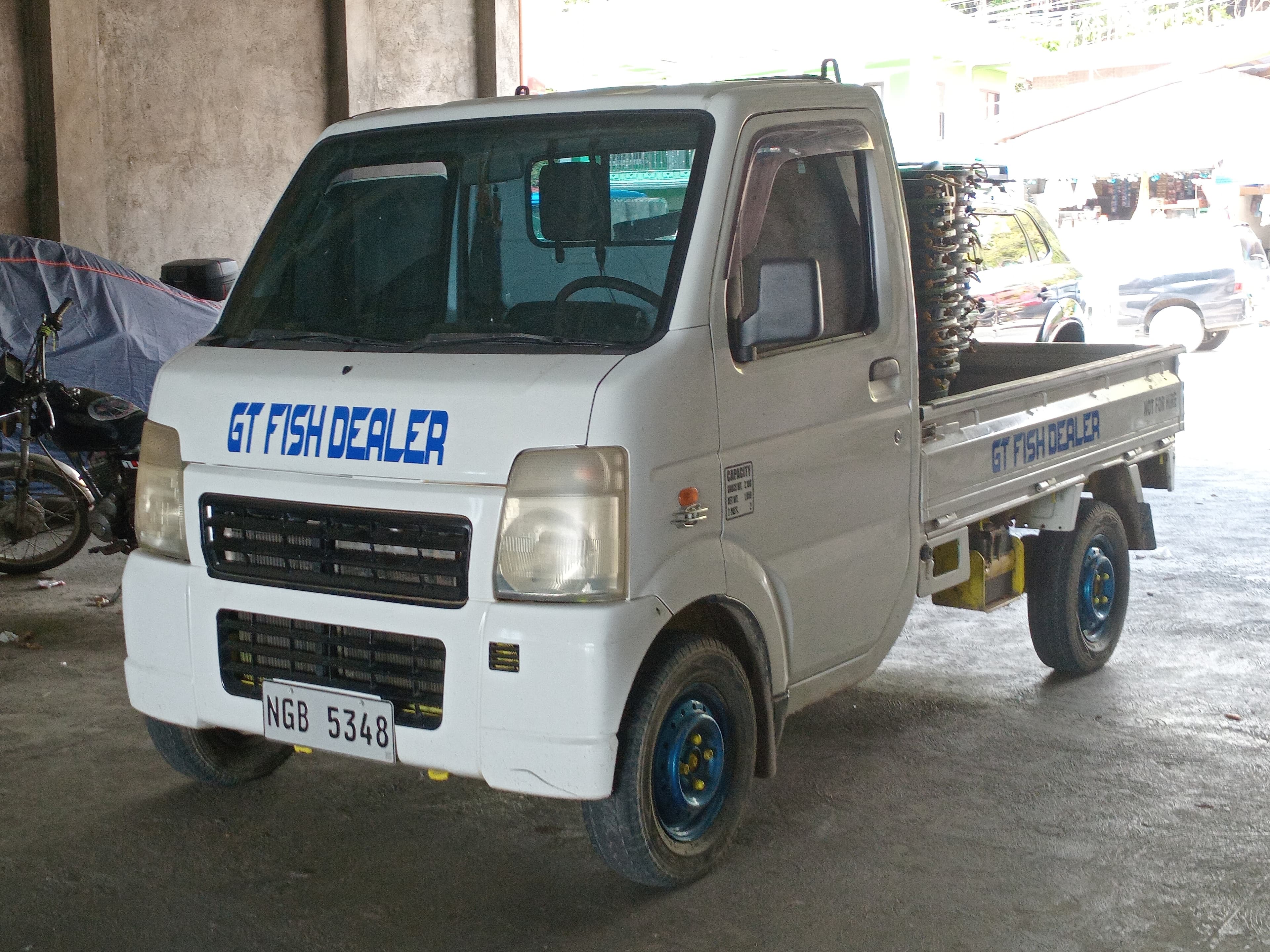
Born from Necessity
The first kei truck I ever loved wasn't mine. It was a yaki-imo truck — a roasted sweet potato vendor — that rumbled through my neighborhood in Setagaya every evening around 5pm. I was 25, teaching English in Tokyo, and the sound of that truck's speaker crackling "yaaaki-imo..." through the narrow streets is still one of the most specific memories I have of Japan. I didn't know the word kei yet. I didn't know the regulations, the history, the displacement limits. I just knew the sound, and the smell, and the way the old man driving it waved at me like I belonged there.
That truck — whatever it was, a Sambar or a Hijet, I never got close enough to check — was a direct descendant of a decision made in 1949.
Japan was rebuilding. The country's infrastructure was devastated, its economy fragile, and most citizens couldn't afford a full-size vehicle. The Japanese government needed to get people and goods moving.
Their solution: the kei (軽) vehicle class — kei meaning "light" — vehicles with strict size and engine limits that qualified for reduced taxes, cheaper insurance, and relaxed licensing requirements. There's a word for this kind of elegant constraint in Japanese: taru wo shiru — to know what is enough.
The original 1949 kei regulations specified:
- Maximum engine displacement: 150cc (four-stroke) or 100cc (two-stroke)
- Maximum length: 2.8 meters (about 9 feet)
- Maximum width: 1.0 meter (about 3.3 feet)
These limits have been gradually relaxed over the decades. Today's kei specs are:
- Engine: 660cc maximum
- Length: 3.4 meters (11.2 feet)
- Width: 1.48 meters (4.9 feet)
- Height: 2.0 meters (6.6 feet)
- Power: 63 horsepower maximum
The Golden Age: 1960s-1990s
The Pioneers
Daihatsu Midget (1957) — A three-wheeled cargo vehicle that became Japan's first mass-market kei truck. With its single headlight, open cab, and tiny cargo bed, the Midget was both charming and incredibly useful. It's still a design icon in Japan.
Suzuki Carry (1961) — Suzuki's entry into kei trucks established a nameplate that's still in production today. The early Carry was a simple, rear-engine van/truck that set the template for decades to come.
Honda T360 (1963) — Honda's first four-wheeled vehicle was a kei truck. It featured a tiny DOHC engine that revved to 8,500 RPM — typical Honda engineering excess applied to a miniature work vehicle.
The Formula Evolves
Through the 1970s and 80s, kei trucks matured rapidly:
- Four-wheel drive became available (revolutionary for farmers)
- Enclosed cabs replaced open designs
- Air conditioning appeared as an option
- Engine displacement grew from 360cc to 550cc to 660cc
By the 1990s, kei trucks had reached their modern form: fully enclosed cabs, 4WD, power steering, and 660cc engines producing 45-55 horsepower. The Suzuki Carry, Honda Acty, Daihatsu Hijet, and Subaru Sambar became the "big four" — each with devoted followings.
Why They Matter in Japan
Kei trucks aren't niche vehicles in Japan — they're essential infrastructure. Walk through any Japanese city and you'll see them everywhere:
- Farmers use them in rice paddies and orchards
- Fishermen haul catches from harbor to market
- Delivery drivers navigate narrow alleys too tight for full-size trucks
- Construction workers carry tools and materials to urban job sites
- Municipal workers maintain parks, roads, and public spaces
In rural Japan, kei trucks are as common as pickup trucks in rural America. Approximately 40% of all vehicles sold in Japan are kei class — that's over 1.5 million kei vehicles per year.
The American Discovery
How It Started
Americans started noticing kei trucks in the mid-2000s. Early adopters were:
- Military families returning from bases in Japan
- JDM (Japanese Domestic Market) enthusiasts already importing cars
- Farmers who saw them at agricultural equipment shows
- Golf course and resort operators looking for alternatives to golf carts
The NHTSA 25-year rule was the key that unlocked the market. As kei trucks from the 1990s crossed the 25-year threshold, suddenly thousands of well-maintained, low-mileage trucks became legally importable.
The Social Media Explosion
Around 2018-2020, kei trucks went viral. YouTube videos of Americans driving tiny Japanese trucks through rural America racked up millions of views. Reddit communities formed. Facebook groups exploded. The aesthetic — tiny, cute, impossibly practical — resonated with an American audience tired of trucks getting bigger, more expensive, and more complicated every year.
The Kei Truck vs. America Paradox
There's an irony to kei trucks in America. Japan designed them to be the smallest, cheapest, most basic trucks possible. In the US, they've become:
- Cult objects — collected, modified, and shown at car meets
- Status symbols — in some communities, a clean kei truck gets more attention than a new BMW
- Political statements — symbols of anti-consumerism, right-to-repair, and practical vehicle design
- Community builders — kei truck owners are some of the friendliest, most welcoming vehicle enthusiasts anywhere
The Kei Aesthetic
Kei trucks tap into something deeper than practicality. Their appeal is partly wabi-sabi (侘寂) — the Japanese aesthetic of finding beauty in imperfection and simplicity.
A kei truck is:
- Honest — it doesn't pretend to be more than it is
- Human-scaled — you can see over it, around it, and understand it completely
- Joyful — something about driving one makes people smile involuntarily
- Anti-excess — in a world of 7,000-lb trucks with 700 horsepower, a 1,600-lb truck with 45 hp is a radical statement
This aesthetic connects to broader movements:
- Small living — tiny houses, van life, minimalism
- Japanese design appreciation — Muji, Uniqlo, the "less but better" philosophy
- Right-to-repair — simple engines you can fix yourself
- Sustainability — 40+ mpg, small footprint, built to last
What's Next
The kei truck movement in America is still growing. New model years become importable every January. The community gets bigger every month. States are slowly relaxing restrictions.
I think about that yaki-imo truck in Setagaya sometimes — especially on Saturday mornings, when I'm loading Samu-chan with pottery for the Sellwood market here in Portland. My '94 Sambar Van is 30 years old and 5,000 miles from where it was built. The sweet potato man's truck was probably older. Both of them doing the same thing they were designed to do: carry something someone made, to someone who wants it, through streets that were never meant for anything bigger.
Tatsuro Yamashita on the stereo. Fog on the windshield. Nori asleep on the dashboard when I get home.
That's the thing about kei trucks. They carry more than cargo.