Here's the Deal With Japanese Auctions
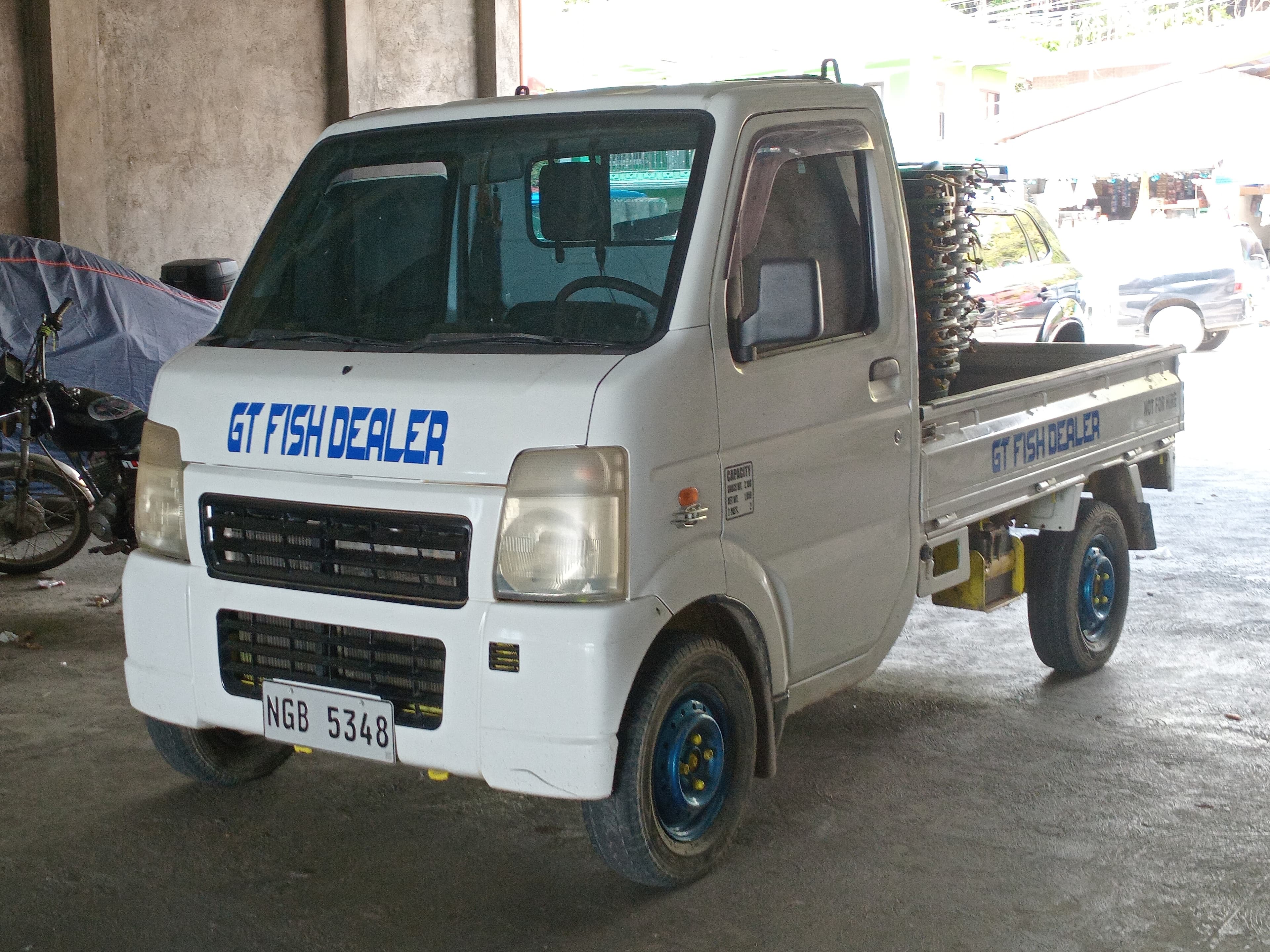
I bought Old Faithful — my '97 Carry — through a Japanese auction agent for $2,800 FOB Yokohama. All-in to Boise: about $4,200. Best vehicle purchase I've ever made.
Look, here's the deal: the best selection and the best prices aren't on US dealer lots. They're at Japanese auto auctions, where hundreds of thousands of vehicles change hands every week. This guide is everything I wish someone had told me before I started.
This guide covers finding and winning a vehicle at auction in Japan. For the full import process after you've won — shipping, customs, EPA/DOT paperwork, and registration — see our step-by-step importing guide.
The Major Japanese Auction Houses
Japan's used vehicle market runs on auctions. Dealers buy and sell through them constantly, and the infrastructure is massive. Here are the big names you'll encounter:
- USS (Used car System Solutions) — The largest network by far. USS runs auctions at 19 locations across Japan and moves over 70,000 vehicles per week. If you're buying a kei vehicle at auction, there's a good chance it'll be through USS.
- TAA (Toyota Auto Auction) — Toyota's in-house auction system. Strong selection of all makes, not just Toyotas.
- JU (Japan Used car association) — A nationwide network of regional auctions. Good for finding vehicles outside major metro areas.
- HAA (Honda Auto Auction) — Honda's auction network. Tends to have solid Honda Acty and Vamos inventory.
- CAA (Central Auto Auction) — Smaller but well-regarded, especially for commercial and utility vehicles like kei trucks.
Each auction house has its own schedule, fee structure, and grading nuances, but the overall system is remarkably standardized. A grade 4 at USS means roughly the same thing as a grade 4 at TAA.
The Auction Grading System
This is the single most important thing to understand. Every vehicle at auction gets an overall condition grade, and that grade largely determines what you're getting into.
Overall Vehicle Grades
| Grade | Condition | What to Expect |
|---|---|---|
| S | New or near-new | Under 1,000 km, essentially showroom condition. Rare for 25+ year old kei vehicles. |
| 6 | Excellent | Very low mileage, no repairs needed, minimal wear. The cream of the crop. |
| 5 | Very Good | Low mileage, clean inside and out, maybe minor cosmetic wear. Great buy. |
| 4 | Good | Average mileage, normal wear, no major issues. The sweet spot for most buyers. |
| 3.5 | Fair | Higher mileage or noticeable wear, might need some cosmetic or minor mechanical work. Still a solid vehicle. |
| 3 | Below Average | Significant wear, mechanical issues likely, or heavy cosmetic damage. Budget pick. |
| R | Accident History | Repaired accident damage. Quality varies wildly — some are fine, some are nightmares. |
| RA | Accident + Poor Condition | Accident history combined with poor overall condition. Proceed with extreme caution. |
My rule of thumb: if you're importing to the US and can't inspect the vehicle yourself, stick to grade 4 or higher. The cost of shipping a lemon across the Pacific is the same as shipping a gem. Don't save $500 on a lower grade and spend $2,000 fixing it stateside.
Interior Grades
Interior condition gets a separate letter grade:
- A — Clean, minimal wear
- B — Normal wear for age, maybe small stains or light scuffs
- C — Noticeable wear, stains, tears, or odor (cigarette smoke is common)
- D — Heavy damage or extremely dirty
For kei trucks, a B interior is perfectly fine — these are working vehicles. For kei vans or cars you plan to daily drive, aim for A or B.
How to Read an Auction Sheet
Every vehicle at auction comes with an auction sheet (出品票, shuppin-hyō) — a standardized inspection report filled out by the auction house. Learning to read these is a superpower.
Key Sections on the Sheet
Top section — Vehicle identity:
- Make, model, year, chassis number
- Mileage (in kilometers — multiply by 0.62 for miles)
- Transmission type (AT/MT)
- Drive type (2WD/4WD)
- Color
- Registration expiry (shaken)
Middle section — Grades and equipment:
- Overall grade and interior grade
- Equipment list: AC, power steering, power windows, radio/CD, 4WD, etc.
- Inspector's comments (usually in Japanese)
Bottom section — The vehicle diagram: This is where it gets critical. The diagram shows the vehicle from above, front, back, and both sides. Inspectors mark damage using standardized codes:
- A — Scratch (small)
- B — Scratch with dent
- U — Dent
- W — Repair mark/wave (indicates previous body work)
- S — Rust
- C — Corrosion
- P — Paint work (repainted panel)
- X — Crack (glass)
- XX — Replaced panel
Numbers after letters indicate severity: A1 is a small scratch, A3 is a large one. The fewer marks on the diagram, the cleaner the vehicle.
Most buying agents will translate the auction sheet for you and highlight anything concerning. But learning the basics yourself means you can scan listings faster and ask better questions.
Using a Buying Agent (You Probably Need One)
Here's the reality: you cannot bid at Japanese auctions yourself unless you hold a Japanese dealer license and are physically present (or registered as a proxy bidder). For 99% of overseas buyers, you'll work through a buying agent.
What a Buying Agent Does
- Searches auction listings on your behalf across multiple auction houses
- Translates auction sheets and provides condition assessments
- Bids at auction based on your instructions and maximum price
- Handles payment to the auction house
- Arranges domestic transport from the auction site to the export port
- Manages export paperwork (de-registration, export certificate, etc.)
Some agents are Japan-based companies; others are US-based importers who have partnerships with Japanese auction houses. Both models work.
What to Look for in an Agent
- Auction house access — make sure they have accounts at the major houses (USS at minimum)
- Transparent fees — the good ones clearly list their commission and don't pad the auction price
- Communication — you want someone who responds within 24 hours and sends photos/translations proactively
- Track record — ask for references or check forums like the kei truck subreddits for reviews
- Shipping partnerships — agents who handle end-to-end (auction through US port delivery) simplify the process enormously
Be wary of agents who won't show you the original auction sheet. If they only send their own "summary," you can't verify the grade or damage marks yourself. Transparency is non-negotiable.
Agent Fees
Typical buying agent fees range from a flat $300–800 per vehicle to a percentage-based commission of 5–10% of the auction price. Some charge both. Clarify the fee structure upfront — there shouldn't be surprises.
The Bidding Process, Step by Step
Here's what the process actually looks like from start to finish:
1. Tell Your Agent What You Want
Give them specifics: make, model, year range, transmission (MT or AT), drive type (4WD is popular), maximum mileage, and your budget ceiling. The more specific you are, the less time you waste on vehicles that don't fit.
2. Review Listings
Your agent sends you auction sheet translations and photos for vehicles matching your criteria. Some agents give you direct access to search their auction database yourself. Review the grades, mileage, damage marks, and photos carefully.
3. Set Your Maximum Bid
For each vehicle you're interested in, set a maximum bid in Japanese yen. Your agent will bid up to that amount on your behalf. Be realistic — check recent sale prices for comparable vehicles so you're not bidding blind.
4. Auction Day
Auctions happen on specific days at each location. Your agent bids live. Bidding moves fast — a vehicle might be on the block for 30 seconds to 2 minutes. This is why having a clear maximum bid matters.
5. Win (or Don't)
If you win, the agent confirms the purchase. You're typically expected to pay within 3–5 business days. If you don't win, you try again at the next auction. Popular models in good condition can take a few attempts.
6. Post-Auction Logistics
After payment, the agent arranges:
- Vehicle pickup from the auction site
- Any pre-export inspection you've requested
- Domestic transport to the export port (usually Yokohama, Osaka, or Nagoya)
- De-registration and export documentation
Common Auction Pitfalls
I've seen people get burned, and it's almost always one of these:
Grades can be generous. Auction inspectors are generally reliable, but they're grading hundreds of vehicles a day. A grade 4 at a busy auction might be a 3.5 on a slow day. Photos help, but they also flatter — wide-angle lenses and good lighting hide a lot.
Rust hides. This is the big one for kei vehicles. Japanese road salt (especially in northern prefectures like Hokkaido and Tohoku) causes serious undercarriage rust. The auction sheet may note surface rust, but deep frame rust doesn't always get caught. Ask your agent to check the vehicle's registration history — if it spent its life in Hokkaido, budget for rust remediation.
Mileage isn't everything. A 30,000 km vehicle that sat in a barn for 15 years might need more work than a 90,000 km vehicle that was driven daily and maintained regularly. Look at the overall condition, not just the odometer.
"As-is" means as-is. Once you win, the vehicle is yours. There's no return policy at auction. This is why grade selection and a trustworthy agent matter so much.
Photos can deceive. Auction photos are taken quickly in indoor lighting. Dents, paint fade, and rust spots that are obvious in person can be invisible in photos. Rely on the auction sheet damage diagram more than the photos.
Total Costs: Auction to US Port
Here's a realistic breakdown for a kei vehicle purchased at Japanese auction. I'm using a $3,000 auction price as an example since that's a common range for grade 4 kei trucks.
| Cost Item | Typical Range |
|---|---|
| Auction purchase price | $3,000 (example) |
| Auction house fee | $150–300 (5–10% of price) |
| Buying agent fee | $300–800 |
| Domestic transport to port | $200–500 |
| Export documentation | $100–200 |
| Ocean freight to US | $800–1,500 |
| US customs duty (2.5%) | $75 |
| Customs broker fee | $150–300 |
| EPA/DOT filing | $100–200 |
| Port handling/unloading | $100–200 |
| Total landed at US port | $4,975–6,075 |
These numbers don't include domestic US transport from the port to your location, state registration fees, or any repairs. Our import cost calculator can give you a personalized estimate based on your specific vehicle and destination port.
After the vehicle clears customs at a US port, you'll still need to arrange transport to your home (or pick it up yourself), handle state titling and registration, and potentially address any compliance items your state requires.
Timeline: Winning Bid to US Port
Here's a realistic timeline. Some people get lucky and it goes faster, but plan for the longer end.
| Phase | Timeframe |
|---|---|
| Auction search + bidding | 1–3 weeks (depends on availability) |
| Payment + post-auction processing | 3–5 business days |
| Domestic transport to export port | 3–7 days |
| Export documentation + customs | 5–10 days |
| Ocean shipping to US | 3–5 weeks |
| US customs clearance | 3–7 days |
| Total | 6–10 weeks |
The biggest variable is ocean shipping. West Coast ports (Long Beach, Tacoma) are fastest from Japan — sometimes under 3 weeks. East Coast and Gulf ports add 1–2 weeks.
Tips From Someone Who's Done It
After going through this process multiple times, here's my shortlist of things that made the difference:
-
Be patient with bidding. The perfect truck at the perfect price doesn't show up on day one. Set your criteria, set your budget, and let your agent work. Rushing leads to overpaying or settling.
-
Grade 4+ saves money long-term. Yes, you can get a grade 3 for $1,000 less. But the repair costs to bring it up to grade 4 condition will exceed that savings almost every time, especially once you factor in US parts sourcing.
-
Ask about the vehicle's region. A kei truck that lived its life in Okinawa or southern Kyushu will have dramatically less rust than one from Niigata or Sapporo.
-
Get the auction sheet translated independently if your agent's translation seems vague. Online translation services and kei truck forums can help verify.
-
Budget 15–20% above the auction price for total costs to US port. This is your realistic all-in number, not the auction hammer price.
Next Steps
Once you've won your vehicle at auction, the real import process begins. These guides pick up where this one leaves off:
- How to Import a Kei Truck to the US: Step-by-Step — the complete walkthrough from Japan to your driveway
- 7 Import Gotchas That Catch First-Time Buyers — avoid the expensive mistakes
- Import Cost Calculator — get a personalized cost estimate for your specific vehicle and port
Happy bidding. And when that auction notification comes through saying you won — trust me, it's a great feeling.