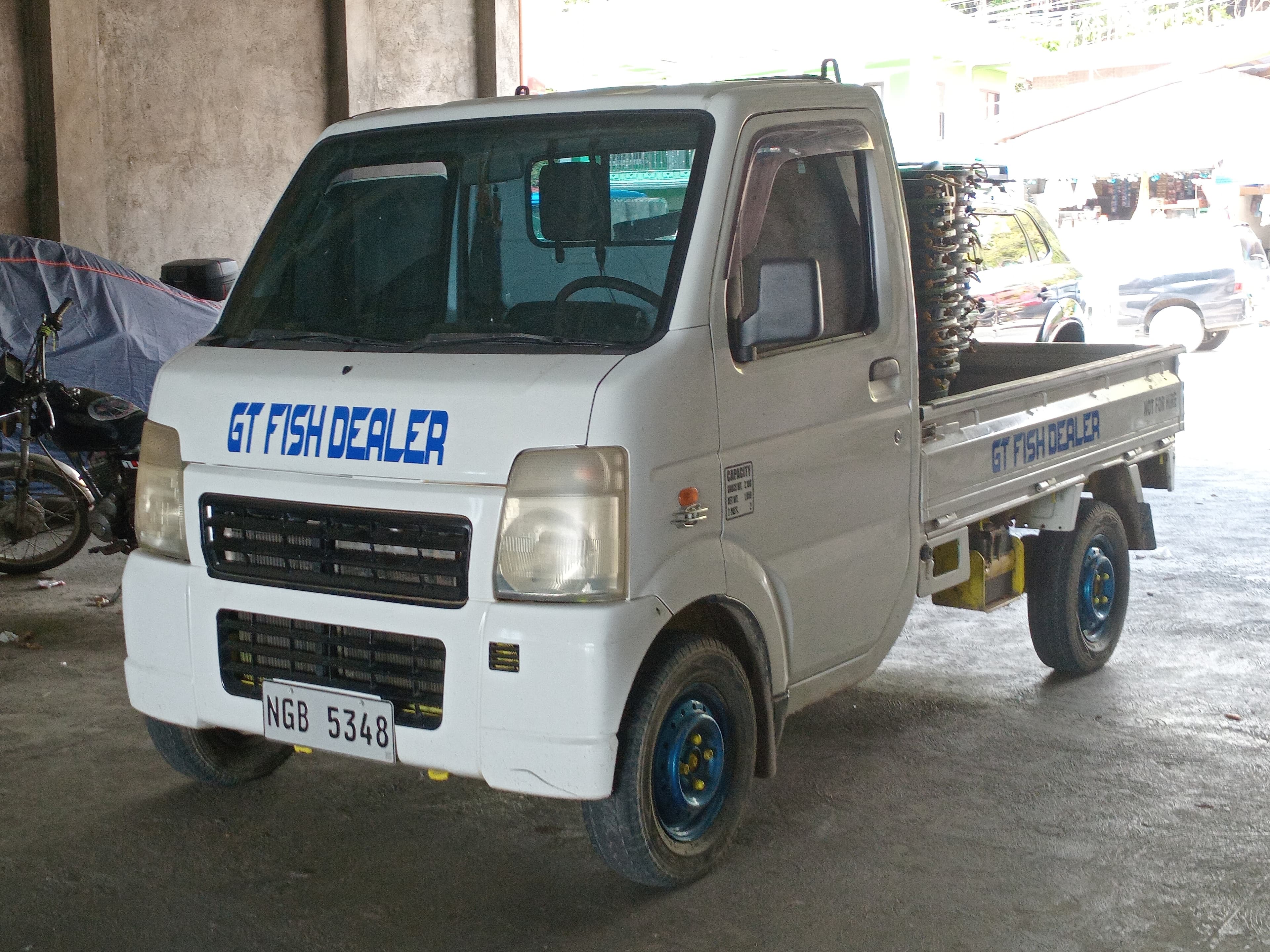
I'll never forget the moment my buddy Tyler called me from Nagoya at 2 AM Boise time, absolutely buzzing, saying he'd found six pristine kei trucks at auction and could we "just fill a container?" That phone call cost me three months of planning, one very confused customs broker, and about $4,000 in savings compared to buying stateside. Worth every sleepless night.
The idea of flying to Japan, handpicking trucks, and stuffing them into a shipping container sounds like the ultimate kei truck adventure. And honestly? It kind of is. But it's also logistics, paperwork, and a whole lot of coordination. Here's what I wish someone had told me before I did it.
How Many Kei Trucks Fit in a Container?
This is the first question everyone asks, and the answer is annoyingly "it depends."
- 20-foot container: 2-3 kei trucks comfortably. Maybe 4 if you remove the beds and get creative with positioning.
- 40-foot container: 4-6 trucks is standard. With disassembly (beds off, mirrors folded, some stacking), experienced shippers squeeze in 7-8.
- 40-foot high-cube: Same footprint, extra vertical space. This is where stacking really pays off — 6-8 trucks is realistic.
Most group buys target the 40-foot container. The per-truck shipping cost drops dramatically once you pass 4 vehicles. That's the sweet spot.
The Real Cost Breakdown
Let's talk numbers. I'm breaking this down per truck assuming a 40-foot container with 5 vehicles headed to the West Coast. Use Keijira's import calculator to run your own scenario.
| Cost Category | Per Truck | Notes |
|---|---|---|
| Purchase (auction) | $3,000-7,000 | Depends on model, condition, mileage |
| Auction fees | $200-500 | Buyer's premium + yard fees |
| Inland transport (Japan) | $300-600 | Getting trucks to the port |
| Container shipping (West Coast) | $600-1,000 | 40ft container split 5 ways |
| Marine insurance | $150-300 | 1.5-2% of declared value |
| US customs duty | $100-300 | 2.5% for trucks |
| Customs broker fee | $150-250 | Per entry, can bundle |
| EPA/DOT compliance | $0-500 | 25+ year exemption simplifies this |
| Port handling/drayage | $200-400 | Getting container off the dock |
| Total landed | $4,700-10,850 | Per truck |
Compare that to buying a similar truck from a US dealer at $8,000-15,000, and you see why people do this. I saved roughly $4,000 per truck on my group buy — that paid for the plane ticket and a week of eating ramen in Osaka.
East Coast ports (Baltimore, Savannah, Jacksonville) add $1,000-2,000 to shipping versus West Coast (Long Beach, Tacoma). If your group is scattered across the country, ship to the West Coast and arrange domestic transport from there — it's usually cheaper than the East Coast ocean premium.
Finding Trucks in Japan
You've got three main sourcing channels:
Auction houses are where the volume is. USS, TAA, HAA, and CAA run weekly auctions with thousands of kei trucks. Auction sheets grade every vehicle honestly (the Japanese are meticulous about this). You'll need a licensed buyer or broker to bid — foreigners can't walk in and raise a paddle. Budget $200-500 in auction fees per vehicle.
Used dealers are easier for first-timers. Shops in Nagoya, Osaka, and the Kanto region specialize in export-ready kei vehicles. You'll pay a 10-20% premium over auction prices, but the trucks are inspected and ready to ship. Some dealers handle the entire export process.
Private sales (Goo-net, carsensor.net) offer the best prices but the most hassle. You need someone local to inspect the vehicle, handle paperwork, and arrange transport to port. This is expert-level stuff.
For your first container, I'd recommend working with a dealer or auction broker who does exports. Old Faithful (my '97 Carry) came through a Nagoya dealer, and the process was painless. Rina has a detailed breakdown of the paperwork side in our importing step-by-step guide.
Organizing the Group Buy
This is where most container imports fall apart. Not at customs — at the group chat. Here's how to actually pull it off:
Pick an organizer. One person handles logistics, communication with the export agent, and money. This person gets a free truck. (Kidding. Mostly.) They should have import experience or be willing to learn fast.
Lock in 4-6 committed buyers. Get deposits upfront — $1,000 per person minimum. People flake. Trust me on this one. I started with 7 interested buddies and shipped with 4. Have backups ready.
Agree on specs early. If everyone wants a different model from a different region of Japan, logistics get complicated. The simplest container buy: everyone wants trucks from the same auction region, shipped to the same US port.
Use a shared spreadsheet. Track every cost, every truck, every document. Transparency prevents fights. When money's involved, friends get weird fast.
Set a timeline. From "let's do this" to trucks-on-American-soil takes 8-14 weeks. Auction sourcing (2-4 weeks), port staging and container loading (1-2 weeks), ocean transit (2-4 weeks), customs clearance (1-2 weeks), and domestic delivery (1 week).
Working with Export Agents
Unless you speak Japanese fluently and understand export customs law, you need an export agent. Full stop.
A good agent handles: auction bidding, vehicle inspection, deregistration (you need the Export Certificate, or "Yushutsu Masshou Todoke"), container booking, port loading, and export documentation. Expect to pay $300-800 per vehicle for full-service export handling.
Never wire money directly to a private seller in Japan without an agent or escrow service. Scams targeting foreign kei truck buyers are real and increasingly common. A reputable export agent protects both sides of the transaction.
Ask potential agents: How many containers do you ship monthly? Can you provide references from US buyers? Do you handle EPA/DOT paperwork? The good ones ship 10+ containers a month and have US-side customs broker relationships.
What Happens When It Hits US Soil
Your container arrives at port and the real fun begins. You'll need a customs broker (or a very patient afternoon with the CBP paperwork). Here's the checklist:
- CBP entry — Customs declaration, duty payment (2.5% for trucks), and ISF filing
- EPA compliance — Vehicles 25+ years old are exempt from emissions standards. This is why most kei truck imports are 1997 and older (as of 2026). Dave wrote a whole guide on what to do with your truck once it arrives
- DOT/FMVSS — Same 25-year exemption applies. Your '98 model? Good to go in 2023. Your 2001 model? You're waiting until 2026
- State registration — This varies wildly. Check Rina's 50-state regulation breakdown before you buy. Some states are plug-and-play, others are a nightmare
For a group buy, you can often file a single customs entry for the whole container, then distribute vehicles to individual buyers afterward. Your customs broker will advise on the most cost-effective approach.
Mistakes to Avoid
Buying too many "project trucks." One fixer-upper in the container is fine. Five trucks that "just need a little work" means five trucks sitting in your driveway six months from now. Ask me how I know. (My '98 Acty Van was supposed to be a weekend project. It was not.)
Skipping the pre-purchase inspection. Auction photos lie. Auction sheets are honest but not exhaustive. Pay $100-200 for a third-party inspection on any truck over $5,000. Rust underneath is the silent killer.
Ignoring the 25-year rule. If a truck is 24 years and 6 months old, it's not 25. CBP counts from the date of manufacture, not the model year. Get the exact build date from the chassis plate. Use our chassis code decoder to verify.
Not budgeting for domestic transport. Your container lands in Long Beach. Your buddy lives in Maine. That's another $1,500-2,000 on a car hauler. Suki once said the journey from port to driveway is its own adventure — she's not wrong, but adventures cost money.
Forgetting about insurance in transit. Marine insurance is cheap ($150-300 per truck) and absolutely essential. One rogue wave or forklift accident and you're out thousands. Don't skip this.
Is It Worth the Trip?
Look, here's the deal. If you're buying one truck for yourself, a container import is overkill. Find a reputable US dealer and let them handle it. But if you've got 4-5 friends who are all in, a container buy saves each person $2,000-5,000 and gives you the experience of a lifetime.
The math only works with commitment and coordination. Get your group locked in, find a solid export agent, budget for everything (including the stuff you'll forget), and give yourself 3-4 months from planning to parking. Check our cost of ownership guide to make sure you're budgeting for life after the import too.
Now go fill a container. And send me pictures.