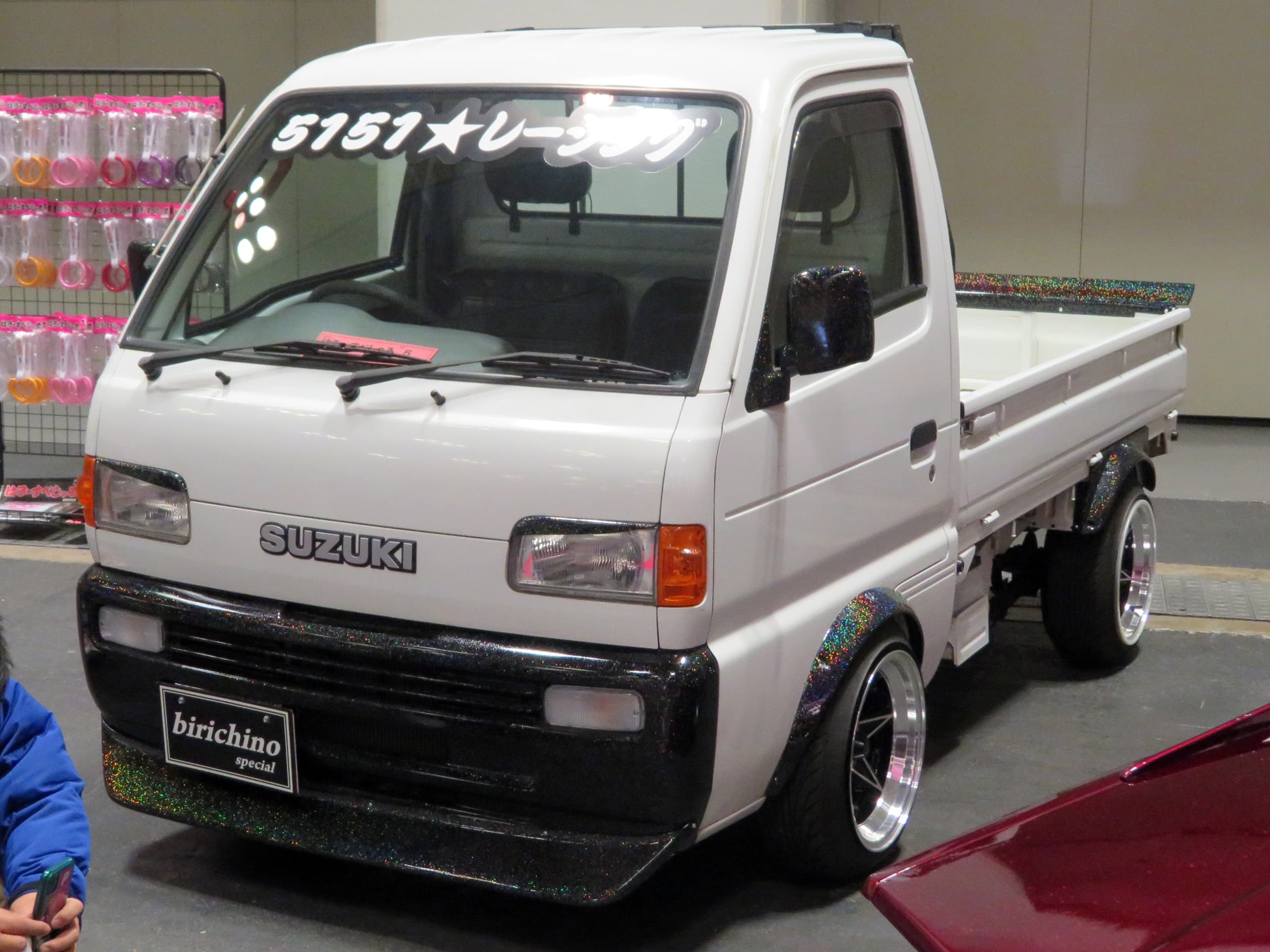
The Frustration Is Real
When my dad tried to register his '95 Carry in Virginia, the DMV clerk called it "an ATV." It has a cab, seatbelts, a windshield, and a top speed of 65 mph — but it wasn't in the computer. That experience sent me down a rabbit hole: I've now read the registration statutes of all 50 states.
If you've spent any time in kei truck communities online, you've seen the posts:
"How is a golf cart street legal but my Suzuki Carry isn't?"
"My neighbor drives a Polaris Ranger on city streets with a plate, but I can't register a kei truck?"
"How can a 1970s VW Bug with no airbags, no ABS, and drum brakes be road legal, but a 1995 kei truck can't?"
The frustration is justified. Here's what the law actually says — and why it doesn't make as much sense as you'd hope. (This is the part where I remind you I'm not a lawyer.)
The Federal Layer: The 25-Year Rule
First, the good news. At the federal level, kei trucks are legal to import once they're 25 years old. This is the NHTSA 25-year exemption — vehicles older than 25 years are exempt from Federal Motor Vehicle Safety Standards (FMVSS).
This means:
- No crash test requirements
- No airbag requirements
- No US-spec bumper, lighting, or emissions equipment needed
- The vehicle can be imported "as-is" from Japan
The EPA also has a 21-year exemption for emissions. So once a kei truck is 25+ years old, it clears both federal agencies.
The problem is the second layer: state law.
The State Layer: Where It Gets Messy
Federal import law gets your truck into the country. But state law determines whether you can drive it on public roads. And this is where things diverge wildly.
States That Ban or Severely Restrict Kei Trucks
California — The strictest. CARB (California Air Resources Board) emissions standards don't have an age exemption the way the federal EPA does. Even a 30-year-old kei truck can't meet CARB requirements. Combined with strict safety inspection standards, California effectively prohibits kei trucks from road use.
New York — NY's safety inspection is rigorous and applies strict standards for headlight brightness, bumper height, and structural integrity. Most kei trucks can't pass. Recent developments (the "Registration canceled in NY 2028" news) suggest the state is actively tightening enforcement.
Hawaii — Doesn't register imported kei vehicles for road use, citing federal safety standards that the state chooses to enforce at the state level.
Rhode Island — Similar to NY — strict safety requirements that kei trucks don't meet.
The Inconsistency
Here's what frustrates kei truck owners: these same states allow vehicles on public roads that are objectively less safe.
| Vehicle | Airbags | ABS | Crash Tested | Street Legal? |
|---|---|---|---|---|
| 1970s VW Beetle | No | No | No | Yes (grandfathered) |
| Golf cart (LSV) | No | No | No | Yes (25-35 mph roads) |
| Polaris Ranger (UTV) | No | No | No | Yes (some states) |
| Side-by-side ATV | No | No | No | Yes (some states) |
| 1995 Suzuki Carry | No | No | No | Banned in some states |
The kei truck has a steel cab, seatbelts, a full windshield, mirrors, turn signals, headlights, and a top speed of 60+ mph. A golf cart has none of these. Yet in many states, the golf cart gets a plate and the kei truck doesn't.
Why? Because kei trucks fall into a regulatory gap. They're imported vehicles, so they get scrutinized under import rules. Golf carts and UTVs are domestic products classified under different categories (Low-Speed Vehicles, off-highway vehicles) with their own — often more lenient — standards.
The Real Reasons Behind the Bans
1. Lobbyist Pressure
This is the elephant in the room. The US auto industry doesn't love cheap, capable foreign trucks entering the market. While kei trucks are a tiny niche, the precedent of allowing non-FMVSS vehicles on roads concerns domestic manufacturers.
The famous "Chicken Tax" — a 25% tariff on imported light trucks since 1963 — was originally about protecting US truck manufacturers from foreign competition. The resistance to kei trucks exists in the same spirit.
2. Liability Concerns
State DMVs worry about liability. If a kei truck is involved in an accident and the state registered it, could the state be liable for allowing a non-FMVSS vehicle on roads? This legal uncertainty makes bureaucrats cautious.
3. Insurance Industry Hesitation
Some states align their registration requirements with what insurance companies are willing to cover. If insurers are reluctant to cover kei trucks (see our Insurance Guide), states may be reluctant to register them.
4. Genuine Safety Concerns (Sometimes Valid)
Kei trucks are small. In a collision with a Ford F-150, the kei truck loses badly. Some regulators genuinely worry about occupant safety in mixed-traffic scenarios, especially on highways. This is why many "restricted" states allow kei trucks on local roads but not interstates.
What's Changing
The trend is toward more access, not less. Several factors are driving this:
More Trucks Hitting 25 Years
Every January, another model year becomes importable. The pool of eligible kei trucks grows annually, increasing demand and political pressure. As more people own them, more people advocate for registration rights.
Agricultural Exemptions
Many states have carved out exemptions for kei trucks used on farms and rural properties. This gets trucks on the road in agricultural communities, builds familiarity, and creates constituencies that push for broader access.
State-Level Advocacy
Kei truck owners are organizing. Online communities share information about which DMV offices are friendly, which state legislators to contact, and how to navigate the registration process. This grassroots advocacy is slowly moving the needle.
The UTV Precedent
The explosion of street-legal UTVs (Polaris, Can-Am, etc.) has created a precedent that's hard for states to ignore. If a roofless, beltless UTV can get a plate, the argument against kei trucks weakens significantly.
What You Can Do
- Check your state — use our State Regulations page to see where things stand
- Contact your representatives — state legislators respond to constituent pressure, especially on niche issues with no organized opposition
- Join the community — connect with other owners at online communities to share info and coordinate advocacy
- Register where you can — some owners register in friendly states like Montana or New Hampshire and drive elsewhere (research the legal implications carefully)
- Be visible — every kei truck on the road is free advertising for the cause. Drive yours, talk about it, let people see that these are real, capable vehicles
The Bottom Line
Kei truck bans aren't based on consistent safety logic — they're a patchwork of import regulations, bureaucratic caution, industry lobbying, and genuine (if sometimes misplaced) safety concerns. The trend is toward legalization, and the community is growing fast.
The best thing you can do is own one, enjoy it, and show people what they're missing.