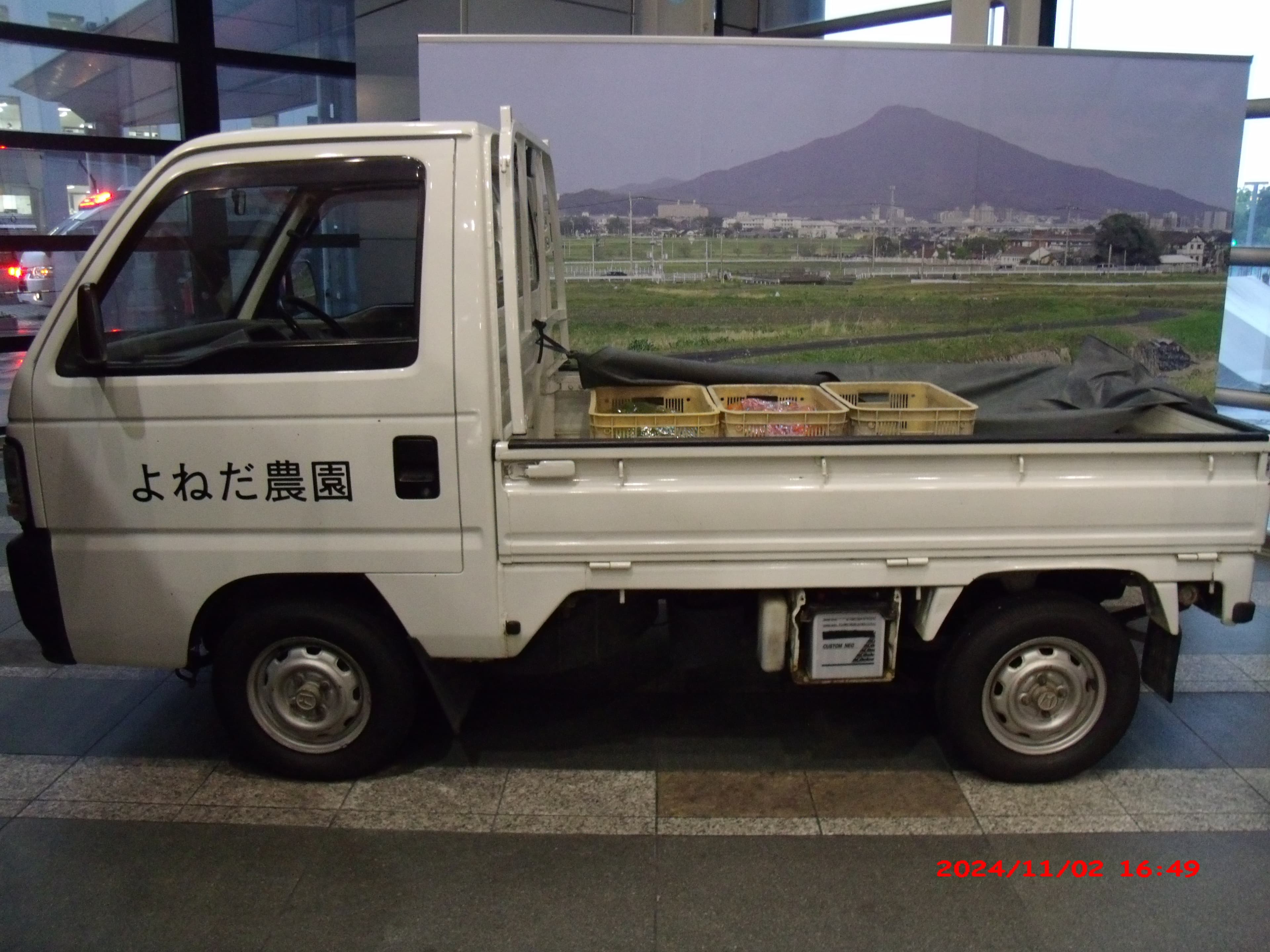
Why Kei Vehicle Tires Are Confusing
Here's the deal: most kei trucks roll on 12-inch wheels. Your local Discount Tire doesn't stock 12-inch anything. The guy behind the counter will look at you like you brought in a riding mower.
Kei vehicles use JDM tire sizing that doesn't overlap with the US market. You won't find these at Walmart, Costco, or most tire chains. The sizes are standard in Japan — where these trucks are everywhere — but obscure here in the States.
The good news? Once you know your size, sourcing is straightforward. You just need to know where to look.
Common Tire Sizes by Model
| Vehicle | Stock Tire Size | Notes |
|---|---|---|
| Suzuki Carry | 145/80R12 or 145R12 LT | LT (light truck) rated for hauling |
| Honda Acty | 145/80R12 | Same as Carry — parts bin win |
| Daihatsu Hijet | 145/80R12 or 145R12 LT | Jumbo cab uses same size |
| Subaru Sambar | 145/80R12 | Supercharged models too |
| Mitsubishi Minicab | 145/80R12 | Van and truck same size |
| Mazda Scrum | 145/80R12 | Rebadged Carry — identical fitment |
| Honda Vamos | 155/70R13 | Slightly larger than truck models |
| Suzuki Every | 145/80R12 | Van version of Carry platform |
| Kei cars (general) | 155/65R13 or 165/55R14 | Varies by model and year |
Most kei trucks share the 145/80R12 size. That's the magic number. If you own a kei truck, there's a 90% chance that's what you need.
The "145" is the width in millimeters. "80" is the aspect ratio. "R12" means radial, 12-inch rim. Simple once you see it.
All-Season vs Mud Terrain vs Highway
Not all 145/80R12 tires are the same. What you pick depends on how you use the truck.
All-Season (Best for Most Owners)
If you daily drive your kei vehicle or use it for light farm duty, all-season is the move. You get decent grip in rain, acceptable performance on gravel, and reasonable tread life.
My pick: Bridgestone Ecopia EP150 in 145/80R12. Quiet on pavement, good wet grip, and widely available from Japanese tire importers. I've run these on my Hijet for two seasons with zero complaints.
Mud Terrain / Aggressive Tread
For farm trucks, hunting rigs, or anything that sees actual dirt and mud, you want an aggressive tread pattern. Options are limited in 12-inch sizes, but they exist.
My pick: Dunlop Grandtrek MT2 in 145R12 LT. Chunky tread, LT-rated for load capacity, and it clears mud without packing. Not great on the highway — loud and wears faster — but in the field it's a different animal.
Highway / Touring
If your kei vehicle is a pavement-only daily driver or show truck, go for a highway tire with low rolling resistance. You'll get better fuel economy and a quieter ride.
My pick: Yokohama BluEarth AE-01 in 145/80R12. Low noise, good fuel economy, and Yokohama's quality is consistently excellent. These are what I'd run on a kei car commuter.
Brands That Make Kei-Size Tires
Not every tire brand makes 12-inch or 13-inch sizes. Here's who does:
- Bridgestone — Widest selection in kei sizes. Ecopia and Nextry lines are solid. Japanese domestic brand, so kei sizes are a core product for them.
- Yokohama — BluEarth line has excellent kei fitments. Good balance of performance and price.
- Dunlop — Enasave and Grandtrek lines cover both road and off-road in kei sizes. Owned by Sumitomo in Japan.
- Toyo — Tranpath and NanoEnergy lines. Fewer kei-specific options but what they make is good quality.
- Falken — Sincera line has some 12-inch and 13-inch options. Falken is Sumitomo's sub-brand.
Avoid no-name Chinese tires in these sizes. I've seen them on eBay for $30 each. The rubber compound is inconsistent, tread life is poor, and on a vehicle this light, tire quality matters more than you think. A 1,700-pound truck with bad tires is sketchy in the rain.
Where to Buy
TireRack (tirerack.com)
Best option for US buyers. Filter by size, and they'll show what's available in 145/80R12. Selection varies — sometimes they have Bridgestone and Yokohama in stock, sometimes it's slim. Check regularly.
Amazon
Search "145/80R12" and you'll find options. Stick with name brands. Read the seller reviews carefully — some listings ship from Japan with 4–6 week lead times. That's fine if you plan ahead, frustrating if you have a flat.
eBay
Largest selection, including direct-from-Japan sellers. This is where you'll find the obscure stuff — mud terrains, winter tires, and NOS (new old stock) in unusual sizes. Always check the DOT date code on arrival.
Japanese Tire Importers
Specialty shops like Japanparts.com and various kei truck parts dealers import tires directly. Prices are higher but you get curated selection and someone who actually knows these vehicles. Worth it if you value convenience.
Your Kei Truck Dealer
If you bought from a US dealer, they often stock tires or can order them. This is the easiest path — they know the fitment and can mount and balance on the spot.
How to Check Tire Age (DOT Date Code)
This is critical, especially on imported vehicles. Many kei trucks arrive from Japan with the original tires — tires that might be 10 or 15 years old. Old tires are dangerous regardless of tread depth.
Every tire has a DOT code on the sidewall. The last four digits tell you when it was made:
- Example: DOT XXXX XXXX 2419
- 24 = week 24 (June)
- 19 = year 2019
So "2419" means the tire was manufactured in June 2019.
The rule: if those last four digits put the tire at 6 years or older, replace it. Period. I don't care if the tread looks perfect. Rubber degrades. UV exposure, ozone, and temperature cycling break down the compound. Old tires crack internally, lose grip, and blow out without warning.
I've personally cut open a 10-year-old tire that looked fine on the surface. The internal belts were separating. On a 60 mph highway run, that's a wreck waiting to happen.
When to Replace
Two rules, whichever comes first:
-
Tread depth below 3/32" — Use the penny test. Insert a penny into the tread with Lincoln's head facing down. If you can see the top of his head, the tire is done. For wet weather, I actually use 4/32" as my threshold on kei vehicles because they're so light and hydroplane easier.
-
Age over 6 years — Check that DOT code. Even with good tread, old rubber is compromised.
Also replace immediately if you see:
- Sidewall cracking or dry rot
- Bulges or bubbles on the sidewall (internal belt separation)
- Uneven wear patterns (indicates alignment or suspension issues — fix those too)
- Any vibration at speed that wasn't there before
Upgrade Options: Going Bigger
The 12-inch tire market is limited. Some owners upgrade to 13-inch or 14-inch wheels for more tire choices and better road manners. Here's what that involves.
12" to 13" Upgrade
This is the most common upgrade. You need new wheels (obviously) and tires in a 13-inch kei car size like 155/65R13.
What you gain: more tire options, slightly taller sidewall for bump absorption, better highway stability, wider selection of all-season and performance tires.
What you lose: slight reduction in off-road clearance, speedometer reads about 3% fast (tire is slightly smaller overall diameter), may need minor fender trimming on some models.
Cost: $400–$600 for a set of 4 steel wheels plus tires. Alloy wheels run more.
13" to 14" Upgrade
Going to 14-inch is pushing it on most kei trucks. It works on kei cars and vans with more wheel well clearance.
Typical size: 165/55R14 or 165/60R14.
What you gain: much wider tire selection, can run performance tires, looks more aggressive.
What you lose: noticeable speedometer error (recalibration recommended), may rub on full lock, heavier unsprung weight, harsher ride on rough roads.
I'd only recommend 14-inch for show trucks or pavement-only kei cars. For anything that sees dirt or carries loads, stay at 12 or 13.
The Bottom Line
Kei vehicle tires aren't hard — they're just different from what Americans are used to. Know your size (probably 145/80R12), buy name-brand rubber, check the DOT date code, and replace before 6 years or 3/32" tread. Do that and your little truck will grip just fine.
And for the love of your kei truck — replace those original Japanese tires the day you take delivery. I've seen too many people drive around on decade-old rubber because "they still have tread." Tread doesn't matter when the compound has turned to plastic.
Stay safe out there.