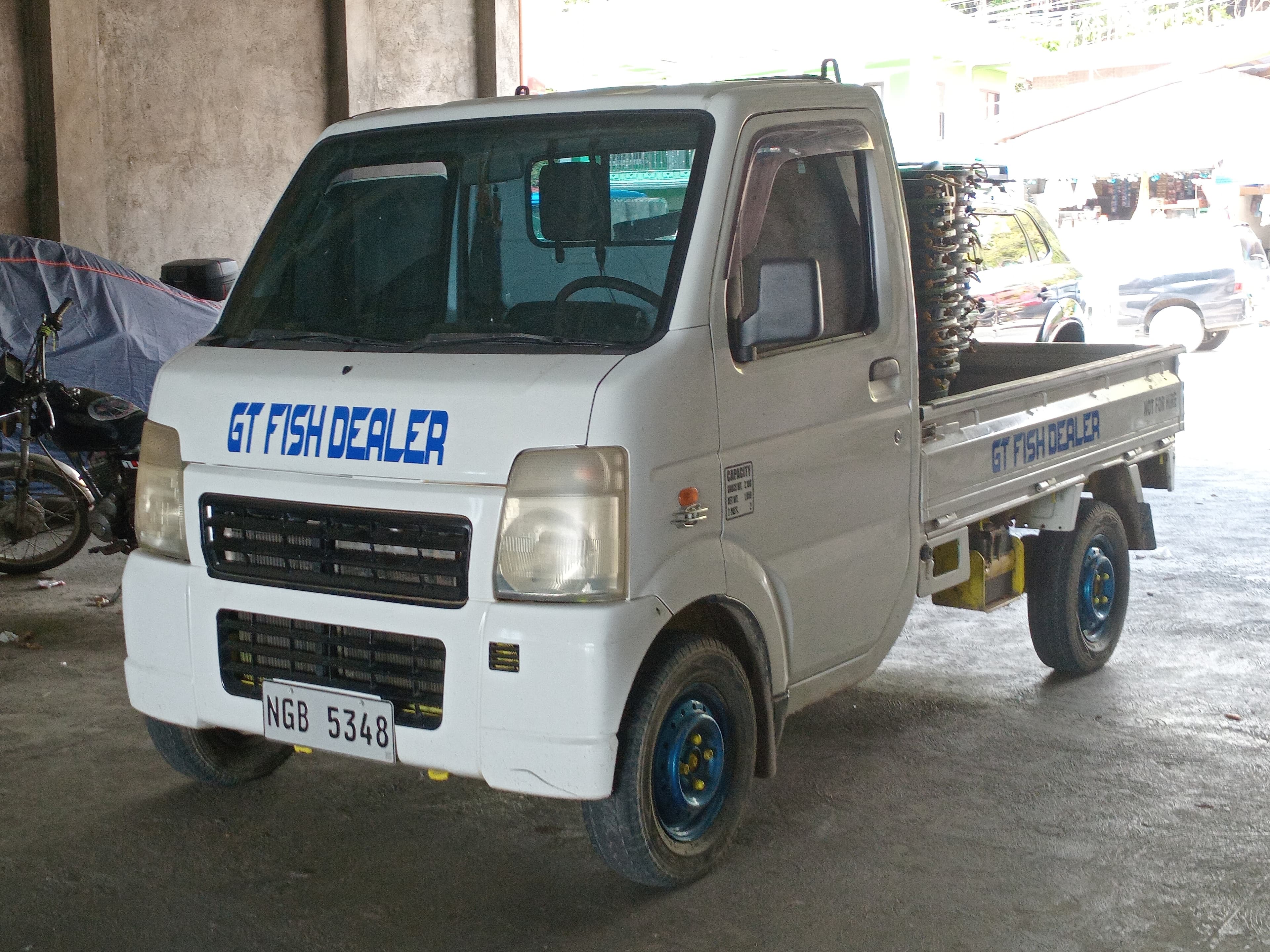
I remember the exact moment I pulled Old Faithful — my 1997 Suzuki Carry — into my driveway for the first time. I sat there with the engine idling, grinning like an idiot, my dog Miso sniffing around the tires trying to figure out what this tiny thing was. Then reality hit me: I had no idea what to do next. No registration. No insurance. No clue if the previous owner had changed the oil in the last decade. I spent the next month figuring it all out the hard way so you don't have to.
Here's your first 30 days, broken down week by week. Follow this and you'll skip about 90% of the headaches I gave myself.
Week 1: The Boring Stuff That Isn't Optional
Get Legal First
Look, here's the deal. I know you want to drive it. I know. But before you take it anywhere beyond your driveway, you need to handle registration and insurance. The order matters.
Step one: check your state's rules on our regulations page. Every state is different — some will register your kei truck like any other vehicle, some restrict them to off-highway use, and a handful won't touch them at all. If you're not sure where you stand, run your truck through our registration check tool. It'll tell you exactly what documents you need and what to expect at the DMV.
Step two: get insurance before you drive. Most people don't realize that some states require you to show proof of insurance before they'll register the vehicle. Check our insurance directory for companies that actually know what a kei truck is. I wasted two days calling agents who kept asking if I meant a "key truck" or a "kay truck." Specialty insurers like Hagerty and American Collectors get it — they'll quote you without the confusion. Standard insurers can work too, but call ahead.
Pro tip from Rina's research: bring your import paperwork, the EPA and DOT exemption forms if applicable, and the bill of sale. DMVs handle kei trucks way more smoothly when you walk in with everything in a folder. She wrote an entire title and registration walkthrough that's worth reading the night before your DMV visit.
Do the Full Fluid Change
This is Dave Russo's number one rule and I'm not going to argue with the man. He's said it to me probably forty times: "Assume every fluid in that truck is wrong until you've personally seen it come out and go back in."
Here's what you're changing:
- Engine oil — 660cc engines are tiny. Bad oil kills them fast. Use the weight specified in your owner's manual (usually 5W-30 or 10W-30).
- Coolant — these little radiators don't hold much. Old coolant means overheating, and overheating means a cracked head. Don't risk it.
- Brake fluid — if it's dark, it's absorbing moisture, and your brakes are compromised.
- Transmission fluid — whether you've got a manual or an automatic, fresh fluid makes a noticeable difference in shift quality.
Budget about $300-$500 for a proper first service if you're paying someone, or around $80-$120 in fluids if you're doing it yourself. If you run into anything weird — strange noises, leaks you can't place, electrical gremlins — Dave's troubleshooting guide covers the most common issues.
While you're under there, check the timing belt. If you can't find records of when it was last replaced, just do it. A timing belt is $150. A new engine is $2,000+. Trust me on this one.
Week 2: Get to Know Your Truck
Figure Out Exactly What You Have
Here's something that surprised me: I didn't actually know what I had. I knew it was a Carry, but I didn't know which generation, which engine variant, or which options package. That matters when you're ordering parts.
Run your chassis number through our chassis decoder. It'll break down your exact model code, engine type, transmission, and production date. Write this stuff down or save it in your phone — you'll reference it every time you order a part.
Spend some time with the truck this week. Not driving hard, just getting familiar. These are small vehicles with unique characteristics:
- The turning radius is absurdly tight. You'll love it in parking lots.
- The brakes feel different than what you're used to. Not bad, just different. Get a feel for the pedal before you need to stop suddenly.
- If you have a manual (and most of you do), the shift gates are short and close together. Practice in a parking lot until the pattern is muscle memory.
- Check every switch, every light, every gauge. Find out what works and what doesn't now, not when you're on the road.
Find a Mechanic Before You Need One
Don't wait until something breaks to start calling shops. Most general mechanics can handle kei trucks — the engines are simple and the components are straightforward — but it helps to find someone who's seen one before.
Check our mechanic directory for shops in your area that have experience with kei vehicles. If there's nobody listed near you, call around to Japanese import specialists or even motorcycle mechanics. The engine size is closer to a big motorcycle than a car, and a lot of the mechanical principles overlap.
When you find someone, bring the truck in for a once-over even if everything seems fine. A fresh set of experienced eyes might catch something you missed.
Week 3: Find Your People and Plan Your Mods
Join the Community
This is the part that turns kei truck ownership from "I have a weird truck" into "I'm part of something." The kei truck community in the US is small enough that people actually know each other and big enough that there's always someone who's solved the problem you're having.
Start here:
- Reddit — r/keitruck is the main hub. Friendly crowd, great for troubleshooting and showing off your ride.
- Facebook Groups — search for "Kei Truck" and you'll find several active groups. The buy/sell groups are especially useful for parts.
- Local meets — check our events page for upcoming shows, meets, and swap meets near you. The Capital Kei Car Club runs regular meetups on the East Coast and they're incredibly welcoming to newcomers.
- Keijira community page — our community hub has links to all the major groups and forums.
When I took Old Faithful to my first meet, I was nervous. Thought my bone-stock Carry would look boring next to all the modded trucks. Turns out half the people there wanted to talk about my truck because it was stock. The community is genuinely one of the best parts of ownership.
Plan Your First Mods (Don't Go Crazy)
You're going to want to mod it. Everyone does. But resist the urge to do everything at once.
Browse our mods section and pick one or two projects to start with. My recommendation for first mods:
- LED headlights — the stock halogens on most kei trucks are barely adequate. LEDs are a safety upgrade that takes 30 minutes.
- A good bed rack or toolbox — makes the truck actually useful for hauling. Dave's bed rack build guide is the one to follow.
Save the lift kits and exhaust work for month two or three. Get comfortable with the truck as-is first. And use our parts lookup tool before ordering anything — it'll help you find the right parts for your specific chassis code.
Week 4: The First Real Drive
By now you've got registration, insurance, fresh fluids, a mechanic on speed dial, and maybe a mod or two. Time to actually use this thing.
Plan a proper drive. Not a commute — a drive. A Saturday morning run to a trailhead, a farmers market trip, a cruise through backroads. Something where you're not in a rush and you can actually pay attention to how the truck feels.
Watch for these things on your first longer drive:
- Temperature gauge — keep an eye on it, especially in traffic or going uphill. These little engines work harder than you'd think.
- Unusual vibrations — anything that wasn't there on short drives might show up at sustained speeds.
- Fuel consumption — fill up before you leave and note the mileage. You'll want a baseline for what "normal" looks like.
- How YOU feel — are you comfortable? Is the seat position working? Can you see out of the mirrors? Small adjustments now prevent fatigue later.
The "Don't Do This" Section
I've made most of these mistakes. Learn from me.
Don't skip the timing belt. I said it already but I'm saying it again. This is the single most expensive mistake new kei truck owners make.
Don't highway cruise at 70 mph on day one. These trucks can do highway speeds, but a fresh-to-you engine with unknown maintenance history doesn't need that stress yet. Keep it under 55 for the first few hundred miles.
Don't ignore small leaks. A tiny drip becomes a puddle becomes an empty oil pan. Check under the truck every time you park it for the first month.
Don't mod before maintaining. I see this constantly — someone drops $800 on a lift kit but hasn't changed the oil. Maintenance first, mods second. Always.
Don't be embarrassed at the DMV. Yes, the clerk might look at you funny. Yes, they might need to get a supervisor. Bring your paperwork, be patient, and remember that Rina's registration guide has DMV-specific tips for every state.
Don't drive without a basic toolkit. Throw a 10mm socket set, a screwdriver, zip ties, and a flashlight behind the seat. These trucks are simple enough that you can fix most roadside issues yourself.
You're Going to Love This
I'm not going to lie — the first month has some tedious moments. Paperwork isn't fun. Changing fluids in a driveway isn't glamorous. But somewhere around week three or four, it clicks. You stop thinking of it as a project and start thinking of it as your truck.
Old Faithful has been with me for years now and I still get that same grin pulling into the driveway. Miso still sniffs the tires.
Welcome to the club. You're going to be fine.
Where to go next:
- Complete Buying Guide — if you haven't read it yet, it's the companion piece to this one
- Cost of Ownership Breakdown — what to budget for year one
- Daily Driving a Kei Truck — Suki wrote a beautiful piece on what it's actually like
- Maintenance & Parts Guide — Dave's bible for keeping these trucks running
- Your state's regulations — bookmark this, you'll reference it more than you think