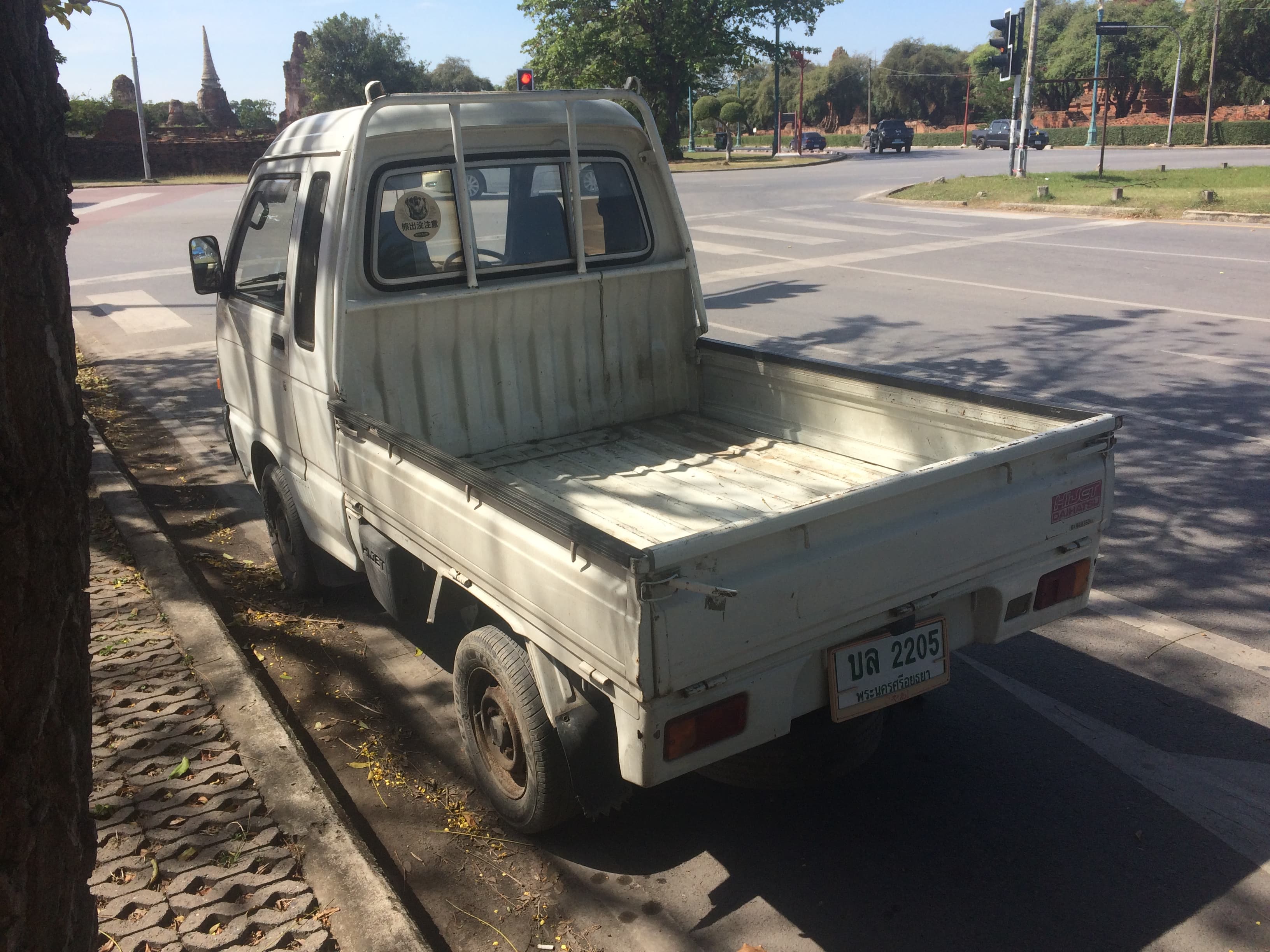
Maintaining Your Kei Truck
After 15 years of Mack trucks, the Hijet's first oil change took me eleven minutes. The drain plug is right there. The filter is right there. These 660cc engines are dead simple to work on.
The biggest challenge isn't complexity — it's sourcing parts. Nobody stocks kei truck parts locally. But between online suppliers, cross-reference numbers, and the occasional Japan shipment, you can keep these things running forever. This guide covers both.
Basic Maintenance Schedule
| Interval | Service |
|---|---|
| Every 3,000 mi / 6 months | Oil and filter change |
| Every 6,000 mi / 12 months | Air filter, spark plugs, coolant check |
| Every 12,000 mi / 24 months | Transmission fluid, brake fluid, brake pads |
| Every 24,000 mi / 48 months | Timing belt (if equipped), water pump, thermostat |
| Every 36,000 mi | Full tune-up: plugs, wires, cap, rotor, belts |
Timing belt trucks: Many kei truck engines (especially Suzuki F6A and Honda E07A) use timing belts, not chains. A broken timing belt can destroy the engine. If you don't know when it was last changed, replace it immediately.
Oil and Fluids
Engine Oil
- Capacity: Typically 2.5–3.0 liters (much less than a standard car)
- Recommended grade: 5W-30 or 10W-30 (check your engine's specifications)
- Filter: Use the Japanese part number to cross-reference. Common crosses:
- Suzuki Carry: equivalent to many Suzuki motorcycle filters
- Honda Acty: similar to Honda Civic/Fit filters from the same era
Transmission Fluid
- Manual: 75W-90 gear oil, typically 1.5–2.0 liters
- Automatic: ATF Dexron III, check dipstick for level
- 4WD transfer case: 75W-90 gear oil, 0.5–1.0 liters
Coolant
- Use standard ethylene glycol coolant mixed 50/50 with distilled water
- Capacity is typically 3–4 liters total system
- Flush and replace every 2 years
Common Repairs
Brakes
Kei truck brakes are simple and inexpensive to service:
- Front: Disc brakes on most models (pads are small and cheap)
- Rear: Drum brakes on most models (shoes are standard to replace)
- Parts availability: Excellent — brake pads and shoes are widely available from US auto parts suppliers
Electrical
The most common electrical issues:
- Battery: Use a standard Group 51R or similar small battery
- Alternator: Often rebuildable; replacements available from import parts suppliers
- Starter: Same as alternator — rebuildable or available from suppliers
- Lights: Headlights and turn signals use standard JIS bulb sizes, most of which have US equivalents
LED upgrades are popular and practical — kei truck headlights are notoriously dim with stock halogen bulbs. See our LED Headlight Upgrade Guide for a walkthrough.
Rust
Rust is the biggest enemy of kei trucks, especially ones from snowy regions of Japan (Hokkaido, Tohoku, Niigata):
- Frame: Inspect annually, treat with rust converter and undercoating
- Bed floor: Common rust area — check under the rubber mat
- Cab corners: Another common spot, especially below the doors
- Prevention: Annual undercoating (Fluid Film, NH Oil Undercoating, or POR-15) is the best defense
Parts Sources
US-Based Online Suppliers
These companies stock or can source kei truck parts domestically:
- Yokohama Motors USA — wide range of parts for Suzuki, Honda, and Daihatsu kei trucks
- JDM Parts Direct — filters, belts, and maintenance items
- Rocky Mountain Kei Trucks — parts and accessories, especially for lifted/modified trucks
- Amazon/eBay — surprisingly good for filters, belts, spark plugs, and brake parts using Japanese part numbers
Cross-Reference Strategy
Many kei truck parts share specifications with more common vehicles:
- Find the Japanese OEM part number — from your owner's manual, parts catalog, or a Japanese parts website
- Search the OEM number on US parts sites — many will show cross-references to US-available equivalents
- Check motorcycle parts — kei truck engines share heritage with motorcycle engines, and filters/gaskets sometimes cross over
Ordering from Japan
For body panels, trim, glass, and model-specific parts:
- Megazip — online parts catalog with diagrams for most Japanese vehicles
- Amayama Auto Parts — genuine OEM parts shipped from Japan
- Yahoo Auctions Japan — used parts at great prices (need a proxy bidding service like Buyee or FromJapan)
Shipping from Japan typically costs $20–$50 for small parts via Japan Post, or $100+ for larger items via DHL/FedEx. It usually takes 1–3 weeks.
Finding a Mechanic
What to Look For
- Import vehicle experience — mechanics who work on Subarus, Hondas, or motorcycles often adapt well
- Willingness to learn — kei trucks are simple; a good mechanic just needs the service manual
- Service manuals — provide your mechanic with the English-translated service manual (available from kei truck forums and eBay)
DIY Friendliness
Kei trucks are some of the most DIY-friendly vehicles on the road:
- Engine access: Mid-engine and rear-engine layouts mean you often work from underneath or through the cab floor, but the engines themselves are tiny and accessible
- Simple systems: Carbureted engines, basic wiring, mechanical components
- Light weight: You can jack up the entire truck with a small floor jack
- Community support: Active forums and YouTube channels cover most common repairs
Stocking Up
When you first get your kei truck, order these spares to have on hand:
- 2-3 oil filters
- A set of spark plugs
- An air filter
- A set of brake pads (front) and shoes (rear)
- Timing belt kit (if equipped and not recently replaced)
- Fan belt / accessory belt
- Thermostat and gasket
- Fuel filter
Having these on hand means you're never waiting weeks for a part to arrive when you need a basic service.
Next Steps
- Browse mod guides for popular upgrades and improvements
- Check the truck database for model-specific specs and details
- Find a dealer with parts support — some dealers also stock parts