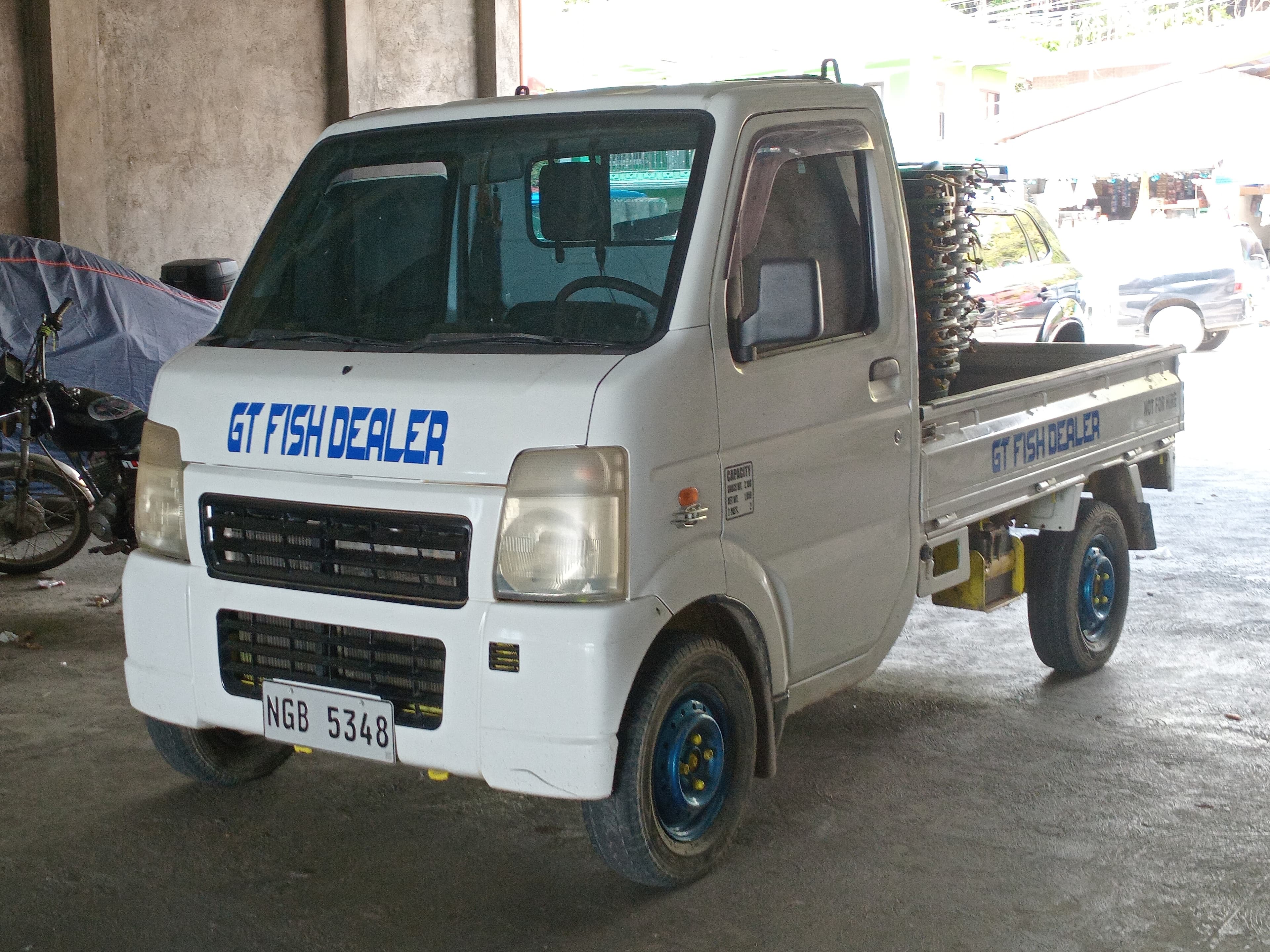
Your kei truck bed is about 6 feet long and 4.5 feet wide. That's smaller than a full-size pickup by a mile, but it's bigger than you think once you start building it out. I've hauled a washing machine, 20 bags of mulch, a disassembled bed frame, and once — regrettably — a friend's drum kit in The Hijet's bed. It all fit. Most of it even survived.
The trick with kei truck beds isn't working around the small size. It's that the bed is one of the most modifiable parts of the truck, and there's almost no aftermarket standardization. Everything's either DIY, adapted from something else, or shipped from a Japanese supplier who doesn't have an English website. That's what makes it fun.
Bed Dimensions by Model
Before you buy anything, measure your bed. These numbers vary by generation, but here's the ballpark for the most common models:
| Model | Bed Length | Bed Width | Bed Height | Payload |
|---|---|---|---|---|
| Suzuki Carry (DC51T/DD51T) | 1,940 mm (76.4") | 1,410 mm (55.5") | 290 mm (11.4") | 350 kg (770 lb) |
| Daihatsu Hijet (S110P) | 1,940 mm (76.4") | 1,410 mm (55.5") | 285 mm (11.2") | 350 kg (770 lb) |
| Subaru Sambar (KS3/KS4) | 1,935 mm (76.2") | 1,410 mm (55.5") | 280 mm (11.0") | 350 kg (770 lb) |
| Honda Acty (HA3/HA4) | 1,940 mm (76.4") | 1,390 mm (54.7") | 290 mm (11.4") | 350 kg (770 lb) |
| Mitsubishi Minicab (U42T) | 1,940 mm (76.4") | 1,410 mm (55.5") | 285 mm (11.2") | 350 kg (770 lb) |
The dimensions are nearly identical across all models. The Japanese kei truck regulations dictated the maximum body size, so everyone built to the same envelope. The Acty is slightly narrower. The Sambar is slightly shorter. In practice, the difference is millimeters.
Key measurement: The tailgate opening width. It's narrower than the bed interior because of the stake pockets. Measure it before you try to slide a 4x8 sheet of plywood in flat. Pro tip: tilt it diagonally or drop the tailgate and let it hang over. Rina did the math once — a 4x8 sheet fits diagonally with about 2 inches to spare.
Bed Liners
A bare steel bed will rust. It's not a question of if. These beds are thin gauge steel that was never meant to handle American-grade abuse without protection.
Spray-In Liner
This is what I run on The Hijet and it's the best option for most people. Raptor Liner or Rust-Oleum Truck Bed Coating gives you a textured, waterproof surface that bonds directly to the steel.
Prep is everything. Wire wheel off any surface rust, wipe with acetone, mask off what you don't want coated. Two coats, 30 minutes between. Done in an afternoon.
Cost: $50-$80 DIY. Professional spray-in (Line-X, Rhino) runs $300-$400 but the bed is so small it's hard to justify.
Drop-In Rubber Mat
Cut a piece of rubber stall mat from Tractor Supply to fit. It's $45, it's indestructible, and it peels right out when you need to hose the bed down. Downside: water gets trapped underneath and accelerates rust if you don't pull it out periodically.
Cost: $30-$50.
Plywood with Marine Coating
Old school and effective. Cut 3/4" plywood to fit the bed floor, seal all six sides with marine spar varnish or Thompsons WaterSeal. Protects the bed and gives you a flat, screw-friendly surface for mounting stuff.
Cost: $20-$30.
Bed Racks
A rack turns your kei truck from a flat hauler into a three-dimensional storage system. Lumber, kayaks, rooftop tents, solar panels — once it's up high, the bed underneath is still usable.
I wrote a full step-by-step on this: bed rack build guide. Here's the summary.
DIY Steel Rack
Square steel tubing (1" or 1.25"), bolted to the existing stake pockets. The stake pockets on most kei trucks accept standard lumber dimensions — Japanese and American 2x4 nominal sizes are close enough. Weld or bolt a crossbar frame, paint it, done.
Materials: 1" square tubing from your local steel supplier, 8 bolts, paint. $50-$100.
Commercial Bolt-On Racks
The aftermarket is growing. Yokohama Garage and a few eBay sellers offer bolt-on racks designed for specific kei truck models. Fit varies. Measure twice, order once.
Cost: $200-$400 shipped.
Custom Aluminum Rack
If you want light and fancy, have a local fab shop bend aluminum. Lighter than steel, won't rust, looks clean. Overkill for most people but Jake's got one on Old Faithful and it does look sharp.
Cost: $400-$800 depending on complexity.
Toolboxes and Storage
The bed has no built-in storage. No wheel wells eating into the space. No trim panels. It's a steel box. That's a feature, not a bug — it means you can mount whatever you want wherever you want.
For the full rundown on storage solutions, see the toolbox and storage guide. Here are the highlights:
Crossbed Toolbox
A standard compact truck crossbed toolbox is too wide. Measure before you buy. Some UWS slim-line models fit, but verify the interior bed width between your stake pockets first. The 54" slim models usually work.
Cost: $150-$250.
Side-Mount Boxes
Small side-mount toolboxes (the kind designed for ATVs or compact trucks) bolt to the bed rails and leave most of the floor space open. Good for hand tools, tie-downs, and the stuff you need to grab without unloading cargo.
Cost: $40-$80 each.
Ammo Can Storage
Military surplus ammo cans bolted to the bed floor or wall. Waterproof, lockable, nearly indestructible. Drill two holes, bolt them down with 5/16" carriage bolts and rubber washers. I've got three along the driver's side of The Hijet — one for tools, one for straps, one for first aid and fluids.
Cost: $10-$20 per can.
Tie-Down Points
Most kei trucks have 4-6 tie-down hooks welded to the bed walls. They're small. They're adequate for Japanese agriculture loads but sketchy for anything heavy or tall.
Upgrade options:
- Bull Ring retractable tie-downs: flush-mount in the bed floor. $30-$50 per pair.
- D-ring bolts through the bed floor: drill, bolt, back with a fender washer. $3 each.
- Stake pocket tie-down rings: drop into the existing stake pockets, no drilling. $15-$25 for a set of 4.
Always use ratchet straps, not bungee cords. These trucks are light and they bounce. Anything unsecured in the bed will become a projectile in a hard stop.
Dump Bed Options
This is where kei trucks get genuinely impressive. A hydraulic dump bed on a truck this small is absurdly useful for landscaping, farming, and firewood.
Factory Dump (Hijet)
Some Daihatsu Hijet models came from the factory with a hydraulic dump bed. The S110P dump variant has a PTO-driven hydraulic cylinder that tips the bed about 45 degrees. If you're buying specifically for work, seek one of these out — it's worth the premium. Suki wrote about them in her kei truck business use cases piece.
Premium over non-dump: $1,000-$2,000 at auction.
Aftermarket Hydraulic Dump Kit
Full hydraulic dump conversion kits exist for trucks that didn't come with one. They mount a hydraulic cylinder between the frame and bed, powered by a 12V electric pump. Pierce Arrow and similar brands make kits rated for the weight range.
Cost: $800-$1,500. Installation is a weekend project — you need to unbolt the bed, install the pivot, cylinder, and pump, and rewire a switch. Difficulty: 7/10.
Scissor Lift Kit
A cheaper alternative to a full dump. Scissor lift kits raise the bed vertically (or at a slight angle) rather than tipping it. Less dramatic than a dump but still lets gravity do the unloading. Good for mulch, gravel, firewood.
Cost: $500-$1,000. Simpler install than a full dump kit. Difficulty: 5/10.
Tonneau Covers and Tarps
Covering the bed keeps your cargo dry and your payload from becoming a sail at highway speeds (well, kei truck highway speeds).
- Tarp with bungee cords: The classic. A 6x8 heavy-duty tarp fits perfectly. $15-$25.
- Snap-on tonneau: Some Japanese aftermarket companies make snap-on vinyl covers. Hard to source in the US. Check Yahoo Japan Auctions via a proxy service.
- DIY hinged tonneau: Plywood + piano hinges + weather stripping. Locks flat for cargo protection, flips open for access. I built one for The Cab when I was using it for deliveries. $40-$60 in materials.
- Truck cap / canopy: Hard shells exist for kei trucks but they're almost exclusively Japanese domestic market. Importing one runs $500-$1,000 shipped. Alternatively, have a local shop build one from aluminum and polycarbonate.
My Setup: The Hijet
Here's what's on The Hijet right now, after two years of tweaking:
- Liner: Raptor spray-in, two coats. Zero rust underneath after two Pennsylvania winters.
- Rack: DIY steel rack from 1" square tubing, bolted to the stake pockets. Carries lumber, my extension ladder, and a rooftop cargo bag when I'm camping.
- Storage: Three ammo cans (driver's side wall), one slim crossbed toolbox behind the cab.
- Tie-downs: Four D-ring bolts in the bed floor corners plus the factory hooks.
- Cover: Heavy-duty tarp with bungee ball ties for daily use. The hinged plywood tonneau is in the garage for when I need security.
Total invested in the bed setup: about $250 over two years. That's less than a set of WeatherTech mats for a Ford F-150.
Cost Summary
| Item | Budget Option | Mid-Range | Premium |
|---|---|---|---|
| Bed liner | Plywood: $20-$30 | Rubber mat: $30-$50 | Spray-in: $50-$80 |
| Rack | DIY steel: $50-$100 | Bolt-on: $200-$400 | Custom aluminum: $400-$800 |
| Toolbox | Ammo cans: $10-$20 | Side-mount: $40-$80 | Crossbed: $150-$250 |
| Tie-downs | D-ring bolts: $12 | Stake pocket rings: $15-$25 | Bull Ring flush: $30-$50 |
| Cover | Tarp: $15-$25 | DIY tonneau: $40-$60 | JDM cap: $500-$1,000 |
| Dump conversion | — | Scissor lift: $500-$1,000 | Hydraulic dump: $800-$1,500 |
Budget build (liner + DIY rack + ammo cans + tarp): $95-$175. Full build (spray-in + bolt-on rack + crossbed box + flush tie-downs + tonneau): $475-$840.
Start with the liner and tie-downs. Add the rack when you need overhead capacity. Add storage as you figure out what you actually carry. The beauty of a steel box is that nothing's permanent — drill a few holes, bolt it on, and change your mind next month.
Your bed is 27 square feet of possibility. Go build something.