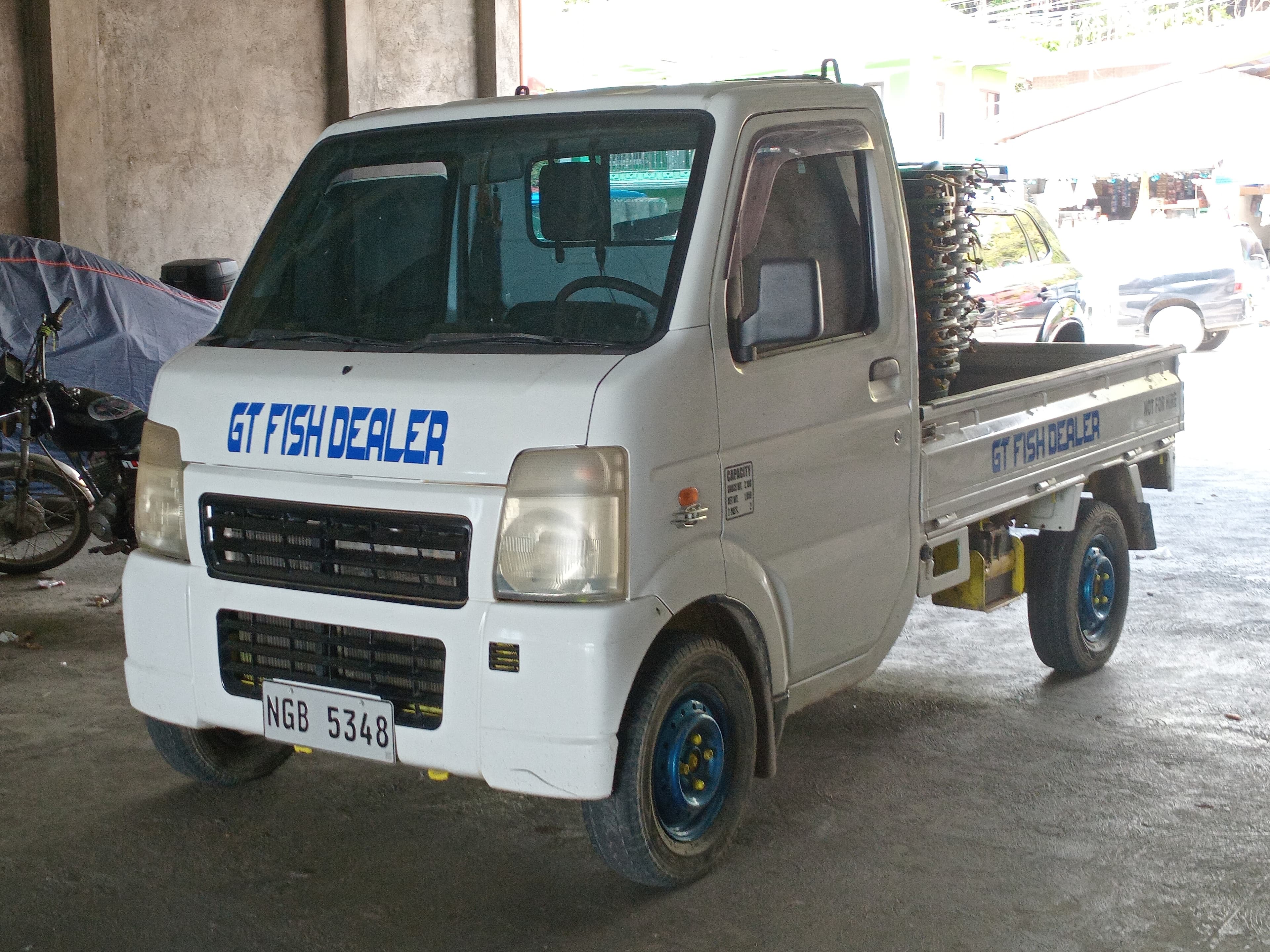
The Hijet overheated on July 14th, 2024. I know the exact date because I was hauling lumber from the yard on Main Street in Scranton and the temp gauge buried itself past the red line about two miles from home. Pulled over, popped the rear hatch, and watched steam roll out of the engine bay like a bad horror movie.
A 660cc three-cylinder engine makes about 45 horsepower. That's fine when you're cruising empty at 40 mph on a cool day in Osaka. It's not fine when you're hauling 500 pounds of pressure-treated 2x6 up a grade in 94°F Pennsylvania humidity. The engine works twice as hard, the cooling system was designed for a country with milder summers and shorter distances, and the whole thing is 28 years old.
Something was going to give. The cooling system gave first.
Coolant: The Right Stuff Matters
Start here because it's cheap, it's fast, and half of you are running the wrong coolant.
Japanese engines use different gasket and seal materials than American engines. Universal orange coolant (Dexcool and its clones) uses organic acid technology that can attack the rubber and silicone seals in Japanese cooling systems. I've seen swollen hoses and weeping water pump seals on trucks running the wrong coolant.
Use Asian-formula coolant. It's blue or green, phosphate-free, and specifically formulated for Japanese, Korean, and other Asian-make engines. Two brands I trust:
- Prestone Asian Vehicles (blue, pre-mixed 50/50) — $15 per gallon
- Zerex Asian Vehicle (green, concentrate or pre-mixed) — $14 per gallon
Your kei truck's cooling system holds about 4–5 liters total. Buy two gallons of pre-mixed and you'll have extra for top-offs.
Change interval: every 2 years or 30,000 miles, whichever comes first. Coolant degrades. Its corrosion inhibitors deplete. Old coolant becomes acidic and starts eating your system from the inside. Don't make the mistake I made — The Hijet's coolant hadn't been changed since I bought it. That's on me.
Flush procedure: drain the radiator (petcock at the bottom, or remove the lower hose). Remove the engine block drain plug if your model has one (10mm or 12mm bolt on the block). Fill with distilled water, run the engine to operating temp with the heater on full, drain again. Then fill with fresh coolant. Takes 30 minutes.
Thermostat Replacement: Cheap Insurance
The thermostat is a $12 part that controls when coolant flows through the radiator. When it fails stuck-closed, your engine overheats. When it fails stuck-open, your engine never reaches operating temp and runs rich.
On a 25-year-old truck, just replace it. Don't test it, don't wonder if it's still good. It's twelve dollars.
On the Hijet S110P, the thermostat housing is on the engine side of the upper radiator hose — two 10mm bolts, pull the housing, swap the thermostat, install a new gasket (comes with the thermostat), torque to 10 ft-lbs. Use gasket maker sparingly on both sides if the housing surface isn't perfectly flat.
Stock thermostat temp: most kei trucks use a 76.5°C (170°F) thermostat. That's correct for normal use. Don't go lower thinking it'll help — a thermostat that opens too early means the engine never fully warms up, which increases fuel consumption and wear.
Pro tip: when you install the new thermostat, make sure the jiggle valve (the small hole with the pin) is at the 12 o'clock position. This lets trapped air escape past the thermostat during filling. If the jiggle valve is at the bottom, you'll get an air pocket and the engine will overheat even with a brand new thermostat. Ask me how I know.
Radiator Upgrade: OEM Replacement vs Aluminum
If your radiator is original, it's 25+ years of corrosion, mineral deposits, and degraded plastic end tanks. Even if it's not leaking, its cooling capacity is reduced. Hold a flashlight behind the core — if you can't see light through most of the fins, it's clogged.
Option 1: OEM-Style Replacement ($80–$150)
A new copper-brass or plastic-aluminum radiator in the stock dimensions. Drop-in fit, no modifications. This restores factory cooling capacity. Good enough for most people running stock power with moderate loads.
For the Hijet S110P, aftermarket replacement radiators are available from multiple Japanese parts importers. Make sure you match your chassis code — cab-over models route the hoses differently than mid-engine models.
Option 2: Aluminum Upgrade ($150–$250)
A full-aluminum radiator with a thicker core (typically 36mm vs the stock 26mm). Better heat dissipation, lighter weight, and more cooling capacity. Worth it if you haul heavy, live in a hot climate, or plan to keep the truck for years.
I put an aluminum radiator in The Hijet after the overheating incident. Cost was $185. The core is 36mm thick with dual-row tubes. Dropped my operating temperature by about 15°F under load compared to the old clogged radiator. Direct bolt-in, same hose connections, same mounting points.
Installation: drain the coolant. Disconnect upper and lower hoses (spring clamps or worm-drive clamps, squeeze or unscrew). Disconnect the overflow tube. Remove the mounting bolts (usually two 10mm bolts at the top, two at the bottom or on brackets). Lift out the old radiator. Reverse for install. Transfer your fan shroud if the new radiator doesn't include one.
Don't forget to flush the system before installing the new radiator. No point putting a clean radiator into a dirty system.
Electric Fan Addition: The Best Bang for Your Buck
This is the upgrade I recommend to every kei truck owner who drives in summer. Stock mechanical fans (belt-driven, clutch-type) work fine at highway speed when there's plenty of airflow. They're useless in traffic, at idle, or crawling up a steep grade — exactly when your engine needs cooling the most.
An auxiliary electric fan pulls air through the radiator regardless of engine speed. It's controlled by a temperature switch or a manual toggle. When the engine hits a set temp, the fan kicks on. Temps drop. Simple.
What You Need
- Slim electric fan: 10-inch or 12-inch, depending on your radiator size. 12-inch is ideal for most kei trucks. Push or pull configuration — pull (mounted behind the radiator, pulling air through) is more effective. Cost: $30–$60 for a quality fan with mounting hardware.
- Wiring kit: 30-amp relay, 30-amp fuse, temperature switch (185°F on / 170°F off), wiring, and connectors. Some fan kits include this. If not, a universal fan wiring kit is $15–$25.
- Temperature switch: threads into the radiator or a hose adapter. The probe reads coolant temp directly.
Installation
Mount the fan to the radiator using the included zip ties, brackets, or through-bolt mounting kit. I prefer the bolt-through method — drill small holes in the radiator fins between tubes, use rubber grommets to prevent vibration damage, bolt the fan frame directly to the core. More secure than zip ties, which dry-rot and snap after a couple of years.
Wire the fan through a relay. Power wire from the battery to the relay, relay to the fan, temperature switch triggers the relay ground. Add an inline fuse on the power wire. Total wiring time: about an hour if you're neat about it, two hours if you route everything properly and use wire loom.
Pro tip: add a manual override toggle on the dash. Sometimes you know you're about to work the engine hard — going uphill, stuck in traffic on a hot day. Flip the fan on early instead of waiting for the temp switch. A $3 toggle switch from the auto parts store. I mounted mine next to the hazard button on The Hijet.
After adding the electric fan, The Hijet runs 15–20°F cooler in traffic and on grades. Combined with the aluminum radiator, I haven't touched the red line since. Not once. Even hauling. Even in August.
Water Pump: The Silent Failure
The water pump circulates coolant through the entire system. When it fails, nothing else matters — the best radiator in the world can't cool an engine if the coolant isn't moving.
Water pump failure symptoms: slow temperature creep, coolant weeping from the pump weep hole (a small hole on the underside of the pump housing), grinding or squealing from the pump bearing, or visible play in the pump shaft when you wiggle the pulley.
On most kei trucks, the water pump is driven by the timing belt. If you're doing a timing belt replacement (every 60,000 km or 5 years), replace the water pump at the same time. The pump is $40–$60 and you're already in there. The labor to access it is the hard part.
If you're NOT doing a timing belt job, a water pump replacement on its own is a 3–4 hour job on mid-engine kei trucks because of access. Factor that into your decision. Don't ignore a leaking water pump — a slow weep becomes a catastrophic failure on the highway.
Hose Inspection: Rubber Has a Shelf Life
Every rubber coolant hose on your kei truck is original. Rubber degrades. It gets soft, spongy, and eventually splits. A burst hose at highway speed dumps your coolant in about 60 seconds. Then you're cooked.
Squeeze every hose. It should feel firm but pliable — like a new garden hose. If it feels mushy, crunchy, or if you see cracks at the ends where the clamps sit, replace it.
Upper and lower radiator hoses: $15–$30 each. Heater hoses: $10–$20 each. Bypass hoses and overflow tubes: $5–$10 each.
Replace the clamps too. Spring clamps lose tension after decades. Switch to stainless worm-drive clamps ($1 each) for a more reliable seal.
I replaced every hose on The Hijet when I did the radiator. Seven hoses total. Cost about $80 for everything including clamps. Dave's rule: if you're draining the coolant for any reason, inspect every hose. If one is bad, they're all the same age. Replace the set.
Cost Breakdown
| Upgrade | Cost Range | Time |
|---|---|---|
| Coolant flush and refill | $30–$40 | 30 min |
| Thermostat replacement | $12–$20 | 45 min |
| OEM replacement radiator | $80–$150 | 1–2 hrs |
| Aluminum upgrade radiator | $150–$250 | 1–2 hrs |
| Electric fan kit + wiring | $45–$85 | 2–3 hrs |
| Water pump | $40–$60 | 3–4 hrs (standalone) |
| All hoses + clamps | $60–$100 | 1–2 hrs |
You don't have to do everything at once. If I had to pick one upgrade for someone on a budget, it's the electric fan. Thirty bucks and two hours buys you the biggest temperature drop per dollar. Second priority is fresh coolant and a new thermostat. Third is the radiator.
Jake told me once that he's never worried about his Carry overheating. I told him his Carry is a 1997 with a mechanical fan, original coolant, and original hoses, and he should absolutely be worried about it overheating. He changed his coolant that weekend. Suki's Sambar Van gets the same lecture. Rina just nods and writes it down because she's smarter than all of us.
Total time: 6–10 hours for the full cooling system overhaul (radiator, fan, thermostat, coolant, hoses). Total cost: $200–$350. Difficulty: 4/10.
None of this is hard. Drain, unbolt, bolt, fill, bleed. The hardest part is accessing the water pump on a mid-engine truck, and even that's just patience and skinned knuckles. Do it before July. Do it before you're standing on the side of the road watching steam pour out of your engine bay, calling your buddy Gary to come tow you home in his Hijet. Don't ask me how I know.