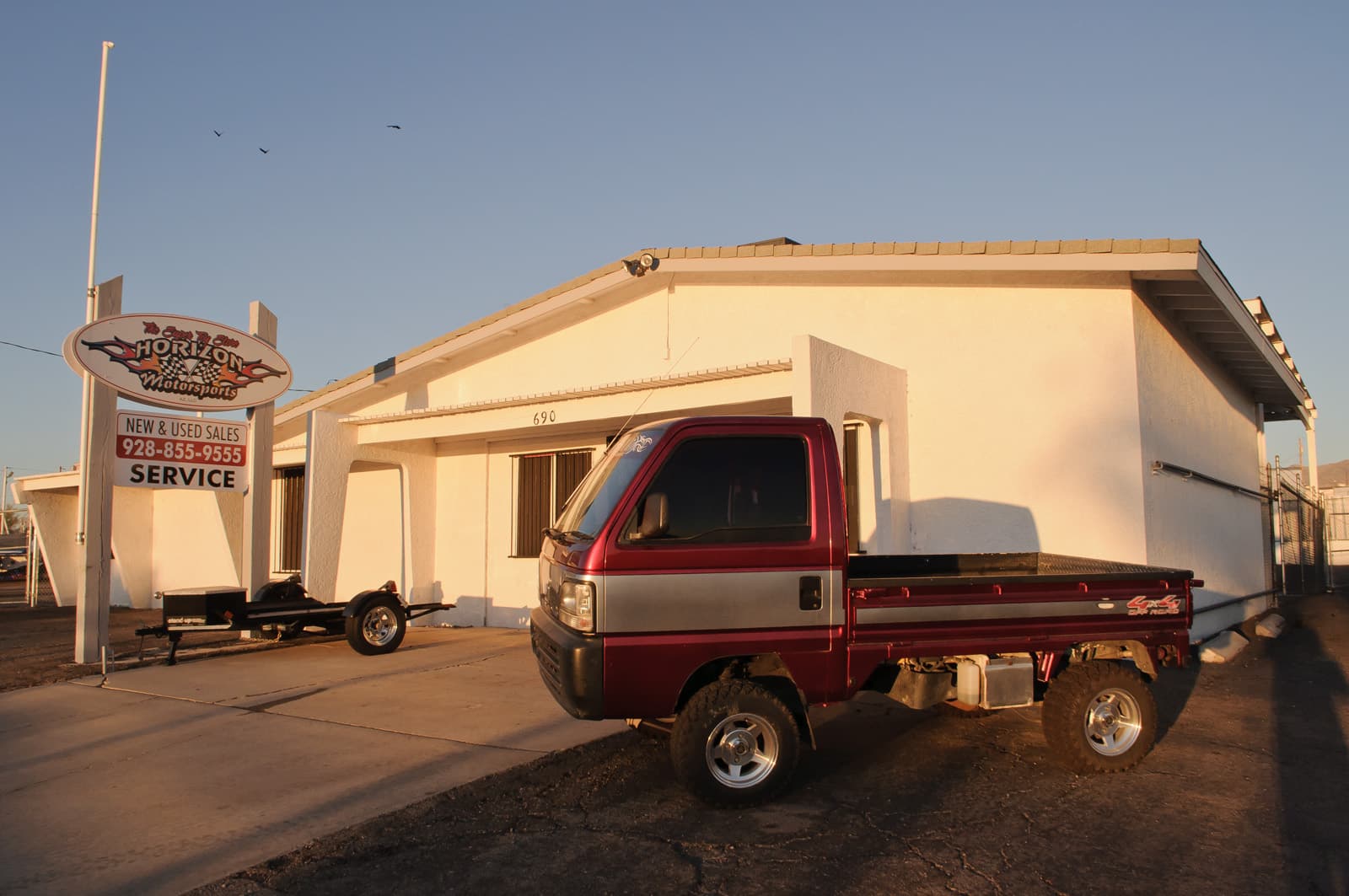
Texas did the thing. Then everyone started taking notes.
When Senate Bill 1816 took effect in September 2025, it gave the rest of the country a working template: define a kei vehicle functionally, tie it to the federal 25-year rule, and let people register it like any other car. Two of the states watching most closely — Colorado and Oregon — are now a year into writing their own next chapters. And they're doing it two completely different ways.
One passed a law and is now waiting. The other can't seem to get a law across the line despite both parties wanting it. Here's where each actually stands in 2026, with the receipts.
Colorado: the law passed, the clock is the problem
Colorado is the cleaner story on paper. Governor Polis signed HB25-1281 on May 9, 2025 — a SEMA-backed bill that adds "kei vehicle" to the state's definition of a motor vehicle and makes them titleable and registerable. Colorado Public Radio covered it as a straightforward win for the mini-truck crowd.
Read the fine print, though, and the catch is the calendar. Per the bill text, the law doesn't take effect until July 1, 2027, and the DMV won't begin issuing kei registrations until January 1, 2028. TFLcar summed up the mood: legal, finally — but there's a two-year wait.
That delay isn't political cold feet. It's an implementation runway. The DMV's titling software, the state's vehicle-classification tables, and the Front Range emissions-testing systems all have to be updated before a single kei truck can be registered under the new class. When the registrations do open, the rules are already set: kei vehicles are capped to roads with posted speed limits of 55 mph or below, limited-access highways are off the table, and emissions testing applies in the Denver metro and other Front Range counties.
So if you're in Colorado: the destination is locked in, but you're sitting in the waiting room until 2028. Buying now means storing or off-roading the truck until registration opens. Check our Colorado regulation page for the current status as the implementation date approaches.
Oregon: everyone agrees, nobody can land the plane
Oregon is the more frustrating story — frustrating in a specifically legislative way.
Start with what's actually true, because it is the opposite of what most coverage implies: Oregon does not let you register a kei truck for road use. You can buy one, import it, and drive it on your own property. You cannot put plates on it. There is no dedicated statutory framework, and without one the DMV has no path to register a vehicle that carries no FMVSS compliance label.
That is what the bills below are trying to create. They are not tidying up an existing allowance — they are trying to open a door that is currently shut.
The state has tried. In June 2025, Sen. Anthony Broadman introduced Senate Bill 1213 with bipartisan co-sponsors, a $63 registration fee, and a 65 mph use cap. KPTV covered the rollout. Then, per Crankshaft Culture, the sponsors pulled the standalone bill and moved its language into a faster-moving omnibus transportation package — a procedural move meant to speed things up.
It didn't quite work. The push carried into 2026, and Streetsblog USA documented the headline that makes this case interesting: Democrats and Republicans actually agree on kei trucks. The renewed bipartisan effort kept the $63 fee and a 65 mph cap. And then it ran into the wall that keeps tripping Oregon up — the legislative calendar. The measure failed to clear its policy-committee deadline, which kills a bill regardless of how much support it has.
That's the real Oregon lesson, and it's the dry-but-important kind: bipartisan support is necessary but not sufficient. A bill still has to survive committee scheduling, deadline cutoffs, and the omnibus-versus-standalone tradeoff. Oregon's kei effort hasn't died from opposition. It's died, twice now, from procedure.
Two states, two failure modes worth understanding
Put Colorado and Oregon side by side and you get a useful map of how kei legalization actually goes wrong even when it's going right:
- Colorado's risk was implementation. The law is real, but a DMV that needs years to retool means owners wait. Passing the bill was the easy part.
- Oregon's risk was process. The votes are there, the parties agree, and it still keeps missing the calendar. Getting to a vote is the hard part.
Texas avoided both. SB 1816 was clean enough to administer quickly and uncontroversial enough to pass on the first serious try. That's why it's the model — not because Texas wanted kei trucks more than Colorado or Oregon, but because the bill was written to clear both hurdles at once.
For the rest of the country — the Pennsylvanias, the Vermonts, the Maines still sorting out their own positions — that's the takeaway. A kei bill has two enemies: the committee calendar and the DMV's IT backlog. Beat both and you get Texas. Beat one and you get Colorado or Oregon.
I still don't own a kei truck myself — I'm holding out for a Beat, and I learned to drive in my dad's '95 Carry — but I read every one of these bills the way I'd read a contract, because that's what they are. The headline says "legal." The clauses say when, how fast, and on which roads. Those are the parts that decide whether you can actually drive the thing.
Keep an eye on both Oregon and Colorado on our regulations tracker — we update them as the bills and implementation dates move.
Correction (August 2, 2026): An earlier version of this article said Oregon already allowed kei trucks on public roads and framed the pending bills as adding a formal framework to an existing allowance. That was wrong. Oregon has no registration pathway for kei trucks — the bills are trying to create one. The Oregon section and the summary above have been rewritten, and our Oregon regulations page has been corrected from "legal" to "prohibited". If you bought or nearly bought a truck on the strength of the earlier version, I'm sorry — that is exactly the mistake this site exists to prevent.