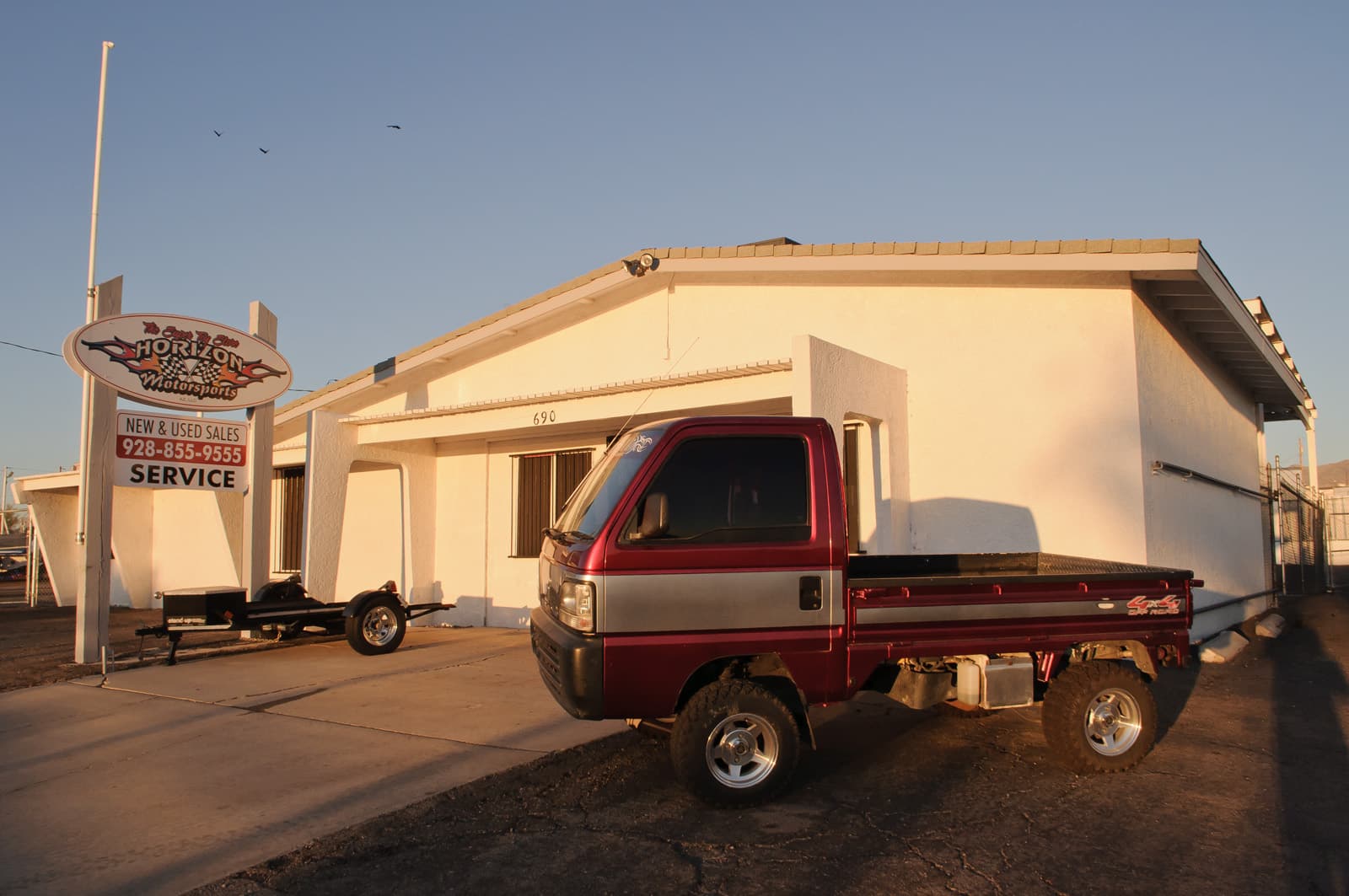
Texas did the thing.
On September 1, 2025, Senate Bill 1816 took effect — the cleanest piece of kei vehicle legislation passed in the United States to date. It was unanimous in both chambers. It didn't need the governor's signature to become law (it cleared the two-thirds vote threshold, making executive approval automatic). It took eighteen months from the first administrative shift at TxDMV to a codified state statute. And it gave the country a working model for what kei truck legalization looks like when the legislature actually wants it to happen.
This is the story of how that bill got across the line, what it does, and why states like Pennsylvania, Vermont, and Maine are watching it closely.
What the bill actually does
SB 1816 amends the Texas Transportation Code to add a new vehicle class: "miniature vehicle." The class is defined functionally — by engine displacement, dimensions, and federal import status — rather than by country of origin or marketing category. That matters, and we'll come back to it.
What a Texas miniature vehicle is, under the statute:
- Engine displacement of 660cc or less
- Length, width, and height within the Japanese kei dimensions
- At least 25 years old at time of import (matching the federal NHTSA exemption)
- Equipped with the same basic safety features Texas requires of other passenger vehicles: working lights, mirrors, signals, brake lights, horn, seat belts (in cabin)
Once classified as a miniature vehicle, the truck is eligible for full Texas title, full passenger registration, and license plates. It pays the same fees as any other passenger vehicle. It must pass the same annual safety inspection. It must pass emissions in counties where emissions testing applies (Harris, Dallas, Tarrant, Collin, Denton, El Paso, Travis, Williamson, Galveston, Brazoria, Ft. Bend, Montgomery, Rockwall, Ellis, Parker, Kaufman, Johnson — the standard list).
What it does not do: override federal law. Driving a kei truck on a federal interstate is still illegal everywhere in the United States, Texas included. This is a state legalization, not a federal one. Stay on US highways, state highways, and local roads — the same restriction that applies to a registered kei truck in any of the other now-legal states.
How Texas got here
The clean version of the timeline runs like this:
Early 2024 — TxDMV begins administratively allowing kei trucks to be titled and registered under existing "specially constructed" and antique vehicle provisions. No statute change, just a clerk-level policy shift. Most county tax offices follow along. A handful refuse, and owners in those counties get inconsistent treatment depending on which agent they happen to draw.
Late 2024 — David McChristian, an Austin-area enthusiast, founds Lone Star Kei. According to coverage by Texas Standard (Texas Public Radio), he made it his personal project to call every single Texas legislator individually. Not email — call. Some called him back. Several of the ones who did became sponsors.
Spring 2025 — Senate Bill 1816 is introduced. The bill is shaped by enthusiast input but drafted with SEMA's help, which is the second story under the story: the Specialty Equipment Market Association — the same trade group that has been quietly winning state-level fights on the registration of vintage and modified vehicles for decades — was deeply involved in the language and the lobbying.
May–June 2025 — Bill passes unanimously through Senate (31-0) and House (146-0). I've covered a lot of state legislation in the last three years; unanimous is rare. It usually means the bill was carefully scoped to avoid the policy fights that would otherwise sink it.
June 2025 — Governor Abbott signs SB 1816. Because of the two-thirds threshold being cleared, signing was a formality.
September 1, 2025 — Bill takes effect. TxDMV begins issuing standard passenger plates and titles to qualifying kei trucks under the new statute.
What "carefully scoped" looks like
The reason SB 1816 passed unanimously, and the reason it's worth studying, is that it carefully sidestepped every common objection raised against kei truck legalization elsewhere:
Safety. SB 1816 doesn't claim kei trucks meet FMVSS — it sidesteps the question entirely by piggybacking on the federal 25-year exemption. Texas isn't saying "these are safe by FMVSS standards." It's saying "the federal government has decided vehicles 25+ years old don't need to meet FMVSS, and we accept that determination." This is a defensible position legally and politically, and it deflates the AAMVA "best practices" argument that has driven the New York and Rhode Island bans.
Speed. Some other state bills (notably Colorado's HB25-1281 and Oregon's SB 1213) explicitly cap kei trucks at sub-55 mph and ban them from limited-access highways. SB 1816 doesn't add a state-level speed restriction — it relies on the federal interstate ban to handle that. Owners can drive on US highways and state highways at posted speed; the federal interstate prohibition handles the "shouldn't be on a 75 mph freeway in a 660cc truck" concern.
Emissions. No carve-out. Kei trucks in Texas pass the same emissions test other vehicles their age would, in the same counties. This was important politically — it avoided creating a perceived loophole.
Local control. Counties and municipalities retain authority to add local restrictions. This was a small concession that probably bought a few legislative votes from urban districts.
The bill is short, specific, and doesn't try to do more than it needs to. That's why it passed.
What this means for current Texas owners
If you already had a kei truck titled under the pre-SB 1816 administrative policy, your title and registration carry over without action required. TxDMV updated the underlying vehicle classification code on its own.
If you're newly importing or buying a kei truck for Texas use, the registration path now looks like this:
- Get insurance. Liability coverage is required before titling. See our insurance directory for companies that quote kei vehicles.
- Annual safety inspection. Required in all 254 counties.
- Emissions inspection if your county requires it (the standard 17-county list above).
- Standard Form 130-U title application at your county tax office. Bring your bill of lading, CBP 7501 customs entry, EPA Form 3520-1, NHTSA Form HS-7, Japanese export certificate, bill of sale, and the inspection certificate.
- The chassis number serves as the VIN. Most Texas county clerks are now familiar with this; if not, ask to speak with a supervisor.
- Receive Texas title, passenger registration, and standard plates.
For a step-by-step walkthrough that applies to most legal states, see our Title & Registration Guide and the Importing Step-by-Step.
Why other states are watching
The SB 1816 model — federal-exemption deference, no novel state safety claim, no carve-out for kei vehicles in the emissions regime, retained local authority — is what gets quoted in committee testimony in Pennsylvania (HB 1205), Maine (LD 1209 working group), and Oregon (SB 1213 → HB 2025 amendment). Colorado's HB25-1281, signed two weeks before SB 1816, went further by adding an explicit speed restriction. Texas didn't need to.
The contrast with Georgia is instructive. Georgia's HB 308 passed both chambers in 2025 — also bipartisan, also broadly supported — and was vetoed by Governor Kemp on May 14, 2025. The reasoning cited in the veto was widely criticized as out of step with current federal import rules. The lesson: the bill text isn't the whole game. Executive branch buy-in matters. Texas had it. Georgia didn't.
The bigger picture
Texas joins a growing list of states that have moved kei trucks from gray-zone tolerance to codified legality in the last 24 months: Massachusetts (RMV policy reversal Sept 2024), Michigan (SOS policy correction Nov 2024), Texas (SB 1816 Sept 2025), and Colorado (HB25-1281, with registrations beginning Jan 2028). Vermont and Pennsylvania have active bills. Oregon's language is moving as an amendment to HB 2025.
At the federal level, President Trump's December 2025 directive to Sec. of Transportation Sean Duffy adds a new layer — but as the Covington & Burling legal analysis makes clear, that's a directive to begin work, not a finalized regulatory change. Federal action will take years even on the optimistic path.
State action is where the wins happen, and Texas wrote the playbook.
Dave has a great breakdown of the actual import paperwork if you're thinking about pulling the trigger now that Texas is settled. And if you're not in Texas but want to lobby your own legislature, the bill text linked above is a clean template — far easier to convince a state senator to support model legislation that's already worked somewhere than to start from scratch.
— Rina