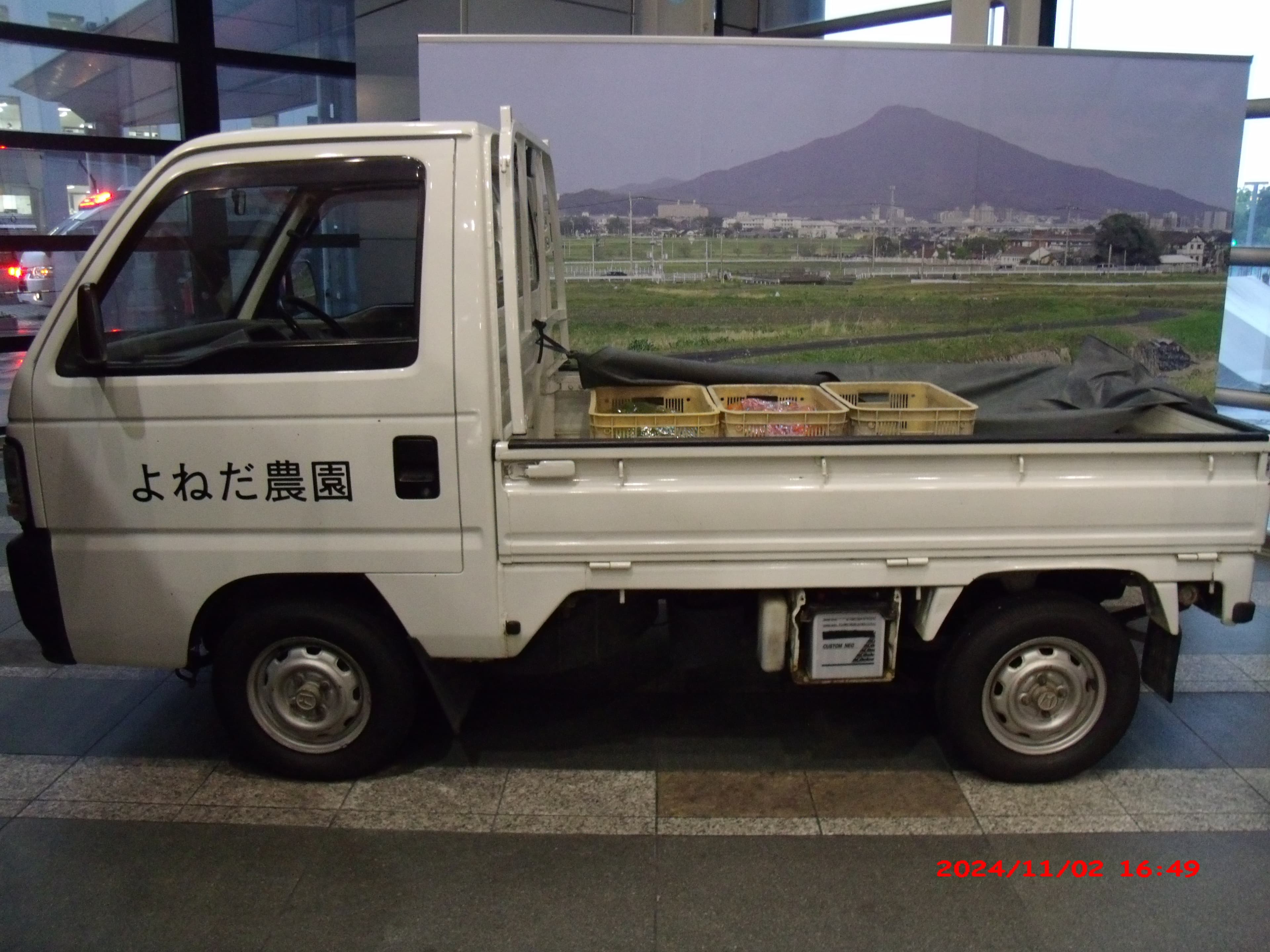
The $11,600 Question
A Reddit post blew up recently: "Got offered $11,600 for my truck. What do you guys think?"
884 upvotes. 104 comments. And the consensus was split — some said take the money, others said hold. The real answer, as usual, depends on the data.
Here's what the data actually shows about kei vehicle values in the US market, and how to figure out what yours is worth.
Why Kei Vehicles Hold Value (When They Shouldn't)
On paper, a 25+ year-old truck with 45 horsepower and no airbags should depreciate like a stone. In reality, the opposite is happening. Three forces are at work:
- Fixed supply — only vehicles 25+ years old can be imported under the NHTSA exemption. The pool of eligible trucks grows by one model year per year, but attrition (rust, accidents, scrapping in Japan) shrinks the total available inventory
- Growing demand — the US kei vehicle community has roughly doubled every two years since 2020. More buyers, same supply
- No substitute — nothing else on the US market does what a kei truck does at this price point. A new UTV costs more. A used Tacoma costs more. A kei truck is its own category
The result: kei vehicles are one of the few used vehicles in the US that appreciate over time.
Factors That Affect Resale Value
Not all kei vehicles are created equal. Here's what moves the price, ranked by impact:
High Impact
- Model — Suzuki Carry commands a 15-20% premium over comparable trucks. Parts availability and name recognition matter
- 4WD vs 2WD — 4WD adds $1,500-$3,000 to resale value. In the US market, 4WD is nearly non-negotiable for most buyers
- Rust — the single biggest value killer. Frame rust can cut value by 40-60%. Surface rust on body panels is tolerable; structural rust is a deal-breaker
- Condition — a truck with maintenance records, clean interior, and working everything will sell for 25-35% more than a "runs and drives" listing
Medium Impact
- Air conditioning — AC adds $800-$1,500 in value, especially for buyers in southern states
- Transmission — manual is preferred by most enthusiasts (+$500-$1,000 over automatic), but automatic appeals to a broader buyer pool
- Mileage — matters less than you'd think. Japanese kei trucks are often low-mileage by US standards. Under 50,000 km is a plus; over 100,000 km starts to discount
- Dump bed / lift gate — functional dump beds add $1,000-$2,500 in value
Lower Impact
- Year — within the 25-year window, a 1995 vs 1999 matters less than condition and features
- Color — white (most common) is neutral. Unusual colors (green, blue, red) can add a small premium for enthusiasts
- Location — trucks sell faster and for slightly more in states with favorable registration laws
Price Ranges by Model (2026 US Market)
Based on Facebook Marketplace listings, dealer lots, and auction results. All prices are for running, titled vehicles in fair-to-good condition with 4WD.
| Model | Low | Typical | High | Trend |
|---|---|---|---|---|
| Suzuki Carry | $7,000 | $10,000-$13,000 | $16,000+ | Strong |
| Honda Acty | $6,500 | $9,000-$12,000 | $15,000+ | Strong |
| Daihatsu Hijet | $5,500 | $8,000-$11,000 | $14,000 | Steady |
| Subaru Sambar | $5,500 | $8,000-$10,500 | $13,000 | Steady |
| Mitsubishi Minicab | $5,000 | $7,500-$10,000 | $12,000 | Stable |
"High" means exceptional. These are low-mileage, rust-free, 4WD trucks with AC, dump beds, maintenance records, and sometimes tasteful mods. The typical range is where 70% of sales land.
Kei vans (Sambar Van, Minicab Van, Every, Vamos) generally sell for $1,000-$2,000 less than their truck counterparts, with one exception: the Honda Vamos, which commands a premium for its unique styling and camper conversion potential.
Kei cars (Cappuccino, Beat, AZ-1) are a different market entirely — enthusiast pricing, with clean examples of the Cappuccino and AZ-1 regularly exceeding $15,000.
Five-Year Market Trend
The numbers don't lie. Average US sale prices for kei trucks, indexed to 2021:
| Year | Avg. Sale Price | Change from Prior Year |
|---|---|---|
| 2021 | $6,200 | — |
| 2022 | $7,400 | +19% |
| 2023 | $8,800 | +19% |
| 2024 | $9,500 | +8% |
| 2025 | $10,200 | +7% |
| 2026 (YTD) | $10,800 | +6% (projected) |
The growth rate has slowed from the 2021-2023 boom, but prices are still climbing. The market has shifted from "hidden gem" to "established niche." Unless US import law changes or Japan floods the market with deregistered trucks, expect steady appreciation of 5-8% per year.
The wildcard: if NHTSA ever changes the 25-year rule (proposals have surfaced in Congress), the supply dynamics shift dramatically. This is unlikely but worth knowing about.
When to Sell vs. When to Keep
Sell if:
- You have a high-demand model (Carry, Acty) in good condition and the price meets your number
- You're facing a major repair ($2,000+ engine or transmission work) on a lower-value truck
- You've moved to a state that restricts kei vehicles on public roads
- You need the money — kei trucks are liquid assets right now
Keep if:
- The truck serves a practical purpose on your property (the utility value exceeds the cash value)
- It's rust-free and low-mileage — these only get more valuable
- You enjoy driving it. Obvious, but people forget
- You paid significantly less than current market value and the appreciation is still working for you
How to Price Your Kei Vehicle
Don't guess. Do the research:
- Facebook Marketplace — search "kei truck," "Suzuki Carry," etc. in your region. Filter by "sold" if available, or note listing prices and check back to see what actually sells
- Dealer lots — check prices at US dealers and importers. Dealer retail is typically 15-25% above private party value
- Japanese auction results — sites like USS auction and auction.co.jp show what trucks sell for in Japan. Add $2,500-$4,000 for import costs to get a rough US floor price
- MiniTruckTalk forums — the classifieds section shows real asking prices from knowledgeable sellers
- Reddit — r/keitruck and r/keicar have regular "what's it worth?" threads. The community is surprisingly accurate
The quick formula: Take the current Japan auction price for your model/year/condition, add $3,000 for import costs, add $1,000-$2,000 for the convenience of a titled, US-located truck. That's your baseline. Adjust up for desirable features (4WD, AC, dump, low miles) and down for issues (rust, high miles, no AC).
Where to Sell
Ranked by net proceeds (highest to lowest):
- Facebook Marketplace — largest buyer pool, no fees, expect to deal with some tire-kickers. List with detailed photos and a thorough description. Kei truck listings get attention. Typical sell time: 1-3 weeks
- Kei truck forums (MiniTruckTalk, Reddit) — smaller audience but more serious, knowledgeable buyers. Less haggling. Good for rare or specialty trucks
- Craigslist — still works, especially in rural areas where kei trucks are popular for farm use
- Dealer consignment — the dealer sells it for you and takes 10-15%. Less money, but zero hassle. Good option if your time is worth more than the margin
- Dealer trade-in — fastest but lowest return. Expect 20-30% below private party value. Only if you need it gone today
Mods That Help (and Hurt) Resale Value
Adds value:
- Lift kit (quality brands like Rough Country or custom fabrication) — +$500-$1,500
- LED headlight conversion — +$200-$400
- Bed liner or spray-in coating — +$200-$500
- Quality stereo/Bluetooth upgrade — +$100-$300
- Functional accessories (toolboxes, bed racks) — varies, but buyers notice
Neutral or negative:
- Vinyl wrap — personal taste, some buyers love it, others see removal cost
- Exhaust modifications — enthusiasts appreciate it, practical buyers don't care
- Extreme lifts (6"+) — narrows your buyer pool significantly
- Stickers and cosmetic mods — you're spending money that won't come back
- Repainted in a non-stock color — raises questions about what the paint is hiding
The golden rule: reversible, functional mods add value. Permanent, cosmetic mods don't.
Maximize Your Resale Value
If you're planning to sell in the next 6-12 months:
- Gather your records — maintenance receipts, import paperwork, title history. Organized records signal a cared-for truck and justify premium pricing
- Fix the cheap stuff — replace burned-out bulbs, fix the horn, top off fluids, clean the interior. A $50 detail job adds $500 in perceived value
- Don't fix the expensive stuff — if the AC compressor is dead, disclose it and price accordingly. Spending $800 to add $600 in value is bad math
- Take great photos — 15-20 photos minimum. All angles, bed, interior, engine bay, undercarriage (especially frame rails). Good photos sell trucks faster and for more money
- Write a real description — year, make, model, mileage (in km and miles), 4WD/2WD, AC status, transmission, any mods, any issues. Honesty builds trust and reduces time-wasters
- Price slightly high — list 10% above your target. Everyone negotiates. If you price at your bottom, you'll sell below it
The Bottom Line
That Reddit poster's $11,600 offer? For a clean, 4WD Suzuki Carry with AC, that's right in the middle of the 2026 market. Whether it's a good deal depends on what they paid, what condition it's in, and whether they'd rather have the truck or the cash.
The kei vehicle market rewards patience and maintenance. Buy smart, keep it clean, document everything, and you'll likely get your money back — or more — when it's time to sell.
Looking for current market prices? Check our vehicle catalog for specs and pricing on every model. Ready to buy instead of sell? Start with our Complete Buying Guide or browse trusted dealers.