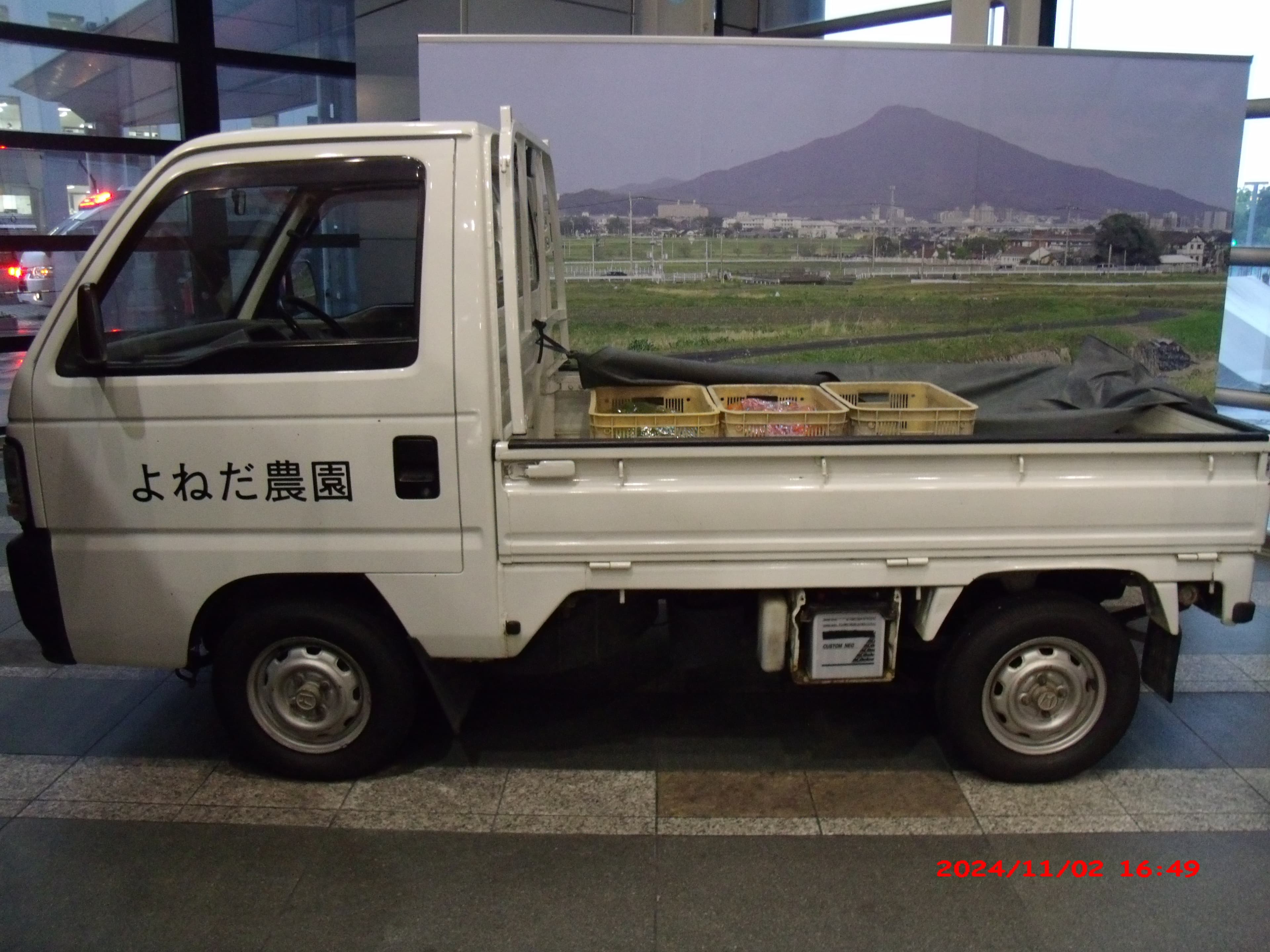
"Why Would You Spend That Much on a Tiny Truck?"
This question blew up on Reddit a while back — over a thousand upvotes and 200+ comments arguing back and forth about whether kei trucks are a smart buy or a money pit. The original post basically asked: "Why tie up so much money in a truck that's slower than a Civic?"
And look, it's a fair question. I asked myself the same thing before I bought Old Faithful. When someone at a barbecue in Boise heard I'd spent $8K on a 660cc Japanese truck, they looked at me like I'd lost my mind. "For eight grand you could've gotten a used F-150," they said.
They weren't wrong about the F-150. But they were wrong about the math. Badly wrong. Let me break this down the way I wish someone had broken it down for me.
The Real Numbers: What a Kei Vehicle Actually Costs
Let's start with what you're actually spending, from day one through year five.
Purchase price runs $5,000-$12,000. That's the range for a solid, running kei truck or van from a US dealer, titled and ready to drive. Import yourself and you might save $1,000-$2,000, but you'll spend weeks dealing with shipping, customs, and paperwork. Most people go the dealer route, and honestly, that's what I'd recommend for your first one. Save the importing adventure for truck number two — and yes, there will be a truck number two.
Import and setup costs (if importing) add $1,000-$3,000 for ocean shipping, customs, broker fees, and port pickup. If you're buying from a US dealer, this is already baked into the purchase price, so don't worry about it.
Registration runs $200-$500, and it varies wildly by state. Some states are straightforward, others make you jump through hoops. But it's a one-time cost either way.
Insurance is where kei trucks start winning. Liability-only runs $25-$50/month in most states. Full coverage is still cheap because the vehicle value is low and claims are rare. Compare that to $150-$250/month for a full-size truck. Rina Hayashi did a deep dive on insurance costs if you want the full picture, but the short version is: it's cheap.
Maintenance runs $200-$500/year. Oil changes, filters, the occasional belt. These are simple engines — 660cc, three cylinders, minimal electronics. Parts are available from Japan (usually cheap with shipping), and any mechanic who isn't scared of the steering wheel being on the wrong side can work on them. I've spent more maintaining my lawn mower. Dave Russo would remind me to budget for a timing belt every 60K km, but even that's a $200-300 job.
Fuel costs basically nothing. This is the kicker. Kei trucks get 35-50 MPG. Let me say that again. Thirty-five to fifty miles per gallon. If you drive 5,000 miles a year (typical for a second vehicle or farm truck), you're spending $350-$500 on gas at $3.50/gallon. A full-size truck doing the same miles at 15 MPG? That's $1,167. Old Faithful costs me about $30 a month in gas. I spend more on coffee.
The 5-Year Showdown
Here's the comparison everyone wants to see. Total cost of ownership over five years, including purchase, registration, insurance, maintenance, and fuel. I'm using middle-of-the-road numbers for each category.
| Kei Truck | Used Full-Size Truck | UTV | ATV | Golf Cart | |
|---|---|---|---|---|---|
| Purchase | $8,000 | $22,000 | $14,000 | $8,000 | $7,000 |
| Registration (5yr) | $400 | $600 | $0* | $0* | $0* |
| Insurance (5yr) | $2,500 | $7,500 | $1,500 | $1,000 | $500 |
| Maintenance (5yr) | $1,750 | $5,000 | $3,000 | $2,000 | $1,000 |
| Fuel (5yr) | $2,000 | $5,800 | $2,500 | $1,500 | $600** |
| 5-Year Total | $14,650 | $40,900 | $21,000 | $12,500 | $9,100 |
| Street Legal? | Yes | Yes | Usually no | No | Limited |
| Highway Legal? | State dependent | Yes | No | No | No |
| Resale Value | 70–100% | 50–65% | 50–60% | 45–55% | 40–50% |
*UTVs, ATVs, and golf carts typically don't require registration or standard road insurance, but they also can't legally drive on most public roads.
**Electric golf carts have minimal "fuel" cost but battery replacement ($1,500–$3,000) looms around year 4–5.
A few things jump out immediately.
The full-size truck costs nearly 3x more over five years. And I used a modest $22,000 purchase price — plenty of used trucks are $30K+ now. If you're buying a kei truck for farm work, property hauling, or short-distance commuting, you're paying full-size truck insurance and fuel costs for capabilities you don't need.
The ATV is cheaper, but it can't drive on roads. If you need to haul stuff on public roads — even just a few miles to the hardware store — an ATV doesn't cut it. You'd need a trailer and a tow vehicle, which adds cost fast.
The golf cart is cheapest, but it's a golf cart. No 4WD. No dump bed. Can't haul 800 pounds of gravel. Limited to 25 MPH on designated roads.
The Resale Secret
Here's something the Reddit skeptics never factor in: kei trucks hold their value like crazy.
The US market has more demand than supply. The 25-year import rule means only a limited window of models can come in each year. Well-maintained trucks routinely sell for what the owner paid — sometimes more. I bought my '97 Carry for $7,500 in 2024, and I could sell it tomorrow for $8,000.
Try that with a used F-150. Buy it for $22K, drive it for three years, sell it for $14K if you're lucky. That's $8,000 in depreciation alone — basically the entire cost of the kei truck.
Over five years, if your kei truck retains 85% of its value, your real cost of ownership drops to around $6,000–$8,000. That's what you'd spend on depreciation alone with a full-size truck, before a single gallon of gas.
When Does a Kei Truck Make Sense?
Be honest with yourself about what you need. A kei truck makes brilliant financial sense when you need a farm or property vehicle for hauling feed, tools, firewood, and mulch — that's the killer use case, and it's what convinced me in the first place. It makes sense when you want a cheap second vehicle for short commutes, grocery runs, and trips to the dump, because insurance on a second-vehicle kei truck is dirt cheap. It makes sense when you're replacing a UTV or ATV for mixed use, since a kei truck does off-road AND public roads. And it makes absolutely killer sense for small business hauling — landscapers, market farmers, mobile vendors. I did some landscaping work around Boise when I first got Old Faithful, and she paid for herself in fuel savings within two years.
If you look at the 5-year numbers above and think "that's the vehicle for me," trust that instinct. The math is on your side.
When Should You Skip the Kei Truck?
I love these trucks, but I'm not going to pretend they're perfect for everyone.
If you need highway speed, this isn't your vehicle. Kei trucks top out at 60-70 MPH and they're not fun at that speed. If your commute involves merging onto I-95, get something else. If you need to tow heavy loads, the 1,000-1,500 lb max towing capacity means boats and campers are out. You need a real truck for that. If you need crash protection, let's be real — these are small vehicles with minimal crumple zones. They weren't designed for American highway speeds. For low-speed farm and town use they're fine, but for highway commuting, think carefully.
Check your state's regulations too — some states limit kei trucks to off-highway use only or require extensive modifications. And if you want a primary family vehicle, remember: two seats, no backseat, no car seats. This is a tool, not a family hauler. Emi would absolutely confirm this — she loves riding in Old Faithful but she's not pretending it's a practical family car.
What the Spreadsheet Doesn't Capture
Here's the thing nobody factors into the math, and honestly it might matter more than the numbers.
Every single time I park my Carry somewhere, someone walks up to talk about it. At the hardware store, the gas station, the farmer's market — everywhere. It's the greatest conversation starter I've ever owned. I've made actual friends because of this truck. Miso (my cat) might disagree about whether I need more friends, but still.
There's a whole community of kei truck owners who organize meets, share tips, help each other source parts. It's not like owning a Camry. Nobody bonds over a Camry.
And the fun factor — look, driving a kei truck is just fun. The manual transmission, the right-hand drive, the feeling of driving something completely different from everything else on the road. You can't put a dollar value on grinning every time you turn the key. I genuinely believe the kei truck is the most fun you can have for under $10K. The Cappuccino might edge it out on pure driving thrills, but for the combination of utility and joy? Nothing touches it.
When that guy at the barbecue told me I wasted $8K, I asked him how much he spent on his bass boat last year. He shut up pretty quick.
The Verdict
If you're buying a kei truck expecting a full-size truck replacement, you'll be disappointed. If you're buying one as the incredibly capable, absurdly efficient, surprisingly fun utility vehicle it actually is, the math works out overwhelmingly in your favor.
Over five years, you'll spend less than half what a used full-size truck would cost you — and you might actually make money when you sell it.
Is it worth it? Run the numbers on your specific situation, but for most people reading this, yeah. It really is.
Want to dig deeper into the numbers?
- Complete Buying Guide — everything you need to know before purchasing
- Import Cost Calculator — plug in your numbers and get a personalized estimate