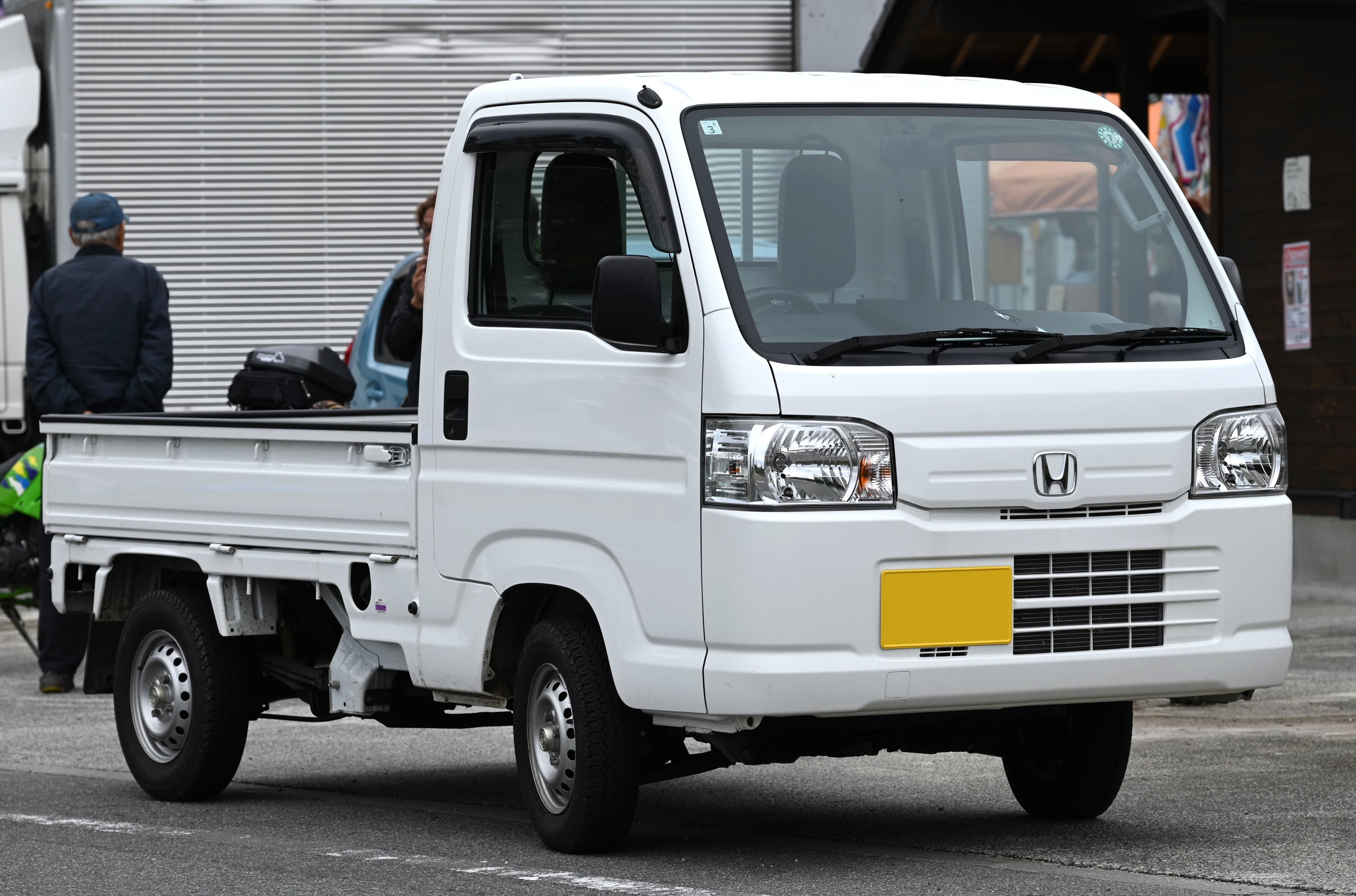
This is the debate that never dies in kei truck communities. The Honda Acty and the Suzuki Carry are the two most popular kei trucks in America, and choosing between them is the first real decision most buyers face.
I've owned both. Here's the honest comparison.
The Spec Sheet
| Honda Acty (HA7) | Suzuki Carry (DA63T) | |
|---|---|---|
| Engine | E07Z 656cc 3-cyl | K6A 658cc 3-cyl |
| Horsepower | 48 hp | 50 hp |
| Layout | Mid-engine | Front-engine |
| 4WD | Real-time (auto) | Part-time (manual) |
| Transmission | 5MT / 3AT | 5MT / 3AT / 4AT |
| Bed Length | 6.1 ft | 6.2 ft |
| Payload | 770 lbs | 770 lbs |
| Price Range | $6,000-$14,000 | $5,000-$12,000 |
| Parts Availability | Very Good | Best |
| Community Size | Large | Largest |
On paper, they're almost identical. The real differences are in how they drive and how they work.
Where the Acty Wins
Driving Feel
This is the Acty's killer feature. The mid-engine layout puts the engine under the bed, not in front of the cab. This gives the Acty better weight distribution — especially when loaded. The rear wheels have more grip, the steering is lighter and more responsive, and the whole truck feels more balanced.
The Carry's front-engine layout feels more like a conventional truck — nose-heavy, with the rear end getting light when empty. The Acty feels like a go-kart regardless of load.
Traction When Loaded
The Acty's mid-engine layout means weight is already centered over the rear wheels. Add cargo and the weight distribution gets even better. The Carry puts all the engine weight up front — add cargo to the back and you get a seesaw effect.
For hauling on slippery surfaces (mud, wet grass, gravel), the Acty has a measurable traction advantage.
4WD System
The Acty's real-time 4WD is brilliant. It monitors wheel slip and automatically sends power to all four wheels when needed. No switches to flip, no stopping to engage — it just works.
The Carry's part-time 4WD requires manual engagement via a lever or button. More control, but you have to remember to engage it BEFORE you get stuck, not after.
Where the Carry Wins
Price
The Carry is consistently $1,000-3,000 cheaper than an equivalent Acty. For budget-conscious buyers, that's significant — it's the difference between a $6,000 purchase and a $9,000 purchase.
Parts and Community
The Carry is the most common kei truck in America. The Mazda Scrum is mechanically identical (more parts interchangeability). The Suzuki Every van shares the same platform. This gives the Carry the largest parts ecosystem and the biggest community of owners sharing knowledge.
The Acty community is strong but smaller. Honda-specific parts sometimes take longer to source.
Simplicity
The Carry's front-engine layout is conventional and accessible. Open the hood (or flip the cab) and everything's right there. Oil changes, belt replacements, and basic maintenance are straightforward.
The Acty's mid-engine layout means accessing the engine requires removing the bed or crawling underneath. It's not terrible — but it's more involved than the Carry for every maintenance task.
Automatic Options
The Carry offers more automatic transmission options, including a 4-speed automatic in later models. The Acty's automatic is a 3-speed that's adequate but not as refined.
The Verdict
Buy the Carry if: You want the safest, cheapest, most-supported first kei truck. You value simplicity and community over driving dynamics.
Buy the Acty if: You care about how it drives. You want better traction under load. You're willing to pay more and work slightly harder for maintenance in exchange for a more engaging driving experience.
The truth: You can't go wrong with either. Both are reliable, both haul 770 lbs, both get 40 mpg, and both will make you smile. The Carry is the head choice. The Acty is the heart choice. Pick whichever organ you trust more.