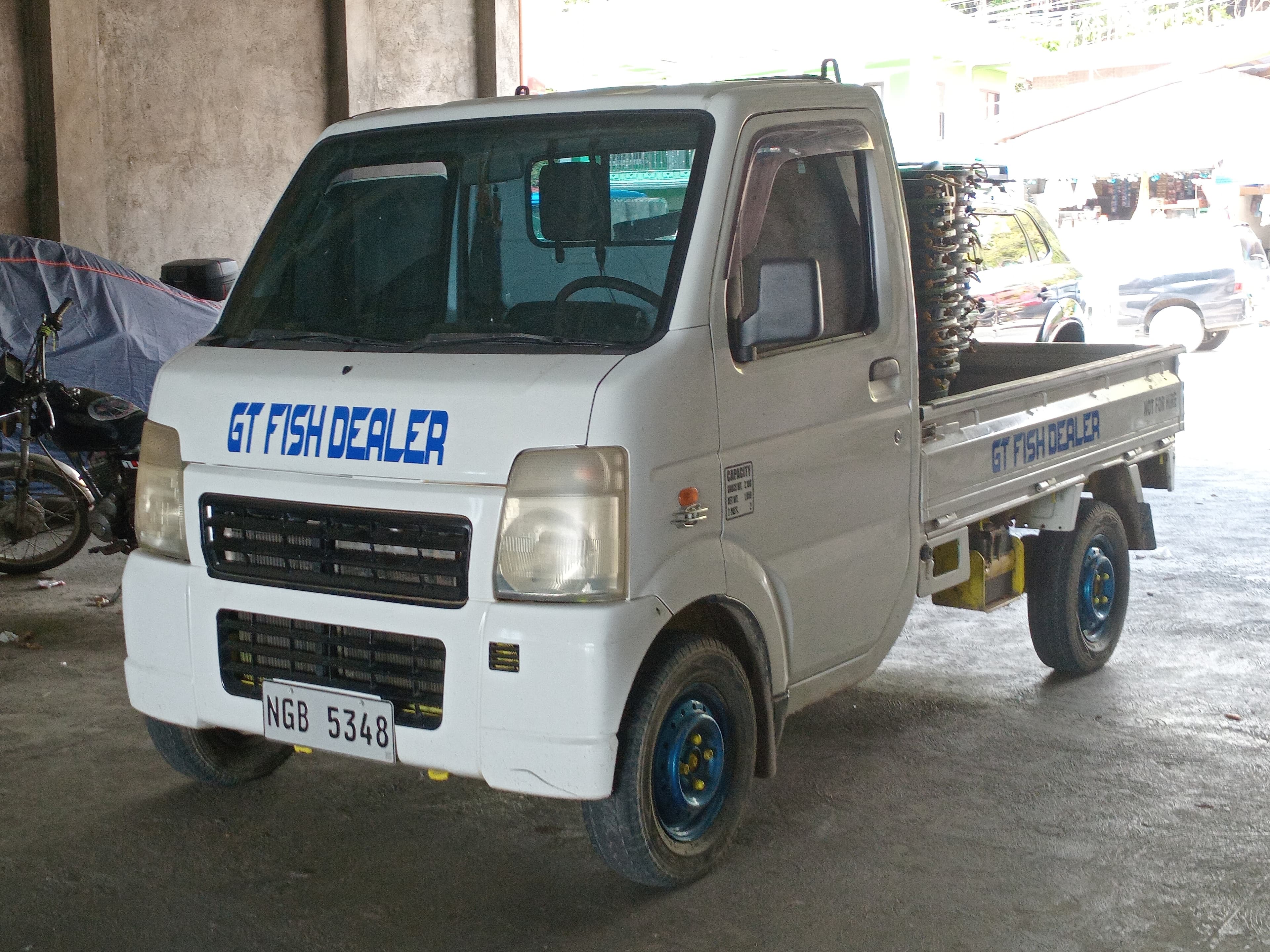
Why Facebook Marketplace?
I found The Van — my '98 Acty — on Facebook Marketplace at 11pm on a Wednesday. Clean title, $5,800, picked it up that Saturday. But not everyone is that lucky.
Marketplace has become one of the biggest secondary markets for kei trucks in the US. Better prices than dealers, but more risk. Here's what I've learned — and what I've seen go wrong.
Before You Start: Know Your Market
Typical Marketplace Pricing
| Condition | Title Status | Typical Price |
|---|---|---|
| Excellent (low miles, no rust, runs great) | Clean title | $8,000–$15,000 |
| Good (some wear, runs well) | Clean title | $5,000–$9,000 |
| Fair (high miles, needs work) | Clean title | $3,500–$6,000 |
| Any condition | No title / off-road only | $2,000–$5,000 |
| Parts truck / non-running | No title | $500–$2,500 |
No title = big risk. Without a title, you may never be able to register the truck for road use. Some states won't title a vehicle without proper import documentation. Only buy a titleless truck if you're okay with off-road-only use.
Red Flags: When to Walk Away
Immediate Deal-Breakers
-
No title and vague excuses — "Title is on the way," "I lost it," "My buddy imported it." If they can't produce a title, the truck may have been illegally imported or stolen.
-
Price way below market — A running, titled Suzuki Carry for $2,000? That's either a scam, a flood vehicle, or has undisclosed problems.
-
Won't let you inspect in person — Any seller who wants you to commit before seeing the truck is a red flag. Always inspect in person.
-
Asks for payment via wire, crypto, or gift cards — Scam. Legitimate sellers accept cash, cashier's check, or escrow services.
-
Seller just got the truck — "Just bought it but my wife says no" or "Bought it and never used it." Sometimes legitimate, often a flipper hiding problems.
-
Can't answer basic questions — If the seller doesn't know the model year, engine type, or mileage, they may not know the truck's real condition either.
Yellow Flags (Proceed with Caution)
- Out-of-state title — not necessarily bad, but adds complexity to your registration
- Montana LLC title — legal gray area; some states don't accept these for re-registration
- Rebuilt/salvage title — the truck was totaled at some point; may be fine mechanically but hurts resale value
- "Runs great, just needs..." — if it just needs a $50 part, why didn't they fix it?
Questions to Ask the Seller
Before making the trip to inspect, ask these over Messenger:
Documentation Questions
- "Do you have the title in your name?" — Most important question. You want a clean title in the seller's name.
- "Do you have the original import documents?" — Export certificate, customs entry, EPA/DOT forms. These prove legal import.
- "How long have you owned it?" — Longer ownership = more likely to know the truck's history.
- "Why are you selling?" — Listen for red flags (mechanical issues disguised as "no time").
Truck-Specific Questions
- "What's the exact model and chassis number?" — Cross-reference with our truck database to verify specs.
- "What's the real mileage in kilometers?" — Japanese odometers read in km. 100,000 km = 62,000 miles.
- "Has it been in any accidents?" — Check for repair history.
- "What maintenance have you done?" — Recent oil change, timing belt, etc.
- "Where did it come from in Japan?" — Trucks from northern Japan (Hokkaido, Tohoku) tend to have more rust from salt.
- "Is it 2WD or 4WD? Does the 4WD work?" — Test this during inspection.
Registration Questions
- "Is it currently registered and insured?" — A currently registered truck is much easier to transfer.
- "What state was it titled in?" — Verify it's registered in a state that actually titles kei trucks.
The Inspection: What to Check
Bring a friend who knows vehicles, or pay a mobile mechanic ($100-150) to do a pre-purchase inspection. Best money you'll spend.
Exterior (10 minutes)
- Rust — check the frame, bed floor (lift the rubber mat), cab corners, rocker panels, and wheel wells. Surface rust is normal on a 25+ year old truck. Frame rust that's eaten through is a deal-breaker.
- Body alignment — do the doors close properly? Gaps should be even. Uneven gaps suggest prior accident or frame damage.
- Glass — cracked windshields are expensive to replace (JDM-specific glass).
- Tires — check tread depth and age. Kei truck tires are small and cheap ($50-80 each), but factor it into your offer.
- Lights — headlights, turn signals, brake lights, reverse lights. All should work.
Under the Truck (5 minutes)
- Frame — look for major rust, cracks, or welds that suggest repair
- Oil leaks — check where it's parked for drip spots. Some seepage is normal on old engines; puddles are not.
- Exhaust — check for holes, heavy rust, or patches
- Suspension — push down on each corner; it should bounce once and settle. Multiple bounces = worn shocks.
Engine (10 minutes)
- Cold start — ask the seller NOT to warm it up before you arrive. Cold start reveals problems (hard start, smoke, knocking).
- Smoke — blue smoke = oil burning. White smoke = head gasket. Black smoke = running rich (usually fixable).
- Idle — should be smooth and steady. Rough idle suggests tune-up needed or worse.
- Temperature — let it run for 5-10 minutes and watch the temp gauge. Should stabilize in the middle.
- Oil — pull the dipstick. Oil should be amber/brown, not black or milky (milky = coolant mixing = bad).
Driving (15 minutes)
- Clutch — should engage smoothly without slipping or grinding
- Transmission — shift through all gears. Any grinding or difficulty = transmission problems.
- 4WD — engage and disengage 4WD. Should click in without grinding.
- Brakes — should stop straight without pulling to one side
- Steering — should be responsive without excessive play or wandering
- Listen — any knocking, whining, or unusual sounds at speed?
Negotiation Tips
- Start lower than you want to pay — leave room to meet in the middle
- Use issues as leverage — worn tires, needed maintenance, and minor problems are all fair negotiation points
- Know the market — reference comparable listings and our cost of ownership guide for realistic values
- Cash talks — bringing cash and being ready to buy today gives you leverage
- Be willing to walk away — there are always more trucks. Don't get emotionally attached before you own it.
After the Purchase
- Get a signed bill of sale with the date, price, VIN/chassis number, and both parties' names and signatures
- Get the title signed over — the seller must sign the title to transfer ownership
- Get insurance immediately — see our insurance directory
- Title and register in your state within the required timeframe — see our state regulations
- Do a full service — oil change, filters, fluid check, brake inspection, regardless of what the seller says was done
Alternatives to Marketplace
If Marketplace feels too risky:
- Established dealers — higher prices, but title in hand, some offer warranties
- Japanese auction importers — you pick the truck, they handle everything
- Craigslist — similar to Marketplace, same rules apply
- Kei truck Facebook groups — the community self-polices; scammers get called out fast
- BringATrailer / Cars & Bids — higher-end, but more transparency and documentation
The Bottom Line
Facebook Marketplace can be a great way to find a kei truck at a fair price. The key rules:
- Always inspect in person
- Verify the title before paying
- If it seems too good to be true, it is
- Bring cash, a friend, and a checklist