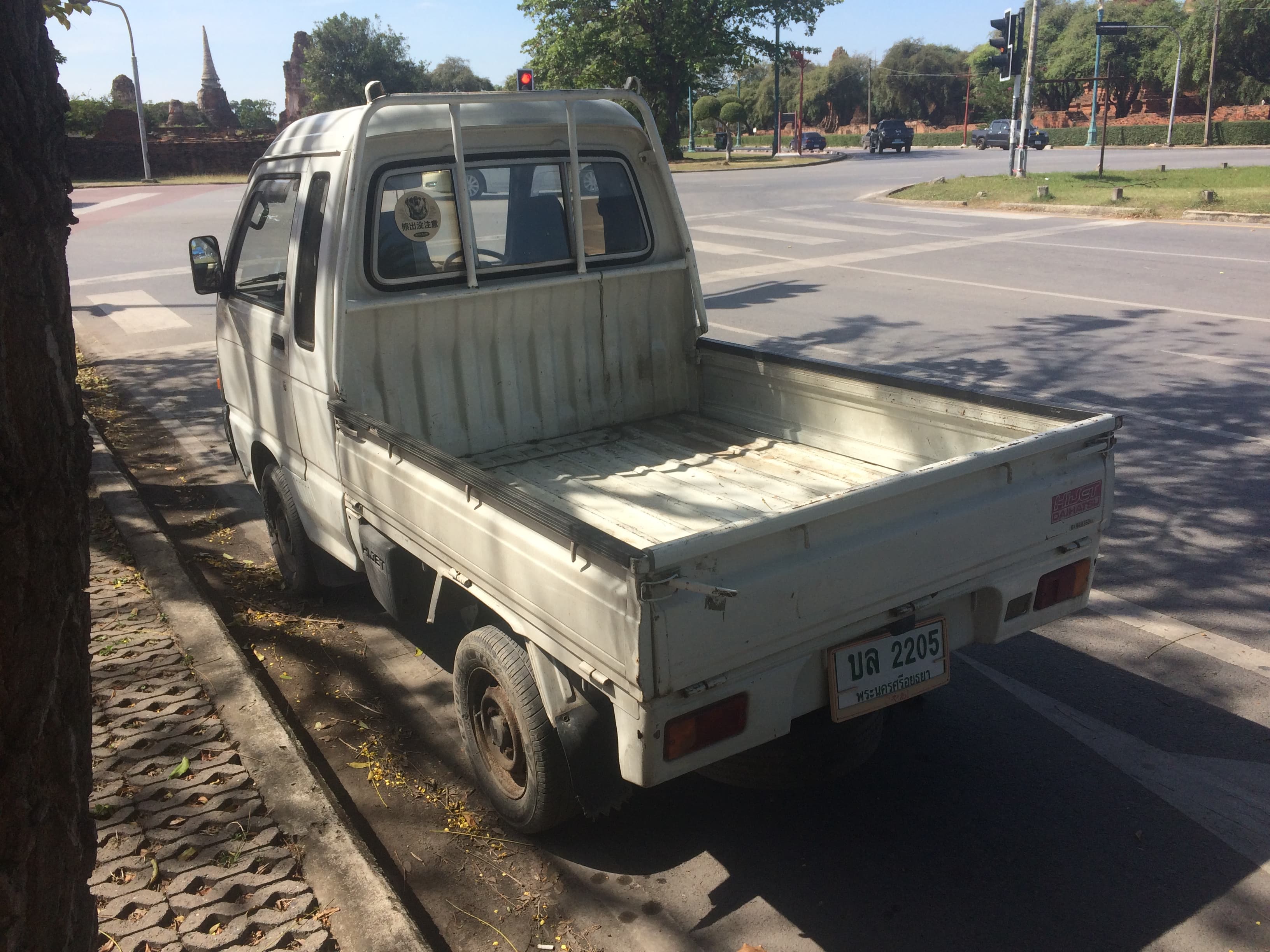
I'll be straight with you: I lost my first Hijet to rust. Not the engine, not the transmission, not an accident. Rust ate through the frame rails in three places and the truck became structurally unsafe. It had 60,000 km on it. The drivetrain was perfect. But you can't drive on a frame that's turning to powder.
That truck taught me everything I know about rust prevention. Here's what I wish someone had told me before I bought it.
Where Kei Vehicles Rust
Every kei vehicle has the same weak spots. Learn these and check them on any vehicle you're considering buying — or own right now.
Frame Rails
The most critical area. Frame rust is structural and potentially unfixable. On kei trucks, the frame runs the full length of the vehicle and supports everything — bed, cab, engine, suspension. Once frame rails perforate (rust through), the vehicle's structural integrity is compromised.
How to check: Get under the truck with a flashlight and a screwdriver. Tap the frame rails along their full length. Solid metal rings. Rust sounds dull. If the screwdriver pushes through — that's perforation, and it's serious.
Bed Floor
The most commonly rusted area on kei trucks. Water collects under the rubber bed mat, sits there for years, and eats through the sheet metal from underneath.
How to check: Pull up the bed mat. If it's stuck down, that's already suspicious — it's been sitting in moisture. Look for bubbling, flaking, or soft spots.
Cab Corners
Where the cab meets the rocker panels, water gets trapped behind body seams. This is mostly cosmetic but can spread if ignored.
Wheel Wells
Salt spray from winter driving concentrates here. The arches above the wheels are thin metal and rust first.
Rocker Panels
The panels below the doors. Water enters from above (door seals, windshield) and below (road spray) and gets trapped.
Where the Rust Comes From (Geography Matters)
In Japan, kei vehicles from different regions have dramatically different rust profiles:
| Region | Salt Use | Rust Risk | Notes |
|---|---|---|---|
| Hokkaido | Heavy | Very High | Harsh winters, heavy road salt |
| Tohoku (northern Honshu) | Heavy | High | Cold, snowy, salted roads |
| Niigata / Sea of Japan coast | Heavy | High | Snow belt, salt + humidity |
| Kanto (Tokyo area) | Low | Low-Medium | Mild winters, some coastal exposure |
| Kansai (Osaka/Kyoto) | Low | Low | Mild climate |
| Kyushu | Minimal | Very Low | Warm climate, minimal salt |
| Shikoku | Minimal | Very Low | Warm, protected from harsh weather |
| Okinawa | None | Low | Tropical, but salt air from ocean |
When buying: Ask where in Japan the vehicle lived. The auction sheet or export paperwork often lists the prefecture. A truck from Hokkaido with 50,000 km may be rustier than one from Kyushu with 100,000 km.
Prevention: The Annual Routine
If you do one thing for your kei vehicle every year, make it this.
Undercoating (Once Per Year, Before Winter)
Apply a rust-preventive undercoating to the entire undercarriage — frame, suspension components, wheel wells, bed floor underside.
Best products:
- Fluid Film — lanolin-based, self-healing, creeps into seams. The gold standard. About $15/can, need 3-4 cans for a kei vehicle.
- NH Oil Undercoating — similar to Fluid Film, slightly thicker. Popular in the Northeast.
- Woolwax — lanolin-based, good penetration. Available as DIY spray.
Do NOT use: Rubberized undercoating (like Rust-Oleum spray) on a vehicle that already has rust. It traps moisture underneath and accelerates the problem. Rubberized coatings only work on clean, rust-free metal.
Application: Jack the vehicle up, remove the wheels for better access, spray everything underneath. Get into the seams, box sections, and anywhere water could collect. Takes about 2 hours.
Wash the Undercarriage (After Winter Driving)
If you drive on salted roads, wash the undercarriage at a car wash with an undercarriage sprayer at least monthly during winter. Salt is the accelerant — remove it and the rust slows dramatically.
Fix Paint Chips Immediately
Any exposed bare metal is a rust starting point. Touch-up paint or clear nail polish on chips — it doesn't need to be pretty, it just needs to seal the metal.
Keep Drain Holes Clear
Every kei vehicle has drain holes in the doors, rocker panels, and bed. These allow water to exit. If they're clogged with dirt or undercoating, water pools inside the panels and rusts from within. Check and clear them once a year.
Treatment: What to Do When Rust Already Exists
Surface Rust (Orange spots, rough paint)
This is cosmetic and fully treatable.
- Sand or wire-brush the rust off until you hit clean metal
- Apply rust converter (Rust-Oleum Rust Reformer or equivalent)
- Prime with a rust-inhibiting primer
- Paint or undercoat
Scale Rust (Flaking, pitting, raised bubbles)
More serious but still treatable if the metal hasn't perforated.
- Grind off the scale with a flap disc on an angle grinder
- Treat remaining surface rust with converter
- Apply body filler if the surface is pitted
- Prime, paint, and undercoat heavily
Perforation (Holes, soft spots, structural weakness)
This is where it gets expensive or terminal.
- Non-structural panels (bed floor, fenders): Can be patched with weld-in panels. Cost: $200-500 at a body shop.
- Structural areas (frame rails, mounting points): May be repairable with welded reinforcement plates, but this needs a competent welder who understands structural loads. Cost: $500-2,000+.
- Extensive frame perforation: The vehicle may not be economically repairable. A frame swap from a cleaner donor is possible but expensive.
The Buying Checklist
Before buying any kei vehicle, do these checks. Every single time. No exceptions.
- Get under it with a flashlight
- Tap frame rails — listen for solid vs hollow
- Check bed floor under the mat
- Look at cab corners and rocker panels
- Check wheel wells for rust-through
- Ask where in Japan it lived
- If the seller won't let you inspect underneath — walk away
A clean-looking kei vehicle on top can be rotten underneath. The paint and body panels are easy to make look good. The frame doesn't lie.
My Maintenance Schedule
| Task | Frequency | Cost | Time |
|---|---|---|---|
| Fluid Film undercoat | Annually (fall) | $50 | 2 hours |
| Undercarriage wash | Monthly in winter | $5 | 10 min |
| Touch up paint chips | As needed | $10 | 15 min |
| Clear drain holes | Annually | $0 | 30 min |
| Full inspection underneath | Every 6 months | $0 | 30 min |
| Annual total | ~$110 | ~5 hours |
$110 and 5 hours per year to protect a $7,000+ vehicle. That's the best insurance money you'll ever spend.