Overview
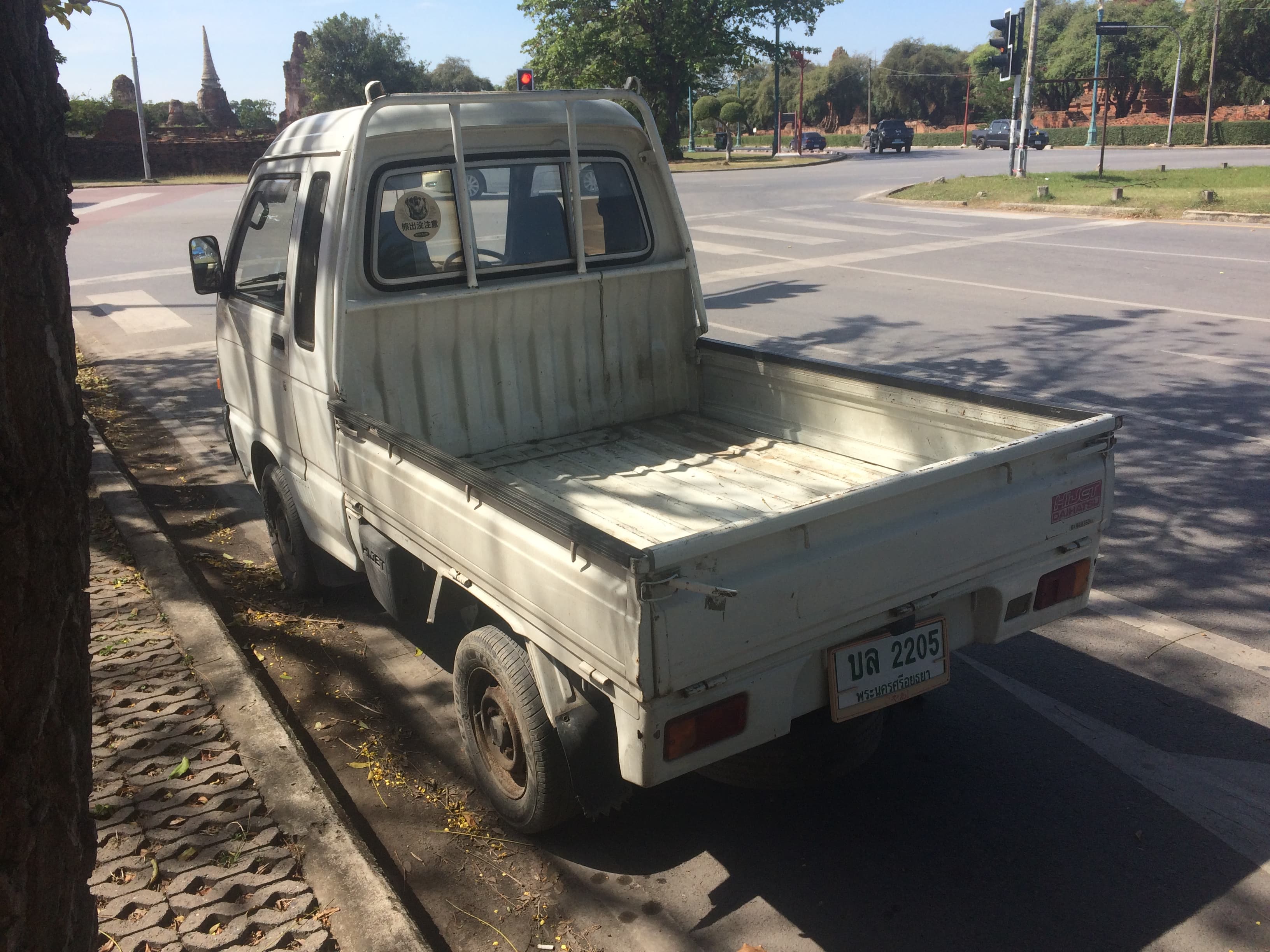
The Hijet survived another Scranton winter. Barely. I pulled it into the garage last Saturday, put it on the lift, and spent an hour just looking. Road salt is a war of attrition against every bolt, bracket, and panel on the underside of your truck, and this winter was particularly bad. Three nor'easters, two ice storms, and one memorable week where the temperature didn't break freezing for nine straight days.
Your kei truck needs a spring check-up. Not because I'm being dramatic — because these trucks are 25-35 years old, they weigh 1,600 lbs with body panels thinner than a full-size truck's fender, and they sit low enough to catch every splash of salt-laden slush from the road.
This is my annual checklist. I run through it on every kei truck that comes through Russo's Garage in March or April. Print it, take it to the garage, work top to bottom. My general maintenance guide covers the year-round basics — this is the spring-specific list.
The Undercarriage — First Priority
This is the big one. Everything else is routine. This is the one that saves your truck.
Pressure Wash the Underbody
Before you inspect anything, blast the undercarriage with a pressure washer. Get every surface — frame rails, suspension components, inside the wheel wells, the underside of the bed. You can't see rust under a quarter-inch of dried salt mud.
If you don't have a pressure washer, a self-serve car wash with an underbody spray works. I take the Hijet and The Cab to one every spring. It costs $6 and it's the best $6 I spend all year.
Rust Inspection Checklist
Work your way across the truck and check these specific spots. I'm listing them in order of "most likely to rust first" based on every Sambar, Carry, Hijet, and Minicab I've worked on:
- Rear frame rails behind the rear axle — the number one rust spot on kei trucks. Salt collects here and sits. Poke with a screwdriver. If it goes through, you have a structural problem.
- Cab mounts — where the cab bolts to the frame. Rust here means the cab is loosening from the chassis.
- Rocker panels / sill plates — the seam between the floor and the outer body. Moisture gets trapped in the seam.
- Wheel well lips — especially the rear wells on trucks. Mud and salt pack in the lip and eat from the inside out.
- Exhaust hangers and heat shields — these corrode faster than anything else because they're exposed and heat-cycled.
- Brake lines — steel brake lines rust from the outside in. A rusted brake line is a catastrophic failure. If you see flaking or deep pitting, replace the line. No exceptions.
What to Do About Rust
- Surface rust (orange discoloration, rough texture): Wire brush or wire wheel on a drill, treat with a rust converter (Rust-Oleum Rust Reformer is my go-to), then spray with rubberized undercoating. 30 minutes per spot.
- Scale rust (flaking, deeper penetration): Grind back to clean metal, rust converter, then build up protection with POR-15 or chassis saver paint. An hour per spot.
- Through-rust (holes, structural compromise): This needs welding or professional repair. Don't undercoat over holes — you're hiding the problem, not fixing it. If it's structural (frame rails, cab mounts), get it welded before driving.
For a deeper dive on preventing rust year-round, check the rust prevention guide.
Fluids
Engine Oil
If you didn't change the oil before winter storage (or before driving through winter), change it now. Winter driving is severe service — short trips, cold starts, lots of idling. The oil has worked harder than it looks.
5W-30 or 10W-30, depending on your model. 2.5-3.0 liters with filter change on most kei trucks. If you own a Sambar, see the Sambar parts guide for specific filter cross-references.
Coolant
Check the overflow reservoir level. If it's low, the system may have a slow leak that worsened over winter. Top up and monitor.
Look at the coolant color. Fresh coolant is bright green or blue (depending on type). If it's brown, rusty, or has floating debris, flush and replace. A full flush is 30 minutes on most kei trucks. Total cost: $15 for coolant.
Brake Fluid
Open the master cylinder cap. The fluid should be clear to light amber. If it's dark brown or black, it's absorbed moisture over winter and needs replacement. Moisture in brake fluid lowers the boiling point — you lose braking under hard use. Flush and refill with DOT 3 or DOT 4. $8 for a bottle.
Transmission and Transfer Case
Check levels. If you drove through deep slush or puddles, water may have entered past aging seals. Milky or gray gear oil means water contamination — drain and refill immediately.
Brakes
After the rust check, brakes are the most important spring item. Winter driving is hard on brakes — cold temperatures, wet conditions, and salt-contaminated rotors.
- Pads/shoes: Check thickness. Most kei truck pads have wear indicators. Minimum thickness: 3mm. Below that, replace.
- Rotors: Run your finger across the rotor face. If there's a pronounced lip at the outer edge, or if you can feel deep grooves, measure the thickness against spec. Warped rotors (pulsing when braking) are common after winter — thermal cycling from cold wet rotors being heated by braking.
- Brake lines: You already checked these for rust (right?). Also check the rubber flex hoses at each wheel — cracks in the rubber mean replacement.
- Parking brake: Test it on a hill. If it doesn't hold, the cable may be seized from salt corrosion. Lubricate the cable or replace if frozen.
Tires
- Pressure: Temperature swings mean your tire pressure has changed since fall. Check all four plus the spare. Cold morning pressure should match the spec on your door jamb or manual. Usually 28-32 PSI on kei trucks.
- Tread depth: Legal minimum is 2/32". I recommend replacing at 4/32" on kei trucks — less weight means less grip, so you need more tread to compensate. The penny test works: Lincoln's head should be partially covered.
- Sidewall damage: Check for bulges, cracks, or cuts from pothole hits over winter. A sidewall bulge is a tire replacement, not a repair.
- Alignment: If the truck pulls to one side, or if you see uneven wear across the tread, get an alignment. $60-80. Potholes are alignment killers.
For tire recommendations after inspection, check the tire guide.
Battery
Winter is brutal on batteries, and kei truck batteries are small — typically 35-45Ah. They don't have the reserve capacity of a full-size truck battery.
- Terminal corrosion: Clean terminals with a wire brush and baking soda solution. Coat with dielectric grease or terminal protector spray.
- Voltage: A healthy 12V battery should read 12.6V or higher with the engine off. Below 12.2V, it's time to charge or replace.
- Hold-down: Make sure the battery is secure. Kei truck engine bays vibrate — a loose battery will crack its case.
Rubber and Seals
Heat, cold, UV — rubber deteriorates. Spring is when you find out what winter killed.
- Wiper blades: If they streak or chatter, replace. $12-20 for a set.
- Door seals: Check for cracking or compression set. Silicone spray revives dried seals. Replacement seals are available from Japanese suppliers but take 2-4 weeks to arrive.
- CV boots: Crawl under and check all four (or six, on 4WD trucks). A cracked boot is a $15 fix now or a $200 CV joint replacement later. I covered this in the Sambar parts guide but it applies to every kei truck.
- Belts: Check for cracking, fraying, or glazing. A belt that looks shiny and hard has lost its grip. Replace proactively — a broken belt on the highway is a tow truck.
Cooling System
Spring is when cooling system problems show up. You didn't notice a slow leak all winter because the engine never got hot enough. Now it will.
- Hoses: Squeeze every radiator and heater hose. Soft and spongy means it's degrading internally. Hard and brittle means the rubber is cooked. Either way: replace.
- Radiator: Look for weeping at the seams (top and bottom tanks) and at hose connections. Green or orange residue = slow leak.
- Thermostat: If the engine takes forever to warm up, or runs hot, the thermostat may be stuck open or closed. Replacement is $15-25 and takes 30 minutes on most models.
- Fan: On rear-engine trucks (Sambar, Acty), the cooling fan is electric and critical. Verify it kicks on when the engine reaches temperature. A failed fan = overheating = head gasket. Not a minor item.
The Checklist (Print This)
| Item | Check | Status |
|---|---|---|
| Undercarriage pressure wash | Done? | ☐ |
| Rust inspection (6 spots above) | Any issues? | ☐ |
| Engine oil change | Fresh 5W-30 or 10W-30 | ☐ |
| Coolant level and color | Top up or flush | ☐ |
| Brake fluid color | Clear = good, dark = flush | ☐ |
| Transmission/transfer case fluid | Check level, check for water | ☐ |
| Brake pad/shoe thickness | >3mm? | ☐ |
| Brake lines — rust and rubber | No flaking, no cracks | ☐ |
| Tire pressure (all 5) | 28-32 PSI cold | ☐ |
| Tire tread depth | >4/32" recommended | ☐ |
| Battery voltage | >12.6V, clean terminals | ☐ |
| Wiper blades | No streaking | ☐ |
| CV boots | No cracks or grease leaks | ☐ |
| Belts | No cracks, fraying, or glazing | ☐ |
| Radiator hoses | Firm, no leaks | ☐ |
| Cooling fan | Turns on at temperature | ☐ |
| Parking brake | Holds on a hill | ☐ |
I run through this list every April on the Hijet, The Cab, and every customer truck that comes through the garage. Takes about 2-3 hours to do thoroughly on one truck. Most of the items are visual inspection or simple checks. The oil change and coolant flush add another hour if needed.
My oldest son helped me with The Cab's spring check last weekend. He held the flashlight and complained about the cold garage. He also learned what a CV boot is and why it matters. I'm calling it educational.
Now get under your truck. You've got a checklist and a Saturday morning. That's all you need.