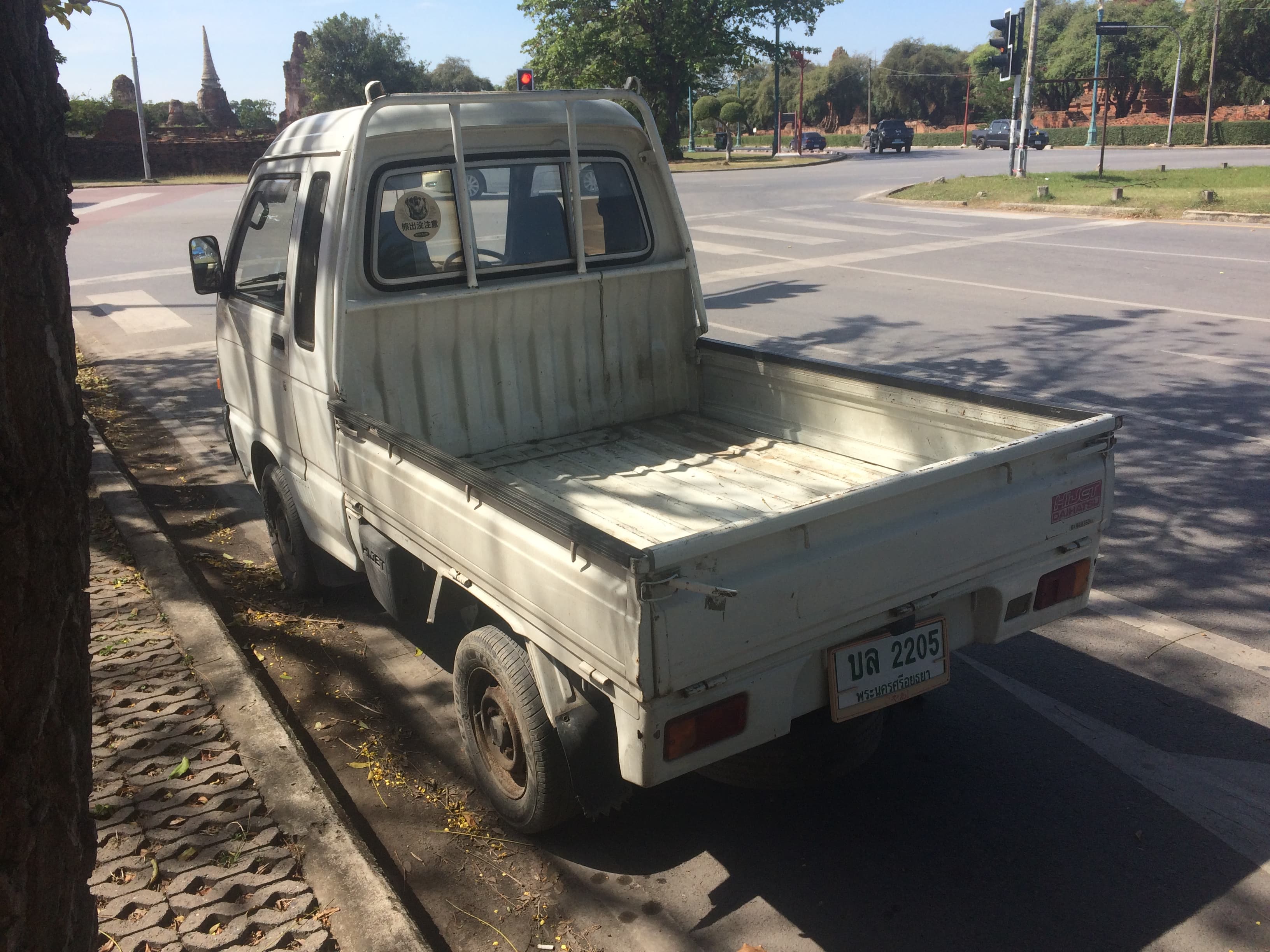
Every kei vehicle owner has had that moment: you're driving along, everything's fine, and then you hear a new sound. Is it normal? Is it catastrophic? Should you pull over or keep driving?
I've been wrenching on kei vehicles since Gary brought his Hijet to my garage in Scranton in 2019. Between The Hijet, The Cab, and every neighbor's truck that's shown up since, I've heard most of these. Here's your field guide.
Severity Guide
Before we start, here's how to read the severity:
- Normal — expected behavior, no action needed
- Monitor — keep an ear on it, check at next service
- Soon — address within the next few weeks
- Urgent — fix before driving further
- Stop — pull over immediately
Engine Sounds
Light Ticking at Cold Start → Normal/Monitor
A light, rapid ticking that appears when you first start the engine and fades after 30-60 seconds of warming up. This is valve lash — the gap between the cam and the valve increases slightly when the engine is cold.
Normal on: All kei vehicle engines, especially those with mechanical valve adjusters (F6A, EF, 3G83). Action: If it persists when warm, schedule a valve adjustment ($50-100 at a shop).
Knocking That Gets Worse Under Load → Urgent
A deeper, rhythmic knocking that increases with engine RPM and gets louder when the engine is working hard (going uphill, accelerating). This is rod knock — a worn bearing in the bottom end.
Action: Stop driving aggressively. Get it diagnosed ASAP. Continued driving can lead to catastrophic engine failure. A rebuild or replacement may be needed ($500-2,000).
High-Pitched Squeal at Startup → Soon
A belt squeal that screams when you first start the engine and sometimes under acceleration. It's a loose or worn accessory belt (alternator, AC compressor, power steering).
Action: Inspect the belt for cracks, glazing, or looseness. Replacement: $15-30 for the belt, 30 minutes of work. If ignored, the belt will eventually snap — leaving you without charging (alternator) or power steering.
Metallic Rattle From Engine Bay → Monitor
A tinny rattle, especially at idle or low RPM. Often a loose heat shield on the exhaust manifold. Common on older vehicles where the spot welds corrode.
Action: Look for loose heat shields and re-secure with hose clamps or stainless steel wire. Not urgent but annoying.
Transmission Sounds
Grinding When Shifting → Soon/Urgent
If you hear grinding when shifting into a specific gear, the synchronizer for that gear is worn. Common in high-mileage kei vehicles, especially 2nd gear (the most-used gear).
Action: Check transmission fluid level first — low fluid causes grinding. If fluid is fine, the synchro needs replacement. You can continue driving by double-clutching into the affected gear, but plan for a repair.
Whining in Gear → Monitor
A constant whine that changes pitch with speed but not with RPM. This is usually gear noise from the transmission — worn gear teeth creating a steady whine.
Action: Check fluid level. If the whine is mild and doesn't get worse, monitor it. Transmissions with gear whine can last years. If it gets suddenly louder, plan for a rebuild.
Drivetrain Sounds
Clunking When Engaging 4WD → Normal/Soon
A single clunk when shifting from 2WD to 4WD is normal — that's the transfer case engaging. Repeated clunking or grinding while in 4WD suggests worn CV joints or u-joints.
Action: Single clunk = normal. Repeated clunking = inspect CV joints and u-joints.
Clicking When Turning → Soon
A rhythmic clicking that appears during tight turns, especially under power. This is a worn CV joint boot that's let grease out and dirt in.
Action: Inspect CV boots for tears. A torn boot caught early = $30 boot replacement. A destroyed CV joint = $150-300 replacement.
Brake Sounds
High-Pitched Squeal When Braking → Soon
Brake pad wear indicators are making contact with the rotor. Your pads are thin and need replacement soon.
Action: Replace brake pads within the next few weeks. Front pads: $20-40. Rear shoes: $20-30. Don't ignore this — eventually metal hits metal and you'll need new rotors too.
Grinding When Braking → Urgent
Metal-on-metal contact. The pads are completely worn and the backing plate is grinding against the rotor. Stopping distance is significantly increased.
Action: Replace pads and inspect rotors immediately. Rotors may need resurfacing or replacement if scored.
Suspension Sounds
Clunking Over Bumps → Monitor/Soon
A single clunk or thunk when hitting a bump. Usually a worn bushing, ball joint, or sway bar link.
Action: Inspect suspension components. Worn bushings are cheap to replace. A worn ball joint is more urgent — if it fails completely, the wheel can separate.
Squeaking Over Bumps → Normal
Leaf springs (on trucks) squeak. It's the leaves rubbing against each other. Completely normal, though annoying.
Action: Spray the leaf spring contact points with silicone lubricant for temporary relief. Some owners insert plastic pads between the leaves.
When to Pull Over Immediately
These sounds mean stop driving:
- Sudden loud metallic bang followed by loss of power — broken timing belt or thrown rod
- Hissing with steam from under hood — coolant leak, overheating imminent
- Grinding from one wheel that doesn't stop — seized brake caliper or wheel bearing failure
- Continuous loud knocking at any RPM — catastrophic engine failure in progress
Pull over safely, turn off the engine, and call for a tow. Continuing to drive with any of these sounds will turn a repairable problem into a totaled vehicle.
The Golden Rule
If a sound is new, changes character, or gets louder — investigate it. Kei vehicles are mechanically simple, which means most sounds have straightforward causes. Catching something early (a $20 belt) prevents catching it late (a $2,000 engine).
And if you can't identify the sound yourself — record it on your phone and post it in the community. Someone has heard it before. Or bring it to a mechanic who knows kei trucks. After 15 years of Mack truck diagnostics and five years of kei truck wrenching in my Scranton garage, I can tell you: the sound is almost always simpler than you think. Almost always.
Post-diagnostic Yuengling. Earned it.