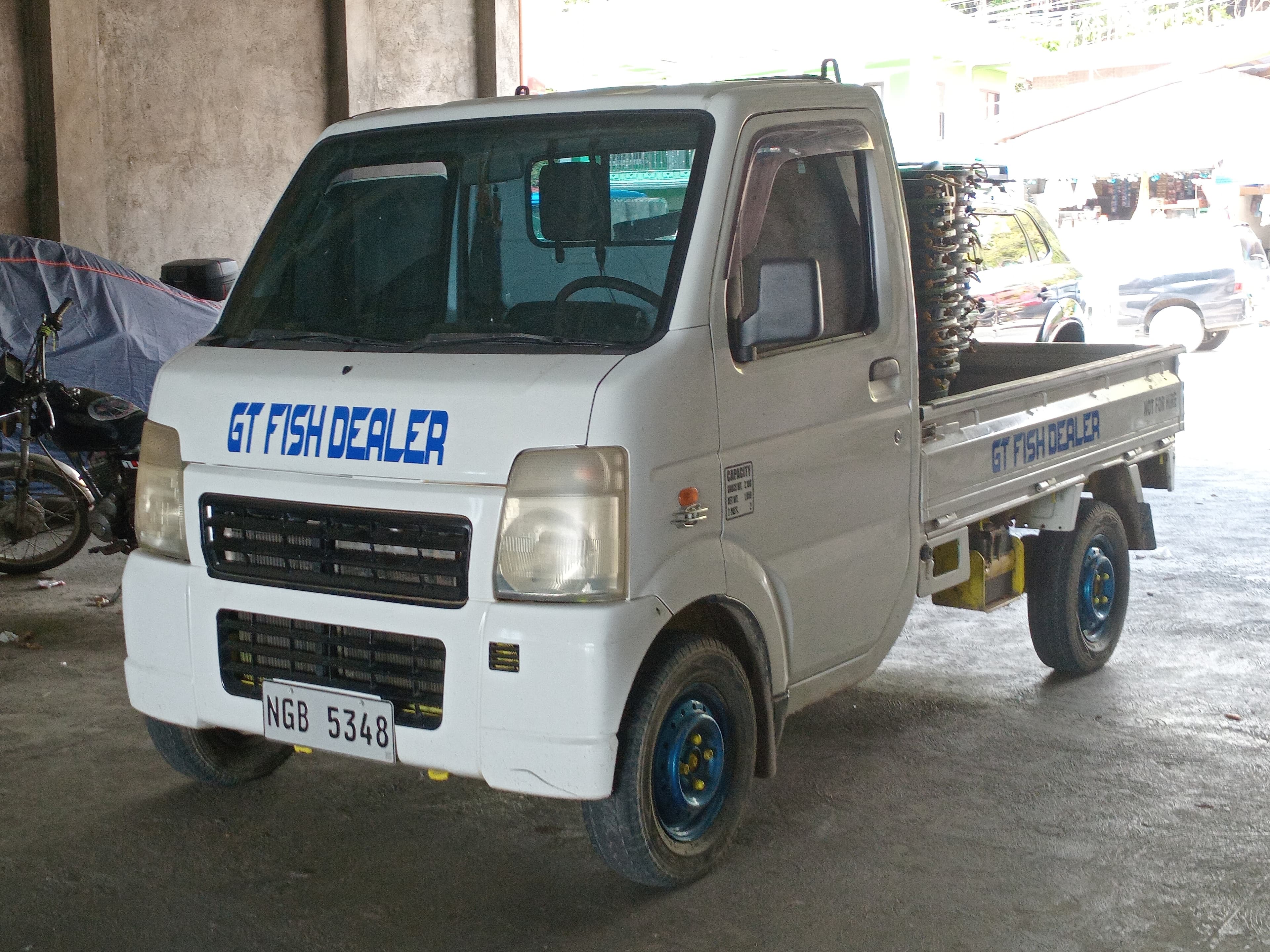
Your kei truck is acting up. Something sounds wrong, something smells wrong, or the thing just won't go. I get it. I've been there with The Hijet more times than I'd like to admit, and The Cab taught me most of these lessons the hard way.
Here's the thing about kei trucks: they're simple machines. That's the good news. Most problems have straightforward causes, and you can diagnose 90% of them in your driveway with basic tools. You don't need a factory scan tool. You need a multimeter, a flashlight, and some patience.
Let's get into it.
1. Won't Start
Symptom: You turn the key and get nothing, slow cranking, or rapid clicking.
Most likely cause: Battery. Every single time, start with the battery. Sixty percent of "won't start" calls I get are battery-related. These trucks came with small Group 51R batteries, and after 25+ years, people put whatever fits — which is often too small.
Diagnostic steps:
- Check battery voltage with a multimeter. Should read 12.6V with the engine off. Below 12.2V, it's too weak to start.
- Inspect terminals. Corrosion on Japanese battery terminals is epidemic. Green fuzz = bad connection.
- Try a jump. If it starts on a jump, the battery is dead or the alternator isn't charging.
- If you get a single loud click, that's the starter solenoid. If rapid clicking, weak battery. If absolute silence, check the starter relay and ignition switch.
Fix: New battery ($80-$120 for a Group 51R). Clean terminals with a wire brush and dielectric grease ($4). If the starter is dead, a rebuild kit runs about $35, or a replacement starter is $60-$100 depending on the model. The Hijet starter is Denso 228000-6660 — I keep a spare on the shelf. Ask me how I know.
2. Overheating
Symptom: Temperature gauge pegged high, steam from under the hood, coolant on the ground.
Most likely cause: On a truck this old, the thermostat is suspect number one. They stick closed after decades, blocking coolant flow entirely. Cost to replace: about $12 for the part, 30 minutes of work.
Diagnostic steps:
- Check coolant level first. Low coolant = no cooling. Look for leaks under the truck.
- Start the engine, let it warm up, and feel the upper radiator hose. If the engine is hot but the hose is cold, the thermostat is stuck closed.
- Check if the radiator fan kicks on. Electric fans fail. On The Cab, the fan relay went bad twice.
- Look at the coolant color. If it's brown or has floaties, the radiator is corroded internally.
Fix: Replace the thermostat ($12-$18). Flush the radiator — you'd be amazed what comes out of a 30-year-old cooling system. If the radiator is clogged beyond flushing, aftermarket replacements run $80-$150. Water pump replacement is $40-$70 for the part, but budget 2-3 hours of labor if you're doing it yourself.
Pro tip: When you replace the thermostat, replace the gasket and the coolant. Don't reuse old coolant. Use the green stuff (ethylene glycol), mixed 50/50. These engines aren't picky.
3. Rough Idle
Symptom: Engine shakes, RPMs bounce, may stall at stop signs.
Most likely cause: On carbureted models (most pre-1995 kei trucks), it's a dirty carburetor 80% of the time. Old fuel varnishes the jets. On fuel-injected models, the idle air control valve gets caked with carbon.
Diagnostic steps:
- Carbureted: Remove the air cleaner and spray carb cleaner into the throat while running. If idle smooths out temporarily, the carb needs cleaning.
- Listen for hissing sounds — that's a vacuum leak. Spray carb cleaner around vacuum lines and the intake manifold base. If RPMs change, you found your leak.
- Fuel-injected: Pull the IAC valve and inspect. If it's black with carbon, clean it with throttle body cleaner.
Fix: Carb rebuild kit ($25-$40). Vacuum hoses ($10 for a universal kit — replace them all while you're in there, they're all the same age). IAC valve cleaning is free. If the IAC is dead, replacements run $40-$80. The Hijet's carb took me a full Saturday to rebuild, but she idled like a sewing machine after that.
4. Won't Shift Smoothly
Symptom: Grinding into gear, hard to find neutral, clutch pedal feels weird.
Most likely cause: Transmission fluid. People forget these things have gearboxes that need oil. Check the level first — low fluid causes every shifting problem in the book.
Diagnostic steps:
- Check transmission fluid level and condition. Should be clear or slightly amber. If it's black or smells burnt, it's overdue.
- Test the clutch: with the engine running, press the clutch fully and wait 3 seconds, then try to shift into reverse. If it grinds, the clutch isn't fully disengaging.
- Feel for notchiness in specific gears. Second gear syncro goes first on almost every Japanese gearbox ever made.
Fix: Fluid change ($15-$25 for 75W-90 GL-4 gear oil — do NOT use GL-5, it eats brass syncros). If the clutch is dragging, bleed the hydraulic system first ($8 for DOT3 fluid). Clutch replacement is $150-$250 in parts but requires dropping the transmission — that's a weekend job or a mechanic job. Syncro replacement means a transmission rebuild. Be honest with yourself about your skill level on that one.
5. Strange Engine Noises
Symptom: Knocking, ticking, squealing, or rattling that wasn't there before.
Most likely cause: Depends on the sound. Ticking from the top = valve adjustment needed. Knocking from the bottom = rod bearing, and that's bad. Squealing from the front = belt.
Diagnostic steps:
- Squealing on startup that goes away: drive belt is loose or glazed. Press on it — should deflect about 10mm.
- Constant ticking that speeds up with RPM: valve lash out of spec. Common on these engines. Use a feeler gauge to check.
- Deep knocking that gets louder under load: rod bearing. Pull the oil drain plug and look for metal flakes. If you see glitter, the engine is on borrowed time.
- Rattle on cold start that fades: timing chain tensioner. Common on high-mileage EFI models.
Fix: Belt replacement ($8-$15). Valve adjustment is free if you own feeler gauges — typically 0.15mm intake, 0.20mm exhaust, but check your service manual. Timing chain tensioner ($30-$50). Rod bearing knock means rebuild or swap territory ($500+ either way). I put a junkyard engine in The Cab for $350 plus a weekend of my life.
6. Electrical Gremlins
Symptom: Lights flickering, gauges reading wrong, random things stopping and starting.
Most likely cause: Grounds. Always grounds. These trucks have ground points that corrode over 25+ years, and one bad ground can cause five different symptoms.
Diagnostic steps:
- Find every ground wire you can see (engine to chassis, battery negative to chassis, body grounds near the fuse box). Clean them all with a wire brush and retighten.
- Check the alternator output. With the engine running, battery voltage should read 13.8-14.4V. Below 13V, the alternator is undercharging.
- Inspect the fuse box for corrosion. Pull each fuse and look at the contacts.
Fix: Clean and retighten all grounds ($0 and 30 minutes). Alternator rebuild ($50-$80) or replacement ($100-$150). Fuse box contact cleaner ($6). Pro tip: Add a supplemental ground wire from the engine block directly to the negative battery terminal. Costs $5, solves half of all electrical mysteries.
7. Stalls at Idle or Under Load
Symptom: Engine dies at stop signs, or bogs and dies when you step on it.
Most likely cause: Fuel delivery. Either the carburetor's float is stuck, the fuel filter is clogged, or the fuel pump is weak.
Diagnostic steps:
- When was the fuel filter last changed? If the answer is "I don't know," change it now. They're $5-$10.
- Disconnect the fuel line at the carburetor/fuel rail and crank the engine. Fuel should pulse out strongly. Weak flow = bad pump.
- On carbureted models, tap the side of the carburetor with a screwdriver handle while it's stalling. If it recovers, the float needle is sticking.
Fix: Fuel filter ($5-$10, replace every 15,000 km). Fuel pump ($40-$80). Float needle and seat kit for the carb ($15-$20). On The Hijet, I replace the fuel filter every spring as a ritual. Cheap insurance.
8. Poor Acceleration / No Power
Symptom: Feels sluggish, won't pull up hills, takes forever to reach speed.
Most likely cause: Air filter, spark plugs, or ignition timing. The boring stuff, but that's the point.
Diagnostic steps:
- Pull the air filter. If it's brown and dense, replace it. A clogged air filter alone can cut power by 15%.
- Pull the spark plugs. Gap should be 0.7-0.8mm for most kei engines. If they're black and sooty, the engine is running rich. If white, running lean.
- Check ignition timing with a timing light if the truck has a distributor. Typical spec is 5-8 degrees BTDC at idle.
Fix: Air filter ($8-$15). Spark plugs ($3-$5 each, NGK BPR6ES fits most). Plug wires ($20-$30). Timing adjustment is free with a timing light. Do all three at once — call it a tune-up. Takes an hour, makes the truck feel new.
9. Excessive Oil Consumption
Symptom: Oil level drops between changes, blue smoke from exhaust, oil spots on the ground.
Most likely cause: Valve stem seals on high-mileage engines. These harden with age and let oil seep past into the combustion chamber.
Diagnostic steps:
- Blue smoke on startup that clears = valve stem seals. Blue smoke under acceleration = piston rings.
- Check for external leaks first. Valve cover gaskets, oil pan gaskets, and cam seals all harden and leak.
- Do a compression test. If all cylinders are within 10% of each other and above 120 PSI, the rings are probably fine.
Fix: Valve cover gasket ($10-$20). Valve stem seals ($30-$50, but labor-intensive — requires removing the head or a special compressed air trick). If rings are worn, you're looking at a rebuild. Some owners just add a half quart every 1,000 km and call it a feature. I won't judge. Ask me how I know.
10. Brake Problems
Symptom: Soft pedal, pulls to one side, grinding noise, long stopping distance.
Most likely cause: Brake fluid absorbs moisture over time. After 25+ years, the fluid is likely original and full of water. This lowers the boiling point and causes a soft pedal.
Diagnostic steps:
- Check brake fluid level and color. Should be clear/light amber. Dark brown = replace immediately.
- Soft pedal: pump the brakes three times. If the pedal gets firmer, you have air in the lines. Bleed them.
- Pulling to one side: one caliper or wheel cylinder is seized. Common on trucks that sit.
- Grinding: pad material is gone, metal on metal. Stop driving and fix this immediately.
Fix: Complete brake fluid flush ($10 for DOT3). Brake pads, front ($20-$35 per axle). Rear drum shoes ($15-$25). Wheel cylinder rebuild kit ($8-$12). Caliper rebuild ($15-$20). Pro tip: When you bleed the brakes, start with the wheel farthest from the master cylinder and work toward it.
11. Steering Feels Loose or Wanders
Symptom: Truck wanders on the highway, steering wheel has play, clunks over bumps.
Most likely cause: Tie rod ends. They wear out on every vehicle, and kei trucks have short steering linkages that amplify any play.
Diagnostic steps:
- Jack up the front end, grab the tire at 3 and 9 o'clock, and push/pull. Clunking = tie rod end. Grab at 12 and 6 — clunking = ball joint or wheel bearing.
- Have someone turn the steering wheel while you watch the tie rods underneath. Any visible looseness at a joint = replace it.
- Check the steering gearbox for play. Some adjustment is possible on older rack-and-pinion or worm gear setups.
Fix: Tie rod ends ($15-$25 each, inner and outer). Ball joints ($20-$40 each). You'll need an alignment after replacing any steering component — budget $60-$80 at a shop. The Cab's tie rod ends lasted about 80,000 km before they got sloppy. Replaced both sides in 2 hours.
12. Hard to Start When Cold
Symptom: Cranks fine but won't fire on cold mornings. Starts okay once warm.
Most likely cause: On carbureted trucks, the choke isn't engaging. On fuel-injected trucks, the cold start enrichment isn't working — usually a coolant temperature sensor lying to the ECU.
Diagnostic steps:
- Carbureted: check the choke plate when cold. It should be closed (or mostly closed). If it's stuck open, the engine gets too much air and not enough fuel on cold start.
- EFI: check the coolant temperature sensor with a multimeter. Resistance should be high when cold (2-3 kOhm at 20°C) and low when hot (200-300 ohms at 80°C).
- Both: check spark plug condition. Fouled plugs won't fire reliably in cold conditions.
Fix: Choke adjustment or choke pull-off diaphragm replacement ($15-$25). Coolant temperature sensor ($10-$20). Fresh spark plugs. On The Hijet, cold starts were brutal until I replaced the original coolant temp sensor. The old one was reading warm when the engine was stone cold, so the ECU never enriched the mixture. Twenty-dollar fix for a problem I chased for two months.
When to Call a Mechanic
I'm all for DIY. These trucks are simple enough that most handy owners can handle 80% of what goes wrong. But know your limits.
Call a pro when:
- Compression test shows a dead cylinder (head gasket or worse)
- Transmission needs internal work (syncros, bearings, gears)
- You smell coolant in the oil or oil in the coolant (head gasket — get it pressure tested)
- The engine has a bottom-end knock (rod bearing replacement requires engine removal)
- You've tried two fixes and the problem persists (fresh eyes catch what you've been staring past)
If you need help finding a kei-truck-friendly mechanic, check Rina's mechanic directory or Jake's dealer directory — many dealers have service departments that know these trucks inside and out.
Most of what goes wrong with these trucks is age, not design. Replace the rubber, refresh the fluids, clean the connections, and these little engines will keep running for decades. The Cab has 140,000 km on it and still starts on the first crank every morning.
Treat the maintenance as a ritual, not a chore. Your truck will thank you for it.