Why this article exists
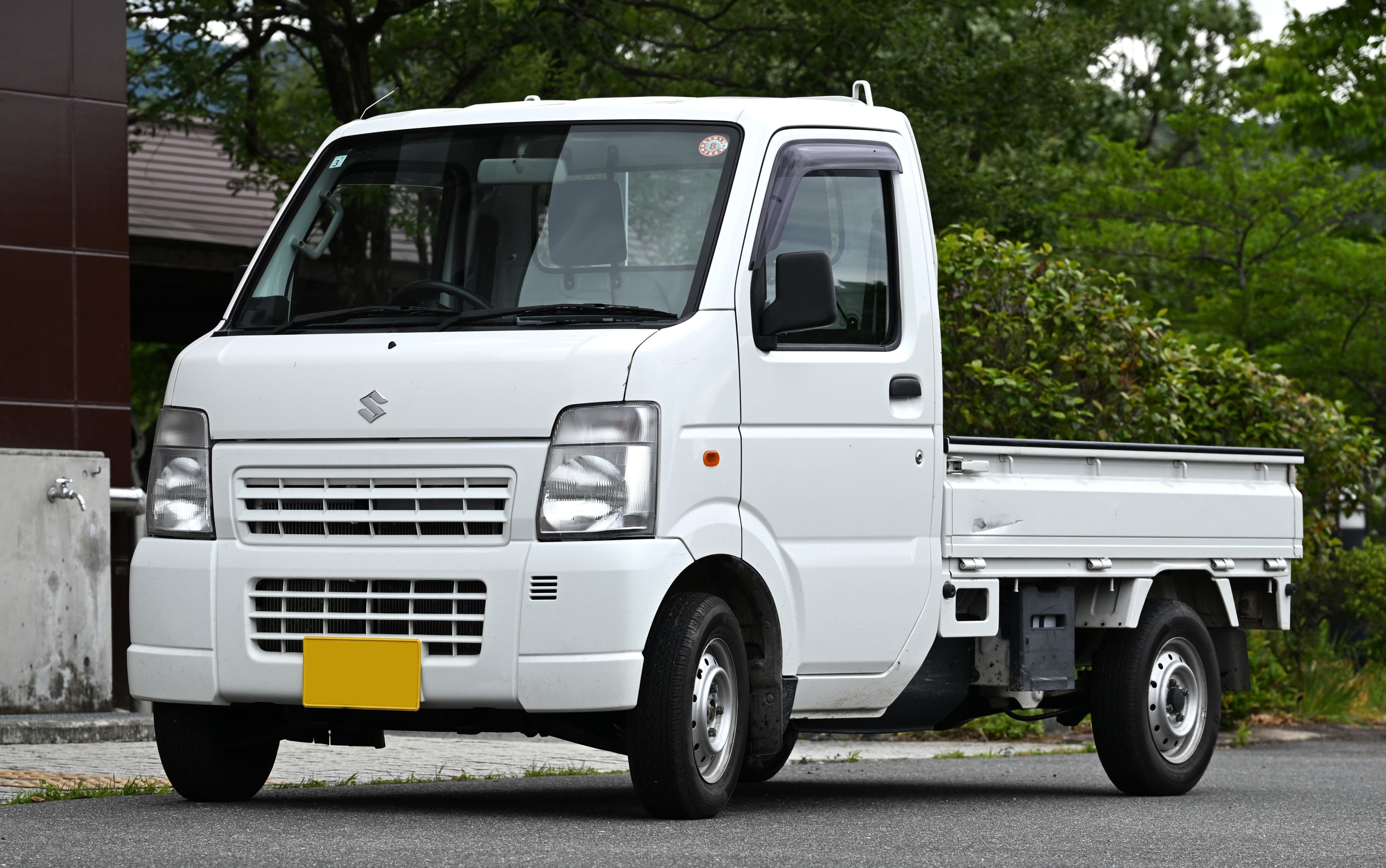
Someone on r/keitruck went looking for wheels for a '92 Autozam — a badge-engineered Suzuki Carry — knew the pattern was 4x114.3, and could not find anything small enough that fit. Fair problem. And when I went looking for a straight answer to give them, I found something worth writing about: the published sources contradict each other.
One reputable fitment guide says kei trucks are 4x100. Another says most are, but older models may be 4x114.3. A wheel listing for a Daihatsu Hijet advertises 4x110. These cannot all be right for the same truck.
So this guide does not contain a lookup table of bolt patterns by chassis code. I could build one, and it would look authoritative, and some percentage of it would be wrong — and being wrong here means you buy four wheels that do not fit and eat the shipping both ways. What you get instead is how to get the right answer for your truck in about five minutes, which is worth more than my table would be.
Do not order wheels based on any chart, including a manufacturer's, without measuring. Kei trucks ran long production runs across many badge-engineered variants, and the same nameplate can span multiple platforms. Our chassis decoder will tell you exactly which platform you have, but the studs on your own hub are the final authority.
Measuring your bolt pattern
Five minutes, and the only tool that really matters is a caliper.
A bolt pattern is written as lug count × PCD — the pitch circle diameter, in millimetres, of the circle the studs sit on. 4x100 means four studs on a 100mm circle.
On a 4-lug wheel this is easy, because an even lug count means the studs sit directly opposite each other:
- Get the wheel off and the hub clean. Wire-brush the stud bases — 25 years of crud will cost you a millimetre or two.
- Measure from the center of one stud straight across to the center of the stud directly opposite.
- That number, in millimetres, is your PCD.
Use vernier or digital calipers. This is the whole reason people get it wrong: 100mm and 114.3mm are 14mm apart, which sounds like a lot until you are eyeballing a tape measure against a curved stud in bad light. Calipers remove the argument.
Measure twice, on two different pairs of studs. If the two measurements disagree, you are measuring from the edge of one stud and the center of another. Center to center, every time.
If you get roughly 100mm, you are 4x100. Roughly 114mm and you are 4x114.3. Roughly 110mm and you are 4x110 — and given how rarely that turns up, measure a third time before you believe it.
Offset, and why it matters more on these trucks
Bolt pattern decides whether the wheel bolts on. Offset decides whether it should.
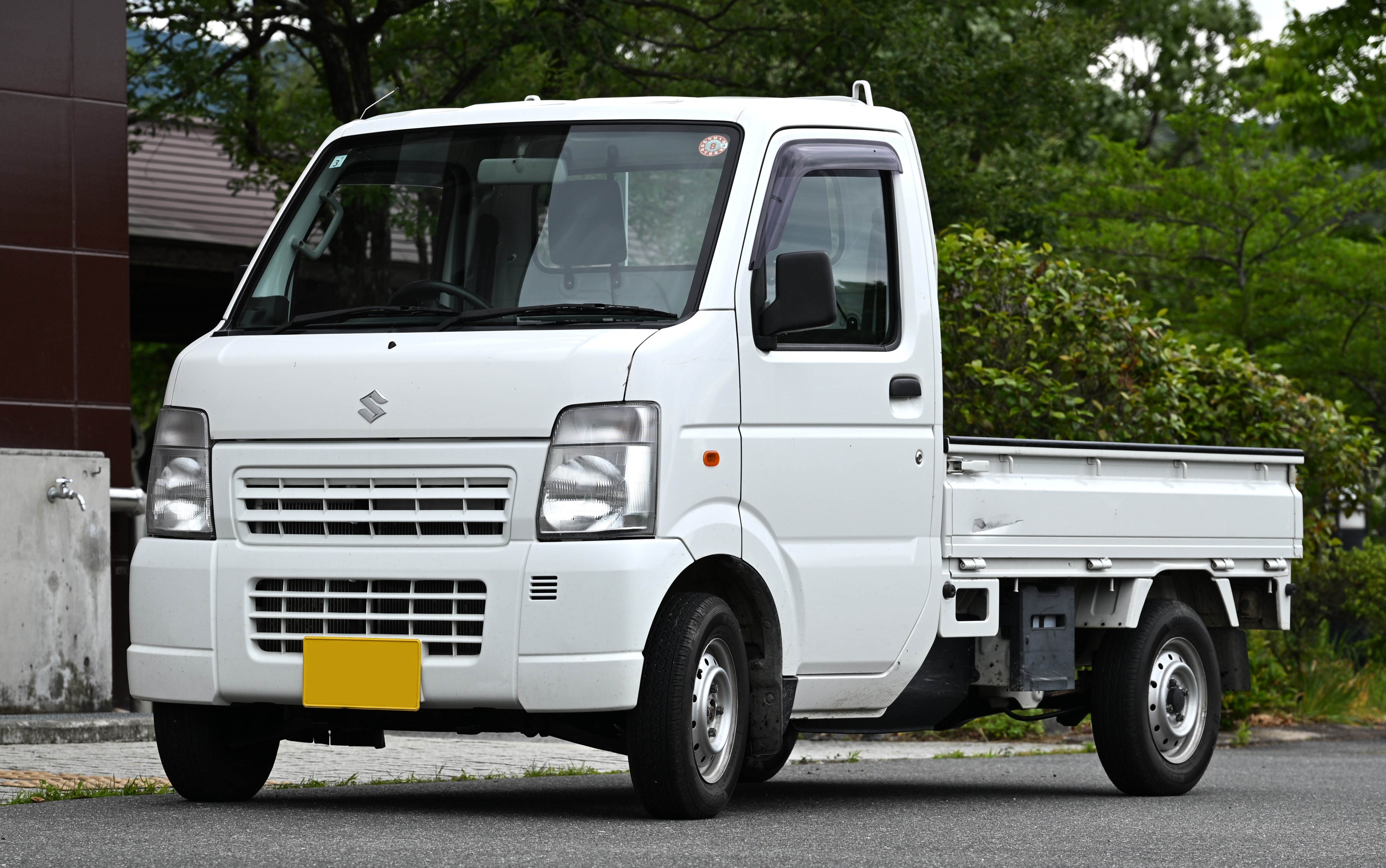
Offset is how far the wheel's mounting face sits from its centerline. Positive offset tucks the wheel inward; lower or negative offset pushes it outward. Stock kei truck wheels generally run a positive offset somewhere around +35mm to +45mm, which is what keeps them inside the vehicle's very narrow track.
Go dramatically lower and you push the wheel outboard, which does three things people underestimate on a vehicle this light:
- It adds leverage on the wheel bearing. Kei truck bearings are sized for a 1,500lb-ish vehicle with the wheel where the factory put it. Moving it outward increases the load on the bearing every mile you drive.
- It changes the steering geometry, and these trucks already have a short wheelbase and quick, twitchy steering.
- It causes rubbing in the arches, usually on lock and usually only once you are loaded.
Stanced kei trucks look great at shows. If yours is a working truck, stay near stock offset — the bearings are not the part you want to be replacing on the side of a road.
Center bore: the one people forget
The center bore is the hole in the middle of the wheel that sits over the hub. On most kei trucks the vehicle is hub-centric — the hub, not the lug nuts, carries the vehicle's weight and centers the wheel.
If a wheel's center bore is larger than your hub, the wheel is not centered by the hub any more, and the lug nuts are doing a job they were not designed for. The result is vibration that no amount of balancing fixes. The fix is hub-centric rings to take up the gap, and they are a few dollars.
If the bore is smaller than your hub, the wheel simply will not sit flat. Do not machine it out to make it fit.
The rating that matters more than any of this
Here is the part that actually gets people hurt, and it has nothing to do with bolt patterns.
Kei trucks are light vehicles that carry genuinely heavy loads relative to their weight. That is the entire point of them. A tire or wheel that fits perfectly and is not rated for that load is a worse problem than one that does not fit at all — because the one that does not fit you find out about in the driveway.
- Tires: stock size is typically around 145/80R12, and you want the light-truck rating, not a passenger-car equivalent. LT-marked tires carry additional plies and stiffer sidewalls, typically Load Range C (6-ply, rated to around 50 PSI), and carry substantially more load than a passenger-rated tire of the same size. Our tire guide covers sizing, brands and where to buy in detail — this article is the wheel half of the same question.
- Wheels: check the load rating stamped on the wheel. Plenty of 4x100 wheels exist for small passenger cars. Bolting a passenger-car wheel to a truck you load with firewood is not the same as it fitting.
Passenger-car wheels and tires in a matching bolt pattern are the single most common fitment mistake on these trucks, precisely because they do bolt up. The studs lining up tells you nothing about the load rating. Check both.
If you cannot find wheels in your size
This is where the Autozam owner was stuck, and it is a real constraint: 12-inch wheels in a truck load rating are a small market.
Things that actually work:
- Buy JDM-spec from kei specialists rather than general wheel retailers. The suppliers listed on our parts page index this market; a mainstream wheel shop does not.
- Consider 13 or 14 inch. There is far more selection a size up, and our tire guide covers going bigger and what it does to your gearing and speedometer. Keep the overall rolling diameter close to stock.
- Keep your steels and get them refinished. Unglamorous, but stock steel wheels are correctly rated, correctly offset, and already fit. Blasted and powder-coated they look genuinely good, and it is usually the cheapest route by a distance.
- Trailer wheels are not a shortcut. They turn up in the same sizes and patterns, they are cheap, and they are not built for steered, driven, braked service. Do not.
The short version
- Measure your own PCD with calipers, center to center, opposite studs. Do not trust a chart, including mine.
- Stay near stock offset unless you have a reason and have thought about the bearings.
- Check center bore, and use hub-centric rings if the wheel bore is larger.
- Check the load rating on both wheel and tire. This matters more than fitment.
- If selection is the problem, refinishing your steels is the underrated answer.
Once you know your pattern, write it on a note in the glovebox with your chassis code. You will want it again, and you will not want to pull a wheel to find out twice.