
The single most expensive misconception in the kei vehicle hobby is this: the 25-year rule is not about how old the model is. It's about how old your specific car is.
If you've ever heard someone say "Beats are legal now" or "Cappuccinos are legal," they're using a shorthand that's almost — but not quite — true. And that "not quite" gap is where people lose money. Let me walk through what the rule actually says.
What the rule actually is
The NHTSA 25-year rule (formally, 49 CFR 591.5(i)) exempts any vehicle 25+ years old from Federal Motor Vehicle Safety Standards (FMVSS). That means no crash-test certification, no airbag retrofit, no FMVSS-compliant headlight conversion. The vehicle imports as-is.
The exemption is calculated from the date of manufacture — the month and year the specific chassis came off the production line in Japan. Not the model year. Not the first-sale date. Not the title year on the Japanese registration. The actual build date.
This matters because:
- Production runs span calendar years. A "1996" Honda Beat might have been built in November 1995. A "2000" Suzuki Carry might have been built in March 2001. The model year is a marketing label; the build date is a fact.
- Customs checks the month, not the year. US Customs and Border Protection looks at the date on the door-jamb plate (or the export certificate). A vehicle built December 1999 is not eligible in January 2024. It's eligible in December 2024.
- The clock runs continuously. Every month, more vehicles cross the 25-year threshold. There's no January 1st bulk release of a model year — it's a rolling line.
Two Beats, two different import dates
The cleanest way to show this: take two Honda Beats, the same model, both PP1 chassis.
Beat A rolled off the line in March 1991, very early in the production run. It crossed the 25-year mark in March 2016. Already importable for years.
Beat B is from the final production run in February 1996 — the last batch before Honda stopped making them. It didn't cross 25 years until February 2021. Anyone trying to import it before that month would have had it impounded at the port.
Same model. Same chassis code. Five years apart on the federal clock.
This is why "the Beat is legal" is technically true (every Beat ever made is now 25+ years old, as of 2026) but was misleading for most of the 2010s. Today the same logic applies to the Suzuki Cappuccino (1991–1998 production — the last ones became eligible in 2023), the Autozam AZ-1 (1992–1995 — fully eligible since 2020), the Daihatsu Copen L880K (2002–2012 — only the earliest examples are eligible now in 2026, the rest waits until 2027–2037), and so on.
If you want the timeline by model, our 25-year rule forecast lays out which kei vehicles become eligible each year through 2030.
Where the build date actually lives
Three places, in order of reliability:
- Door-jamb build plate. Riveted to the driver's-side B-pillar or door jamb. Usually shows month and year. This is the canonical answer — what CBP checks.
- Japanese export certificate ("matsho" / 抹消登録証明書). Issued by the Japanese transport authority when the car is deregistered for export. Lists the first-registration date in Japan, which is usually within 1–3 months of the build date.
- Auction sheet. If you're buying through a Japanese auction (USS, JU, TAA), the auction sheet lists the year and chassis number. Use the chassis number to cross-reference the manufacturer's production-range tables — many enthusiast forums maintain these for popular models like the Beat (PP1) and the Cappuccino (EA11R / EA21R).
Reconcile at least two of those three before you wire money. If the auction sheet says 1996 and the build plate says December 1995, you have a car that's importable a year earlier than its title suggests — which is good news, but you need to be sure. If the auction sheet says 1996 and the build plate says March 1996, that car cannot come to the US until March 2021 — which by 2026 is moot, but for a 2002-built Copen the same kind of mismatch could mean a year of bonded storage you didn't budget for.
Dave Russo has a great parts-sourcing guide that touches on chassis-code decoding for the Sambar — same logic applies across the kei lineup, just different serial ranges.
How this changes what you buy
If you're shopping in 2026, here's the practical filter:
- Built on or before May 12, 2001 → fully eligible right now. You can ship it tomorrow.
- Built May 13, 2001 through end of 2001 → eligible later in 2026. Still inside this calendar year.
- Built 2002 or later → not yet. Wait, or look at a different vehicle.
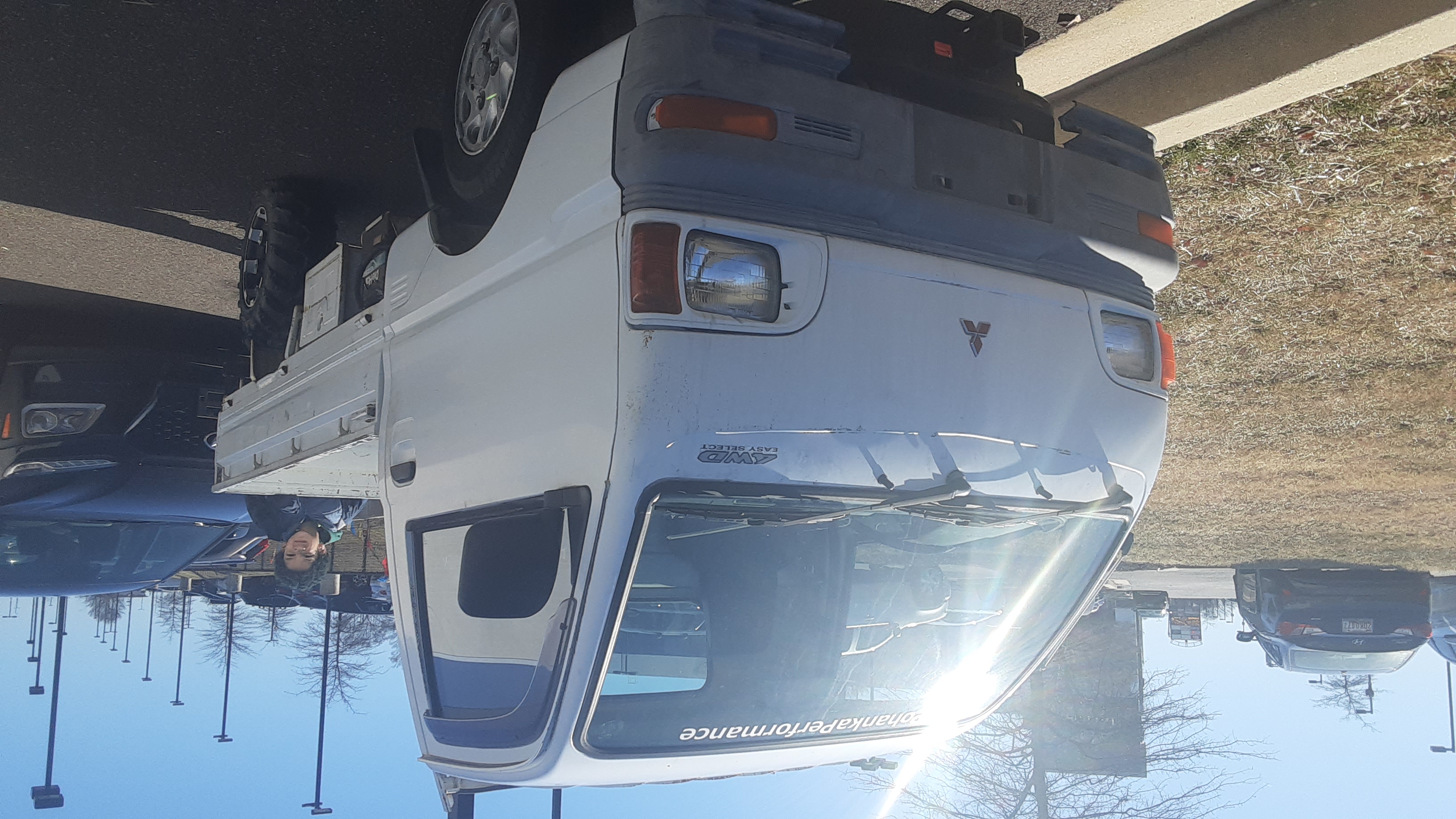
Anyone selling you a "2002 Carry, fully legal in the US right now" is either confused, lying, or has a vehicle built in late 2001 that's been incorrectly logged as a 2002 model year. Make them show you the build plate. If they can't, walk.
The other clock: EPA's 21-year rule
There's a second federal threshold most buyers forget about. The EPA, separately from NHTSA, exempts vehicles 21+ years old from emissions certification under the 40 CFR 85.1511 "original equipment" provision.
For kei vehicles this is effectively a non-issue, because by the time something is 25 years old for NHTSA it's already been 21 years old for EPA purposes for four years. But the mechanism is the same — date of manufacture, not model year — and if you're ever in the gap (between 21 and 25 years old) you'd be exempt from emissions but not from FMVSS, which is not actually useful because customs still won't release the vehicle. Both clocks have to ring.
Federal clearance is not state legality
This is the second-most-expensive misconception, and worth saying explicitly: the 25-year rule only governs whether the vehicle can enter the country. Once it's here, your state's DMV decides whether you can title and plate it.
Some states (New York, Rhode Island, Maine, Hawaii — see our state-by-state regulations for the live list) treat kei vehicles as "off-road equipment" or "non-conforming vehicles" and won't register them for street use, regardless of how old they are. Some states put speed restrictions on them. Some allow kei cars but not kei trucks (and vice versa).
If you're 25-year-eligible and your state is friendly, you're done. If you're 25-year-eligible and your state is hostile, you have a yard ornament. Federal import is the first hurdle, not the last one. Jake's step-by-step import walkthrough covers the customs and CBP side; for what happens at your DMV after the truck lands, check your state first.
A note on dad's '95 Carry
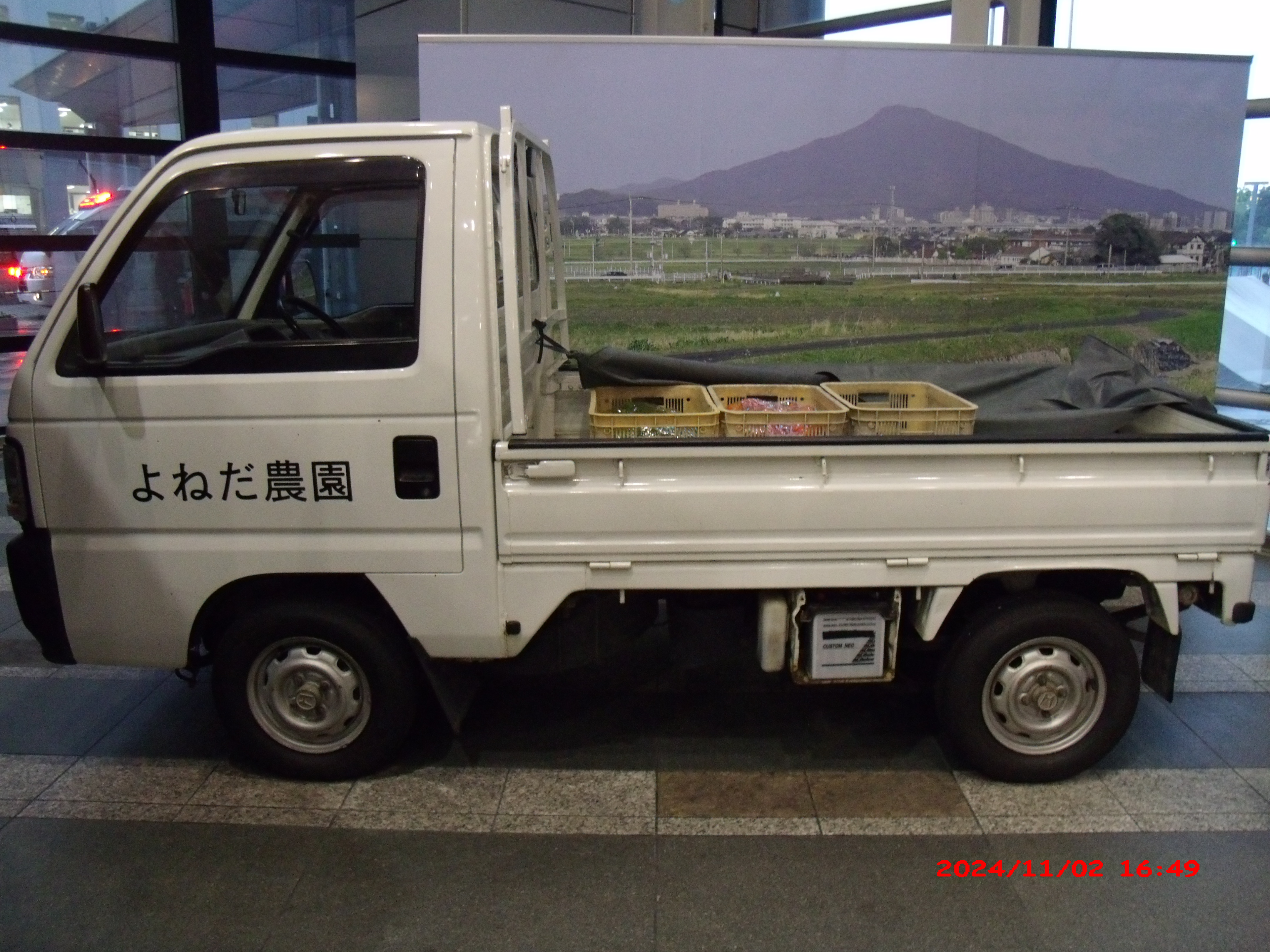
My dad has a 1995 Carry he bought in 2021. When he first started shopping, he kept getting frustrated that listings he loved would be "not yet legal" — even though everything online said 1995s were importable. The reason: half the cars he was looking at were built in late 1995 and weren't eligible until 2020. By the time he actually bought, his car was built in April 1995 and had been clear since April 2020. Six months of confusion would have been avoided by understanding one sentence: it's not the year on the title, it's the date on the build plate.
If you're shopping for a kei vehicle right now and you find yourself confused about whether something is "legal yet," that's the sentence to remember. Don't trust the year on the listing. Find the build plate, find the export certificate, reconcile both, then call customs.
I do not yet own a kei vehicle. I want a Honda Beat — specifically a 1992 PP1, built in spring 1992, eligible for import since spring 2017. The reason I know that date with that much precision is exactly this article. You should know yours too, before you buy.
Quick reference
| What you check | Where it lives | What it tells you |
|---|---|---|
| Build date (month + year) | Door-jamb plate | When the 25-year clock started |
| First registration date | Japanese export certificate | Usually 1–3 months after build |
| Model year | Title, listing, auction sheet | Marketing label — not what CBP cares about |
| Chassis number | VIN plate | Cross-reference to verify build date |
Related resources
- 25-Year Rule Forecast: What's Importable Now and Next — model-by-model timeline through 2030
- How to Import a Kei Truck from Japan: Step-by-Step — once you've confirmed eligibility, here's the actual process
- State-by-State Regulations — federal import is only the first hurdle
- NHTSA 25-year rule (49 CFR 591.5) — the actual text
- EPA emissions exemption (40 CFR 85.1511) — the companion regulation