What Are Kei Cars?
If you know about kei trucks, you already understand kei cars. Same Japanese regulations — 660cc max engine, 3.4m max length — but instead of a truck bed, you get a passenger vehicle. Sedans, sports cars, SUVs, convertibles, city cars.
And some of them are incredible. I say that as someone who already owns two kei trucks and a '93 Cappuccino. The Cappuccino might actually be my favorite vehicle I've ever owned, and I include Old Faithful in that statement. Don't tell her.
The Legends: The ABC Trio
The most famous kei cars in the US market are the "ABC" sports cars from the early 1990s, and honestly, they're the reason a lot of people fall down the kei rabbit hole in the first place.
The Autozam AZ-1 is the wildest of the three. Gullwing doors on a mid-engine, fiber-reinforced body that weighs basically nothing. It looks like someone shrunk a supercar in the wash, and it drives like one too — twitchy, raw, and completely alive. If you want the one that makes people stop and stare at gas stations, this is it.
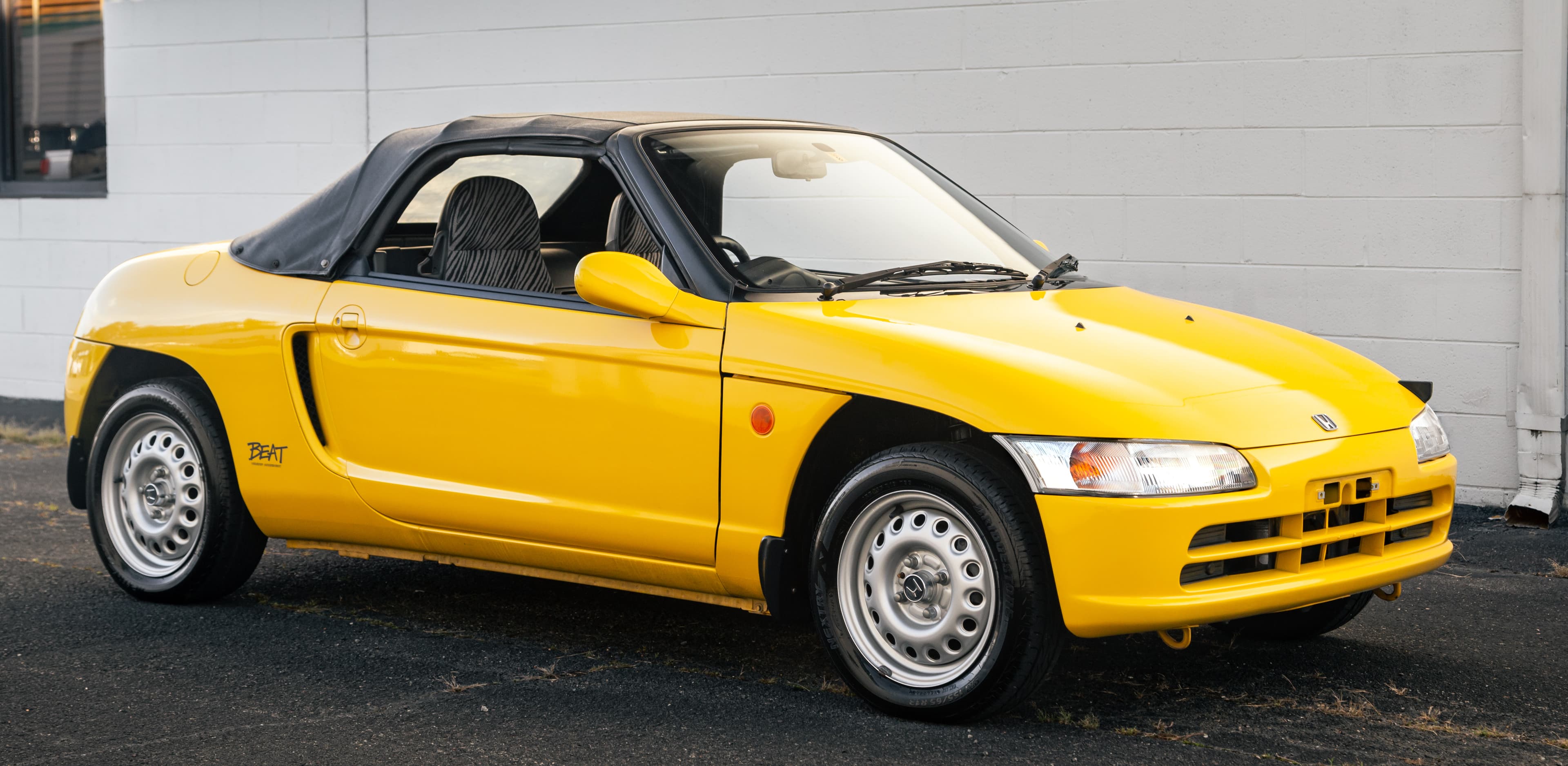
The Honda Beat is a mid-engine roadster with individual throttle bodies, designed by Pininfarina. Honda built it to rev, and you feel every bit of that engineering through the steering wheel. It's the driver's choice of the three — less flashy, more rewarding.
The Suzuki Cappuccino is my personal pick. Front-engine, rear-drive, turbocharged, with a removable targa top. It's the most balanced of the trio and the easiest to live with day-to-day. I've taken mine on coffee runs through the Boise foothills and it makes every back road feel like a rally stage.
All three have become genuine collector cars, with prices ranging from $10,000 to $35,000+ depending on condition. They're small, impractical, and absolutely magical to drive. The Cappuccino is the best value of the three right now, and I'll die on that hill.
Beyond the Sports Cars
Kei cars aren't just sports cars, though. The category is way broader than most people realize.
The Suzuki Jimny is a proper 4x4 with ladder frame, live axles, and low-range transfer case. It's the most capable off-road kei vehicle and has a cult following worldwide. If you've seen those tiny square SUVs on Instagram and wondered what they are — that's the Jimny, and it's every bit as good as it looks.
The Honda Today is the practical choice — an affordable city car that costs almost nothing to own. If you want a second car for errands and commuting that sips fuel and fits in any parking space, the Today is hard to beat. My buddy Emi has been pushing me to get one for her since she saw one at a meet in Portland.
The Daihatsu Copen has a power-folding hardtop, turbocharged 4-cylinder, and real refinement. It's the most sophisticated kei car ever made, and it's the one I recommend to people who want the experience of a kei car without the rawness. It's like comparing a craft cocktail to straight whiskey — both great, different vibes.
So How Do Kei Cars Compare to Kei Trucks?
The short answer: the import process, paperwork, and state regulations are exactly the same. If you know how to import a kei truck, you know how to import a kei car. The differences are really about what you're buying, not how you buy it.
| Kei Car | Kei Truck | |
|---|---|---|
| Price range | $3,000–$35,000 | $4,000–$18,000 |
| Use case | Daily driving, weekend fun, collecting | Utility, farm, property |
| Passenger capacity | 2–4 seats | 2 seats |
| Cargo | Minimal to none | Truck bed |
The kei car world skews toward JDM enthusiasts and car collectors, while kei trucks attract more of the farmer-builder-tinkerer crowd. But there's a lot of overlap — I know plenty of people (including me) who own both. Once you get one kei vehicle, the second follows pretty quickly. Dave Russo calls it "kei creep" and he's not wrong.
What to Expect: Costs
| Car Type | Purchase Price | Import Cost | Total Landed |
|---|---|---|---|
| Honda Today (commuter) | $2,000–$5,000 | $2,500–$4,000 | $4,500–$9,000 |
| Suzuki Jimny (4x4) | $5,000–$12,000 | $2,500–$4,000 | $7,500–$16,000 |
| Honda Beat (sports) | $5,000–$15,000 | $2,500–$4,000 | $7,500–$19,000 |
| Suzuki Cappuccino | $7,000–$15,000 | $2,500–$4,000 | $9,500–$19,000 |
| Autozam AZ-1 (collector) | $12,000–$30,000 | $2,500–$4,000 | $14,500–$34,000 |
| Daihatsu Copen | $6,000–$14,000 | $2,500–$4,000 | $8,500–$18,000 |
Use our Import Cost Calculator for a personalized estimate. The import cost is roughly the same regardless of the car, so the real variable is the purchase price — and that's where condition and model make a huge difference.
How to Buy
The buying process is identical to kei trucks, so if you've already been through it once, you know the drill. Start by checking your state's regulations — they apply equally to kei cars. Then find the car through Japanese auctions, US importers, or our dealer directory. Our step-by-step importing guide walks you through the whole process, and the registration guide covers titling once it lands. Don't forget insurance — most specialty insurers cover kei cars the same way they cover kei trucks.
Which Kei Car Should You Buy?
So which one should you actually get? It depends on what you want out of it.
Want to have fun on weekends? The Honda Beat and Suzuki Cappuccino are both brilliant, but I'd lean Cappuccino every time — the turbo makes highway merging less terrifying, and the targa top means you get open-air driving without a full convertible's compromises.
Want to go off-road? The Suzuki Jimny, and nothing else even comes close. It's the only kei car with real off-road hardware.
Want a cheap daily driver? The Honda Today. You can land one for under $6K and it'll run forever on basically no fuel. Perfect second car.
Want a collector investment? The Autozam AZ-1 is the one that's appreciating fastest. Those gullwing doors are worth the premium.
Want a refined convertible? The Daihatsu Copen starts hitting the 25-year mark in 2027 and it's going to be a game-changer.
Not sure? Take the quiz or browse the full database — and if you're still on the fence, honestly, just go drive one. That's what got me.