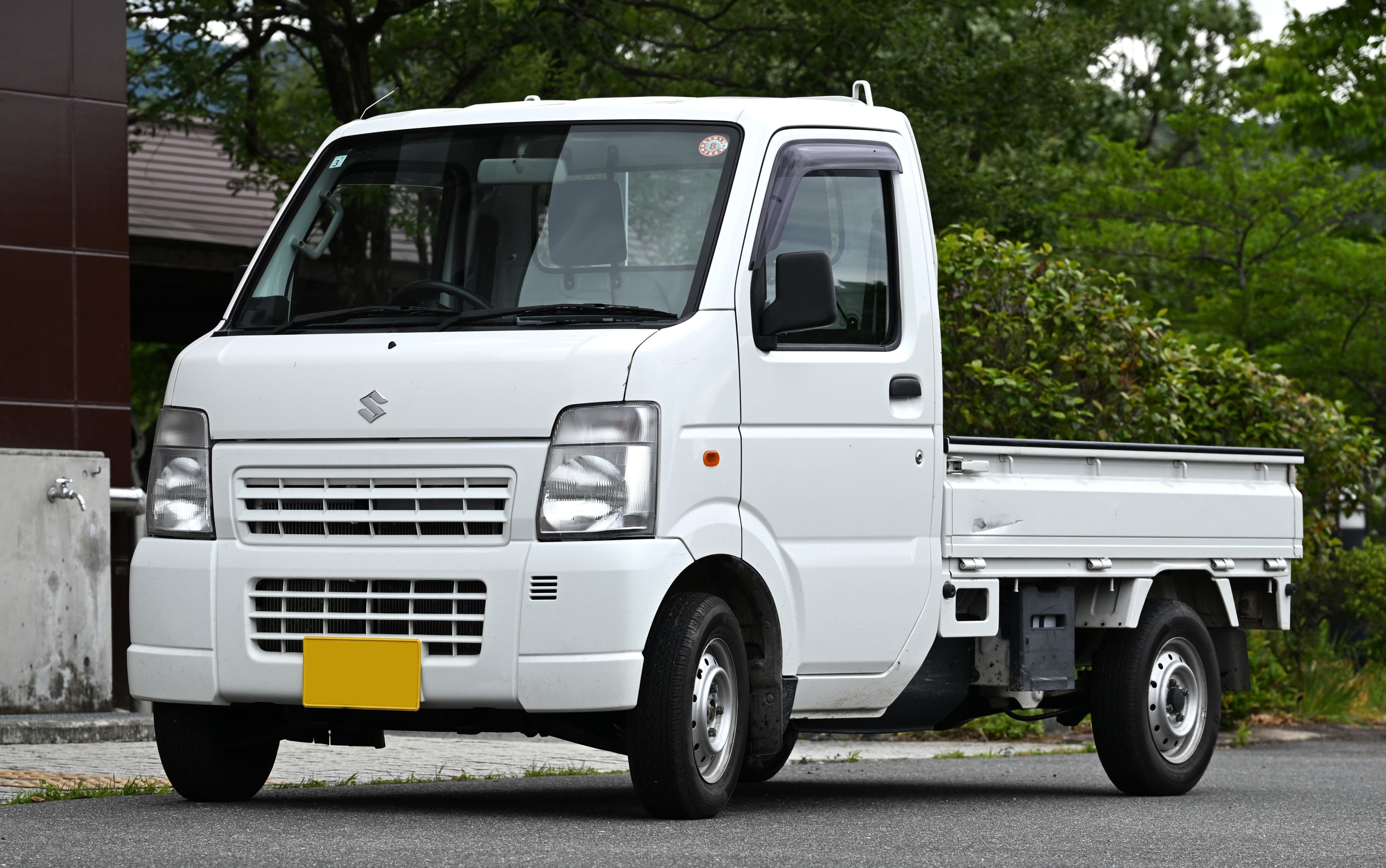
I get this question at least twice a week. Someone DMs me, emails the site, or corners me at a meet: "Be honest with me — is buying a kei truck actually smart, or am I about to make a really expensive mistake?"
Look, here's the deal. I own a '97 Suzuki Carry I call Old Faithful, a '98 Honda Acty Van, and a '93 Cappuccino. I am clearly not the poster child for restrained vehicle purchasing. But I've also been in this world long enough to know that kei trucks aren't for everyone — and pretending otherwise does you a disservice.
So let's do this properly. No cheerleading. No gatekeeping. Just the honest math, the real trade-offs, and enough information for you to decide for yourself.
The Case For: Why Kei Trucks Are Genuinely Smart
The price is absurd, in a good way. You can buy a running, titled kei truck for $5,000-$8,000. A decent one with low kilometers runs $8,000-$12,000. Compare that to... anything else with a bed. A new Tacoma starts at $32,000. A used Ford Ranger with 80,000 miles is still $18,000+. Even a beat-up S10 will cost you $6,000 and give you a truck that's actually beat up. Old Faithful cost me $6,200 in 2022. I've put maybe $1,500 into maintenance over four years. That's less than six months of payments on a new midsize truck.
Fuel economy makes hybrid owners jealous. Most kei trucks get 35-45 mpg. Old Faithful averages about 40 on mixed driving around Boise. At current gas prices, I spend roughly $25-30 a month on fuel. My buddy's F-150 costs him $250. I spend more on coffee than I do on gas. The math is stupid simple.
They actually hold and gain value. Here's something that surprises people: kei trucks are appreciating. The 25-year import rule means supply is permanently limited — Japan only made so many, and they're not making more. Rina Hayashi, our research editor, tracked the numbers and found 15-25% appreciation over the past three years on popular models. I could sell Old Faithful tomorrow for more than I paid. Try getting that from a depreciating Nissan Frontier.
The utility is real. A kei truck bed is roughly 6 feet long by 4.5 feet wide. That's enough for plywood sheets, a yard of mulch, a riding mower, a full camping setup, or about 400 pounds of questionable impulse purchases from the hardware store. I've hauled firewood, furniture, landscaping supplies during my Boise landscaping days, and once an entire chicken coop in Old Faithful. The dump bed models are even better — but that's a whole other conversation.
The fun factor is off the charts. I cannot overstate this. Driving a kei truck is the most fun you can have at 35 mph. The go-kart steering, the fact that you're sitting basically on top of the front axle, the way every trip to the grocery store feels like an adventure. Every parking lot becomes a comedy show because people lose their minds when they see you. Emi laughs at me because I volunteer for every errand just to drive Old Faithful. She's not wrong.
The community is incredible. The kei truck scene is one of the friendliest car communities I've ever been part of. No gatekeeping, no "my build is better than yours" nonsense. Just people who think tiny trucks are cool and want to help each other out. Dave Russo, Suki Tanaka, Rina Hayashi — some of my best friendships in this world started because of these trucks. You will make friends. This is a guarantee.
The Case Against: The Stuff Nobody Wants to Talk About
Now here's where I need to be honest with you, because the internet has enough cheerleading already.
Safety is not great. I'm not going to sugarcoat this. Kei trucks have no airbags, no crumple zones, no ABS, no traction control. You are sitting inches from the front bumper with a 660cc engine behind you and sheet metal that's about as thick as a soda can. In a serious collision with a modern vehicle, you lose. Period. This is the single biggest reason some people should not buy a kei truck. If your commute involves highways with 70 mph traffic and distracted SUV drivers, think hard about this. I mean really think about it.
Highway driving is a white-knuckle experience. Kei trucks max out around 60-65 mph, and they're not happy about it. At highway speed, you feel every gust of wind, every passing semi, every imperfection in the road. Old Faithful can technically do 65, but I wouldn't call it "comfortable." I'd call it "an aggressive negotiation with physics." If you need to regularly drive 70+ mph, a kei truck is the wrong vehicle. Full stop. I drove the Carry from Portland to Bozeman once and the highway portions were genuinely stressful — I wrote about it and the lesson was clear: back roads only.
Parts can be a scavenger hunt. Common models like the Carry, Hijet, and Acty have decent parts availability — Dave Russo has sourced parts for his '96 Hijet without too much pain, and he wrote a whole maintenance and parts guide about it. But if you buy a rarer model or need body panels, you might be waiting weeks for parts from Japan. Oil filters and brake pads are easy. A specific trim piece or weatherstripping? Patience required.
Registration is a maze. Every state handles kei trucks differently. Some register them as regular vehicles. Some restrict them to off-highway use only. Some require inspections that don't really make sense for a 25-year-old Japanese minicar. Rina maintains our 50-state regulation guide and it's genuinely complicated — what's legal in Idaho might get you a citation in California. Check your state before you buy. Not after. Before.
Comfort is relative. No air conditioning on most models (some later ones have it). Manual everything. Seats that were designed for the average Japanese frame of the 1990s, which means anyone over 6 feet tall is going to have a conversation with the ceiling. Road noise is significant. Boise summers in Old Faithful's cab with no AC are... character-building. You are not buying a Lexus. You're buying a purpose-built work vehicle that happens to be charming.
There are no modern features whatsoever. No backup camera, no Bluetooth, no cruise control, no power steering on most models, no power windows. Dave has great guides on adding aftermarket Bluetooth and other upgrades, but out of the box, you're driving a vehicle from a different era. Some people love that. Some people hate it. Know which one you are before you buy.
So Who Should Absolutely Buy One?
The homesteader or farmer who needs a light-duty truck for property work, hauling feed, moving tools between buildings. A kei truck is perfect for this. Low speed, high utility, minimal fuel cost, and it fits on trails that a full-size truck can't touch. This is the use case kei trucks were literally designed for in Japan, and it translates perfectly to American rural life.
The hobbyist with another daily driver who's got a regular car for commuting and wants something fun and useful for weekends, projects, and meets. This is the sweet spot and where most happy kei truck owners land. I fall into this category — Old Faithful isn't my only vehicle, she's the fun one.
The small business owner. Landscapers, mobile vendors, farm stand operators, maintenance crews — I ran a landscaping side gig around Boise with Old Faithful and the ROI was real. Kei trucks are working vehicles that cost a fraction of a new commercial truck. Check out our landscaping guide for the full breakdown.
The collector who appreciates Japanese engineering, likes owning something nobody else on their street has, and understands that these trucks are a finite resource that's only getting scarcer. Every year, there are fewer clean ones left in Japan.
Who Should Probably Not Buy One?
The highway commuter. If your daily drive involves 20+ miles of interstate at 70 mph, a kei truck will make you miserable and potentially unsafe. Get something else. I mean this sincerely.
Someone who needs their only vehicle. Can a kei truck be a sole vehicle? Technically yes, and some people do it. But for most Americans, the speed limitations and lack of features make it a tough only-car. Unless you live somewhere rural with 35 mph roads and everything you need within 15 miles, have a backup plan. A kei truck is the best second vehicle on the market and a questionable first vehicle. That's my honest take.
A family with young kids. No car seat anchors. No airbags. No rear seat on most models. I love these trucks, but I wouldn't put kids in one as a daily driver. Weekend farm runs? Sure. School drop-off in traffic? No.
The Bottom Line
Is a kei truck smart? For the right person, with the right expectations, buying the right model in the right state — yes. Genuinely, unambiguously yes. The cost of ownership is laughably low, the utility is real, the community is great, and the driving experience is something you can't get anywhere else.
But "smart" requires honesty. If you need highway speed, modern safety, or a do-everything vehicle, a kei truck will disappoint you. And a disappointed owner is a truck that ends up sitting in a garage.
Here's what I wish someone had told me before I bought Old Faithful: buy it for what it is, not what you want it to be. A kei truck is a brilliant second vehicle, an unbeatable farm truck, and the most fun you'll have on four wheels for under $10,000. It is not a Tacoma replacement, a family hauler, or a highway cruiser.
Still on the fence? Run the numbers through our import cost calculator, take the "Which Kei Truck?" quiz to find your match, or start with the complete buying guide. And if you decide it's not for you? That's cool too. At least you'll know why.
Is it perfect? No. Is it worth it? Absolutely.