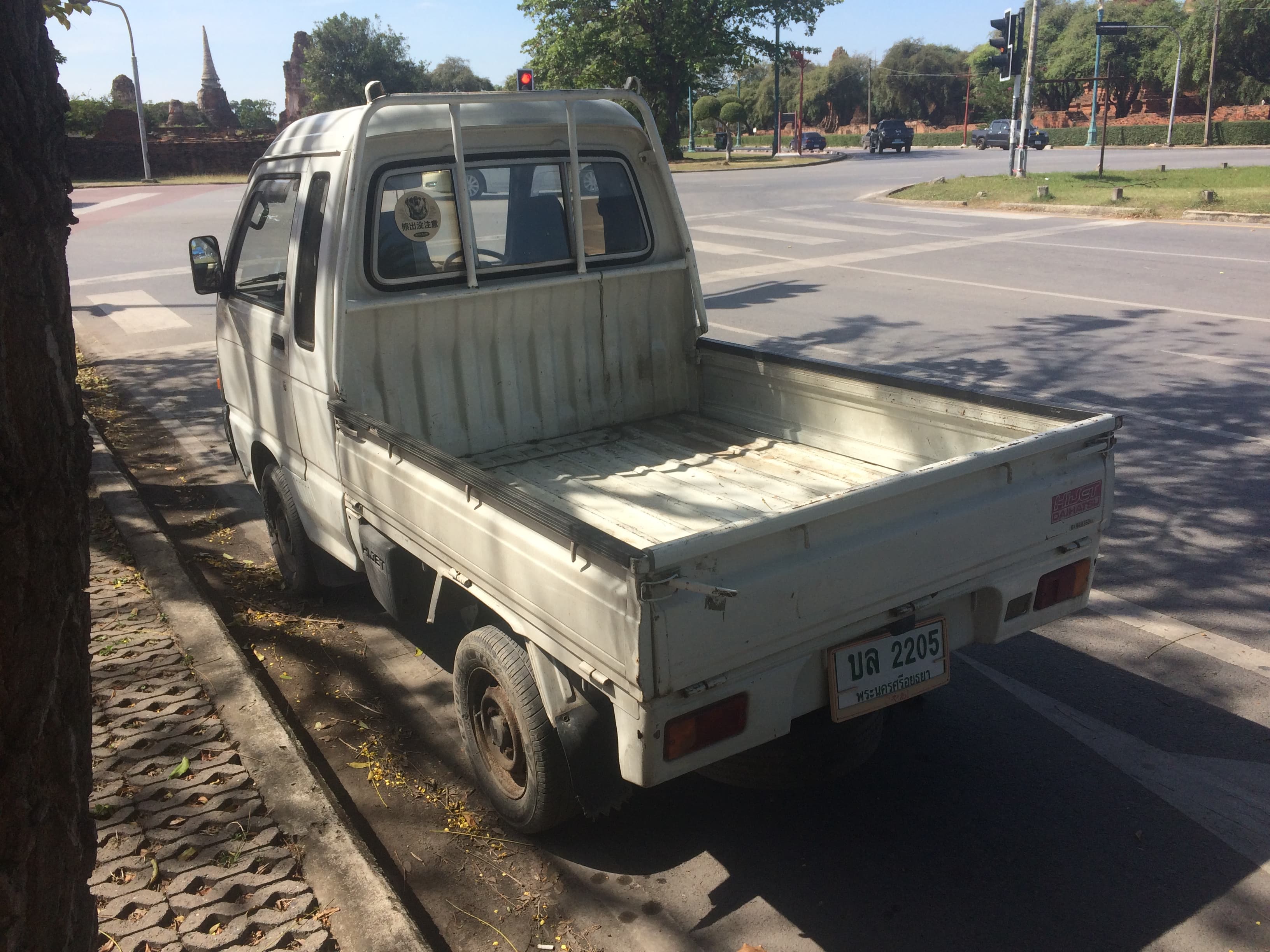
I pulled The Cab's OEM filter at 38,000 miles. Gray as concrete dust. Held it up to the light — couldn't see through it. That truck had been breathing through a dirty sock for who knows how long.
Swapped in a K&N cone filter and the throttle response changed immediately. Not "10 extra horsepower" — more like "the engine actually responds when I ask it to." These 660cc motors have no power to spare. Every bit of intake restriction matters more on a 45 HP engine than it does on a 200 HP one.
Why Stock Airboxes Are Restrictive
The factory airbox on most kei trucks prioritizes noise suppression over airflow. The intake path makes two or three 90-degree turns before air reaches the throttle body. The paper element clogs fast in dusty conditions. For a 45-50 HP engine, every bit of restriction matters more than it would on a 200 HP motor.
Pro tip: even if you don't upgrade to an aftermarket filter, check your OEM filter every 5,000 miles. These little engines work hard. A clogged filter tanks your fuel economy and throttle response faster than you'd think. Jake's maintenance guide covers the full service schedule.
Filter Types: Your Three Options
1. OEM Drop-In Replacement ($12-20) Same paper element, fresh and clean. Zero modification needed. Best option if you just want your engine breathing right again. I keep spares on the shelf — they're cheap enough to swap every oil change.
2. Drop-In Performance Panel Filter ($25-45) A washable cotton-gauze filter (K&N, BMC, Unifilter) that fits your existing airbox. Better airflow than paper, and you clean it instead of replacing it. Pays for itself after 2-3 filter changes. This is what I recommend for most people.
3. Cone Filter / Short Ram Intake ($40-120) Ditch the airbox entirely. A cone filter bolts directly to the throttle body via a silicone coupler. Maximum airflow, loudest intake noise, and the most involved install. This is what I run on The Hijet.
A cone filter without a heat shield sits right next to the engine. Hot air is less dense — you're trading filtration area for intake temperature. On cab-over trucks where the engine lives under your seat, this matters. Either fabricate a simple aluminum heat shield or stick with a drop-in panel filter.
Fitment by Model
| Truck | Engine | OEM Filter Size | Cone Inlet Size | Notes |
|---|---|---|---|---|
| Suzuki Carry (DC51T/DD51T) | F6A | 210×170mm panel | 2.25" (57mm) | Most aftermarket options available |
| Suzuki Carry (DA63T) | K6A | 220×175mm panel | 2.25" (57mm) | Same throttle body as F6A |
| Daihatsu Hijet (S110P) | EF-ES | 200×165mm panel | 2.0" (51mm) | Smaller inlet — measure twice |
| Subaru Sambar (KS3/KS4) | EN07 | 195×160mm panel | 2.0" (51mm) | Tight engine bay, panel filter recommended |
| Honda Acty (HA3/HA4) | E07A | 205×170mm panel | 2.25" (57mm) | Airbox removal is straightforward |
| Mitsubishi Minicab (U42T) | 3G83 | 200×165mm panel | 2.0" (51mm) | The Cab runs a K&N RU-2820 |
Measure your throttle body inlet diameter before ordering a cone filter. I cannot stress this enough. I've seen guys on Reddit order a 3-inch universal cone for a 2-inch inlet and then wonder why it doesn't fit. Ask me how I know.
Tools Needed
- 10mm socket and ratchet (the only tool for airbox bolts on most models)
- Flathead screwdriver (hose clamp tightening)
- JIS #2 screwdriver (for any factory screws — don't strip them with a Phillips. I will die on this hill.)
- Pliers (for spring clamps on older models)
- Measuring tape or calipers
Installation: Cone Filter Swap
I'm covering the cone filter install since OEM drop-ins are self-explanatory — open box, swap filter, close box.
- Disconnect the battery. Negative terminal first, 10mm wrench. Takes 30 seconds and prevents any MAF sensor issues.
- Remove the OEM airbox. Two to four 10mm bolts hold it down. Disconnect the intake hose from the throttle body — it's either a spring clamp or a worm-drive clamp. Unplug the MAF/air temp sensor connector if your model has one.
- Test fit the silicone coupler on the throttle body inlet. It should slide on snugly with about 1 inch of overlap. Tighten the hose clamp to 3-4 Nm — finger tight plus a quarter turn. Don't gorilla it.
- Attach the cone filter to the other end of the coupler. Tighten the clamp.
- Reconnect the MAF sensor. If your truck has a MAF in the original intake tube, you'll need to splice it into the new setup or use an adapter. Most pre-OBD kei trucks don't have one — they use a MAP sensor on the manifold instead.
- Reconnect the battery. Start the engine. Listen for any whistling or sucking sounds at the coupler joints — that's an air leak. Tighten clamps as needed.
- Check for clearance. Close the cab (or hood on van models). Make sure the filter isn't touching anything hot — exhaust manifold, valve cover.
Pro tip: spray a little soapy water on the coupler joints with the engine running. Bubbles mean air leak. A $2 diagnosis that saves you from chasing phantom idle issues later.
What to Expect (Honest Numbers)
Let's be real. You're not bolting a turbo onto this thing.
- Naturally aspirated 660cc: 1-3 HP gain. You'll feel better throttle response, especially at higher RPM. You won't feel more top-end speed.
- Turbo models (Carry turbo, Hijet turbo): 3-5 HP gain. The turbo benefits more from reduced intake restriction. Pair this with a cat-back exhaust and you'll notice a real difference.
- Sound: noticeably louder intake whoosh. Some people love it. Your neighbors at 6 AM might not.
- Maintenance: washable filters (K&N, etc.) need cleaning every 10,000-15,000 miles. K&N recharge kit is $12. One kit lasts years.
Common Mistakes
- Wrong inlet size. Measure the throttle body, not the airbox outlet. They're often different diameters.
- Over-oiling a washable filter. Too much filter oil gets sucked into the MAF sensor and fouls it. Thin, even coat. Let it dry 20 minutes before installing.
- No heat shield on a cone filter. Your intake temps will climb 20-30°F sitting next to the engine. Rina did a deep dive on engine specs — these motors are happiest with cool, dense air.
- Forgetting to reset the ECU. After changing the intake flow characteristics, disconnect the battery for 10 minutes so the ECU relearns fuel trim. Otherwise you'll get a rough idle for the first 50 miles.
Cost & Time Summary
| Upgrade | Parts Cost | Install Time | Difficulty |
|---|---|---|---|
| OEM replacement filter | $12-20 | 5 minutes | 1/10 |
| Drop-in performance panel | $25-45 | 5 minutes | 1/10 |
| Cone filter + silicone coupler | $60-120 | 30-60 minutes | 3/10 |
Total time for the cone swap on The Hijet: 40 minutes, including the 10 I spent looking for the 10mm socket I dropped into the engine bay. Obviously. Total cost: $78 (K&N RU-2820 cone + silicone coupler + two hose clamps). Difficulty: 3/10.
Best bang for your buck? The $25 drop-in panel filter. Zero fabrication, better airflow, washable forever. Save the cone filter for when you've already done the exhaust and want the full intake-exhaust combo.
Now go check your air filter. I bet it's worse than you think.