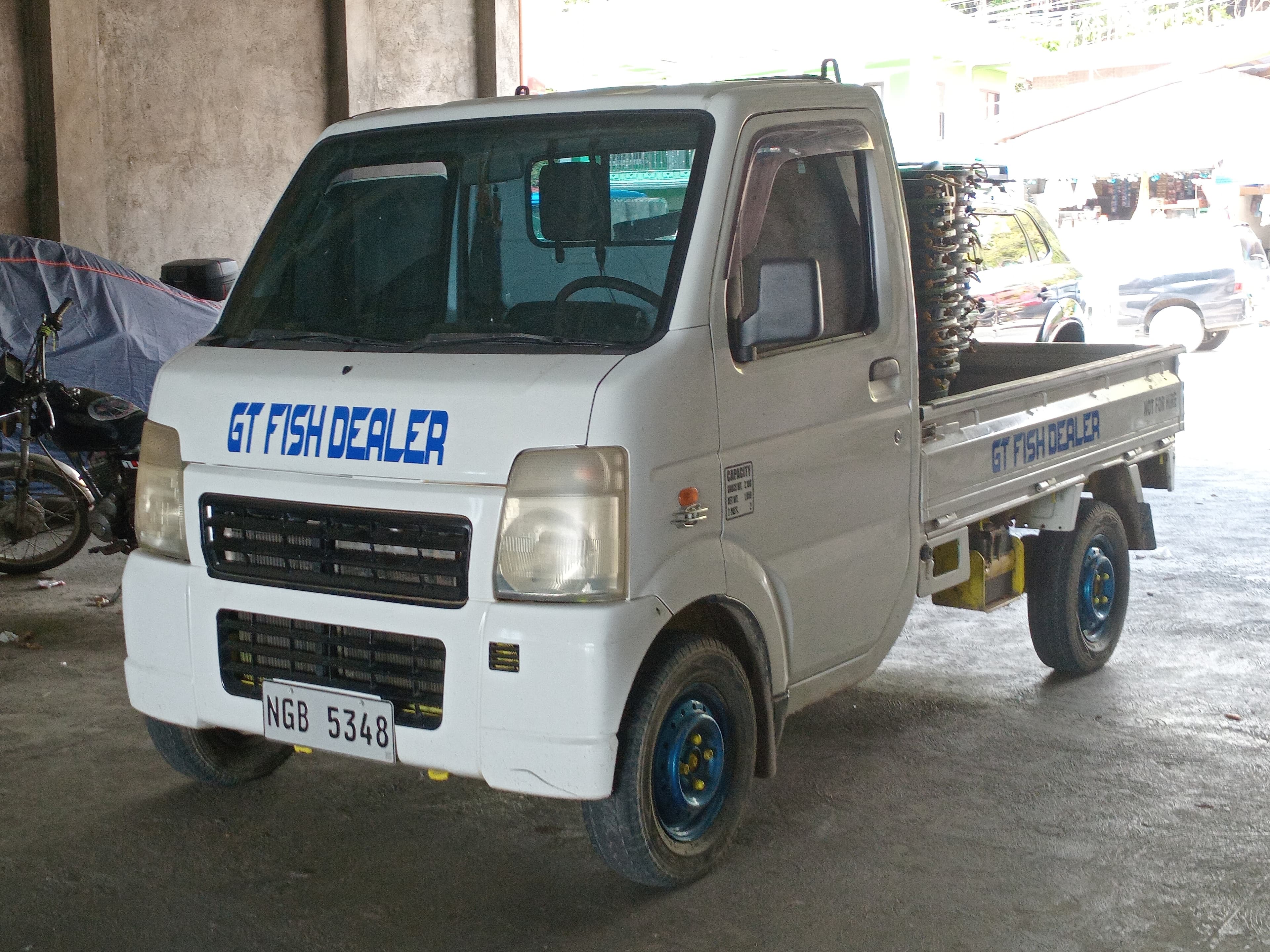
Someone on r/keitruck this month was looking at a truck in Ohio carrying an Ohio-issued title that says Mini Truck on it, and wanted to know whether Indiana would take it. That is a genuinely good question, and it is one our 50-state regulations tracker does not answer — that tracker tells you whether a state will register a kei truck, not whether it will accept another state's paperwork.
So let me explain the mechanism. I am deliberately not going to tell you what any specific state will do with any specific out-of-state title, because I have not verified that state by state and inventing it would be worse than useless. What I can give you is how the process works and exactly what to ask, which is the part that generalizes.
The core thing people get wrong
An out-of-state title does not transfer. It is surrendered and replaced.
When you bring a vehicle titled elsewhere to your own state, your DMV does not import the other state's decision. It takes the old title as proof that the seller owned the vehicle, then issues a new title under its own classification rules, its own inspection requirements, and its own view of what the vehicle is.
Everything follows from that. The other state's opinion about the vehicle is not binding on yours. Full stop.
The corollary is the expensive one: buying across a state line does not get you around your own state's rules. If your state does not register kei trucks for road use, a title from a state that does will not change the outcome. People try this every year. It does not work, and you find out after you have paid and driven several hundred miles.
Why the "Mini Truck" class complicates it
Some states created a dedicated vehicle class for these trucks. Others register them as standard motor vehicles. Others use a low-speed vehicle class, a farm class, or an off-road class. Others do not register them at all.
That means the title in your hand may describe a vehicle class that your state does not have. When that happens, your DMV has to decide what the vehicle is under its own scheme, and there are three broad outcomes:
- A clean equivalent exists. The vehicle re-titles into the matching local class with no drama.
- It maps to something more restrictive. The truck is road-legal but under conditions the previous owner never had — a speed cap, a road-class limit, no highway use.
- There is no equivalent. The state does not register this category, and the answer is no.
Which of those you get is a fact about your state, not about the truck. And it is knowable in advance — by asking.
The one call that prevents the whole problem
Before you send money, call your own DMV — not the seller's, not a forum, not us. Ask these, in this order:
- "Does this state register a Japanese kei truck for on-road use?" If no, stop. You have your answer and it has nothing to do with titles.
- "The vehicle is currently titled in [seller's state] as a [read the exact wording off the title]. What vehicle class would it be titled as here?"
- "Does that classification carry any road restrictions?" Speed, road class, highway access.
- "What inspection is required for an out-of-state transfer?" Many states require a VIN inspection for imports specifically.
- "Do you require the original federal import paperwork, or is the existing US title sufficient?"
Get the answer in writing if you possibly can — an email from the DMV, or at minimum the name of the person you spoke to and the date. Kei truck classification is inconsistently understood at the counter, and we have documented cases where the answer varied by office within the same state. A name and a date is what you use when the second clerk disagrees with the first.
Paperwork to get from the seller
Whatever your state ends up saying, you want a complete file. The gaps are much harder to fill after the sale, when the seller has your money and no reason to answer the phone.
Non-negotiable:
- The original title, signed over correctly. Not a photocopy. Check the name on it matches the person selling.
- A bill of sale with date, price, both parties, and the vehicle description.
- Odometer disclosure. Note that JDM odometers usually read in kilometers — record the unit.
Get these too, especially for an imported vehicle:
- The federal import paperwork — the EPA and DOT entry forms from when it originally cleared customs.
- The Japanese export certificate (and any translation), even though the truck has been titled in the US since.
- Any prior state's inspection certificate.
The import file matters more than people expect. Some states want to see the vehicle's original entry documentation regardless of how many times it has been titled domestically. If the seller is the original importer, this is easy. If the truck is on its third owner, the file is often lost — which is worth knowing before you buy, not after.
Lien and fraud checks
Standard used-vehicle diligence still applies, and it is easier to skip on an enthusiast purchase:
- Check for a lien recorded on the title. A title with an unreleased lien is not clear to transfer.
- Match the chassis number on the truck to the number on the title, physically, with your own eyes. Our chassis decoder will confirm the code makes sense for the claimed model and year.
- Be careful with a title in someone else's name. "I never titled it" is sometimes innocent and sometimes a jumped title. Either way it is your problem after the sale.
What we do and do not know
Being straight with you about the limits of this article: we track, per state, whether kei trucks can be registered and under what restrictions, and we keep that current — you can see the verification date on every state page. We do not currently track how each state treats an incoming out-of-state kei or Mini Truck title, because doing that properly means primary-source verification fifty times over, and a wrong answer here sends someone to a counter that turns them away.
So this guide gives you the mechanism and the questions. Your DMV gives you the answer. For the general titling process once you have that answer, our title and registration guide covers the standard walkthrough.
If you go through this and get a clear response from your state, that is genuinely useful information and almost nobody publishes it. Send it to us and we will build the reference the honest way — from confirmed cases rather than assumption.
Before you drive to collect it
A short version to work through:
- Confirm your state registers kei trucks at all — regulations tracker.
- Call your DMV with the exact wording from the seller's title.
- Confirm what inspection and paperwork they require.
- Sort insurance before you title it — carriers refusing grey-market imports is a real failure point, and our insurance guide covers it.
- Verify the chassis number physically against the title.
- Then, and only then, arrange the trip.
The truck being three states away is not the risk. The classification not surviving the move is.