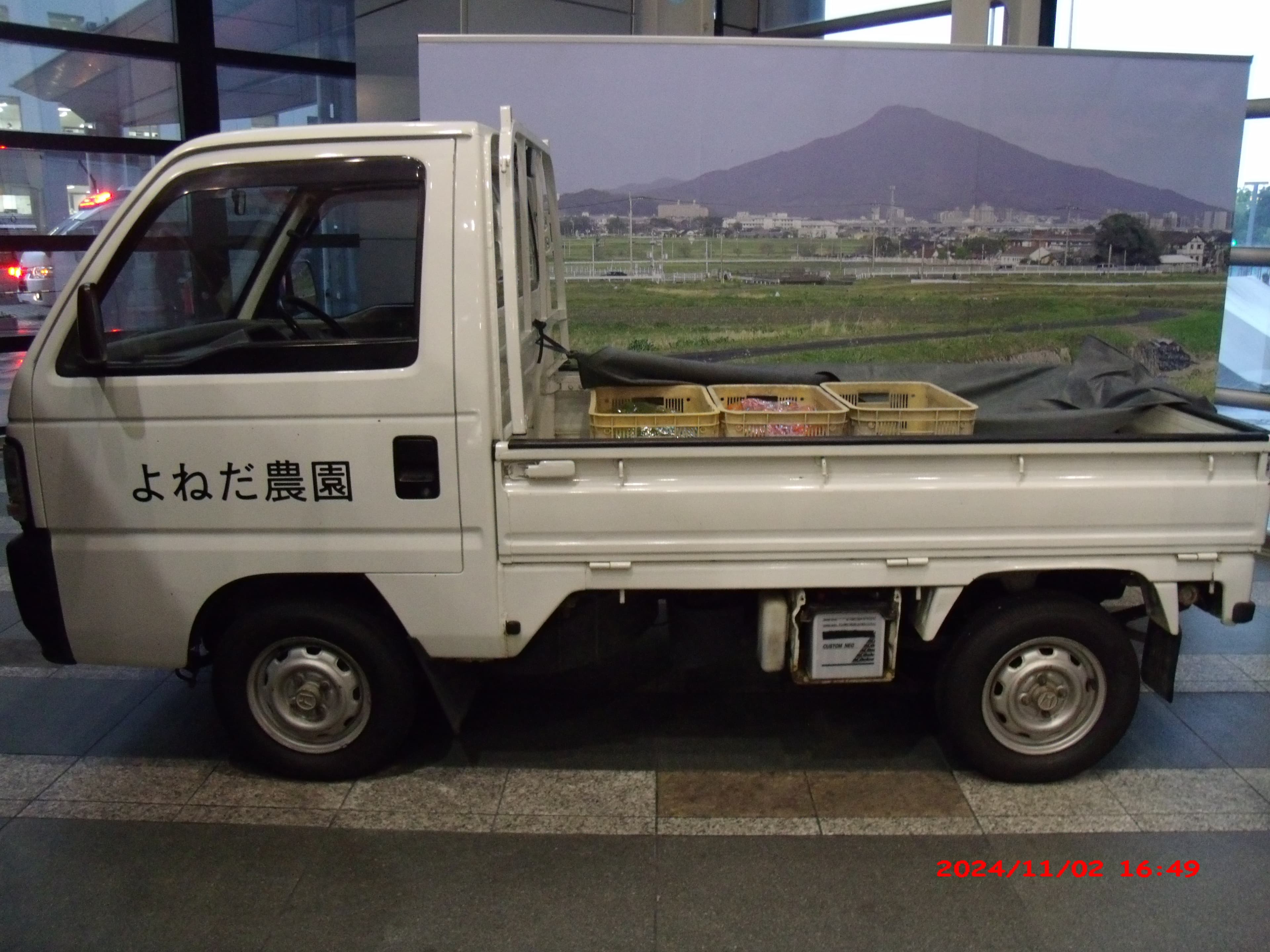
Let me save you the trouble I went through. The first week I had my Hijet, I drove to the landscape supply yard and asked for a yard and a half of gravel. The guy with the loader looked at my truck, looked at me, shrugged, and dumped it in.
The rear end dropped about four inches. The front wheels got light enough that steering felt like a suggestion. I drove home at 15 mph praying the whole way, and the leaf springs have never been quite the same.
Don't be me.
The Official Number: 770 lbs (350 kg)
Every kei truck — Carry, Acty, Hijet, Sambar, all of them — is rated for approximately 350 kg of payload. That's about 770 lbs in the bed. This number is set by the Japanese kei vehicle regulations, not by the individual manufacturer.
Here's what that actually looks like in real materials:
| Material | Weight per unit | How much fits in 770 lbs |
|---|---|---|
| Topsoil | ~2,200 lbs/yard | About 1/3 yard |
| Gravel | ~2,800 lbs/yard | About 1/4 yard |
| Mulch | ~800 lbs/yard | About 1 yard |
| Hay bales | ~50 lbs each | 15 bales |
| Bags of concrete (80 lb) | 80 lbs each | 9 bags |
| Firewood (split) | ~25 lbs/bundle | 30 bundles |
| Feed bags (50 lb) | 50 lbs each | 15 bags |
| Lumber (2x4x8) | ~10 lbs each | 70+ boards |
| Water (5-gal buckets) | ~42 lbs each | 18 buckets |
These are maximums. You should also subtract the weight of any toolboxes, racks, or accessories in the bed. A loaded toolbox can easily weigh 50-100 lbs — that comes out of your 770.
What Actually Breaks When You Overload
I've seen it all in kei truck communities. Here's the damage order when people push it:
First to go: Leaf springs. They sag permanently. I've seen trucks with 2-3 inches of permanent droop from habitual overloading. New leaf springs from Japan run about $200-400 plus shipping.
Next: Brakes. Kei truck brakes are sized for a 1,600 lb vehicle carrying 770 lbs of cargo. Load 1,500 lbs and your stopping distance doubles. On a hill, that's genuinely dangerous.
Then: Tires. Kei truck tires are tiny — 12" or 13" with low load ratings. Overloading causes excessive heat buildup, sidewall bulging, and blowouts.
Finally: The frame. This takes years of abuse, but I've seen trucks with cracked frame rails from repeated overloading. That's a death sentence for the vehicle.
The Smart Way to Haul Heavy
If you need to move more than 770 lbs, make two trips. I know, nobody wants to hear that. But here's my actual workflow:
- Weigh your load mentally. If it's heavy material (gravel, soil, concrete), assume it weighs more than you think.
- Check the rear end. If the bumper is noticeably lower, you're probably close to or over the limit.
- Drive slow. Even at 770 lbs, a fully loaded kei truck handles differently. Take turns slower, brake earlier, avoid highways.
- Two half-loads beat one overload. Every time. Your truck will last ten years instead of two.
Model Differences
Not all kei trucks are equal for hauling:
Honda Acty — Mid-engine layout means better weight distribution when loaded. The rear doesn't squat as badly because engine weight is already centered.
Subaru Sambar — Independent rear suspension handles loads more gracefully than leaf springs, but the rear-engine weight means less capacity before the rear gets heavy.
Suzuki Carry / Daihatsu Hijet — Traditional front-engine, leaf-spring rear. The most common layout. Handles loads predictably but squats the most.
Hijet Jumbo (extended cab) — Shorter bed means the load is more concentrated. Same 770 lb rating but the per-square-foot weight is higher.
Adding Helper Springs
If you regularly haul near the limit, consider adding helper springs or a leaf spring upgrade. A set of helper springs runs about $100-150 and adds maybe 200-300 lbs of effective support. It's the single best mod for a working kei truck.
The Bottom Line
770 lbs is plenty for 90% of what people use kei trucks for — feed runs, firewood, mulch, tools, farm supplies. Just respect the limit. Your truck will repay you with decades of reliable service.
And if the landscape supply guy offers to "just top it off" — say no. Learn from my mistakes.