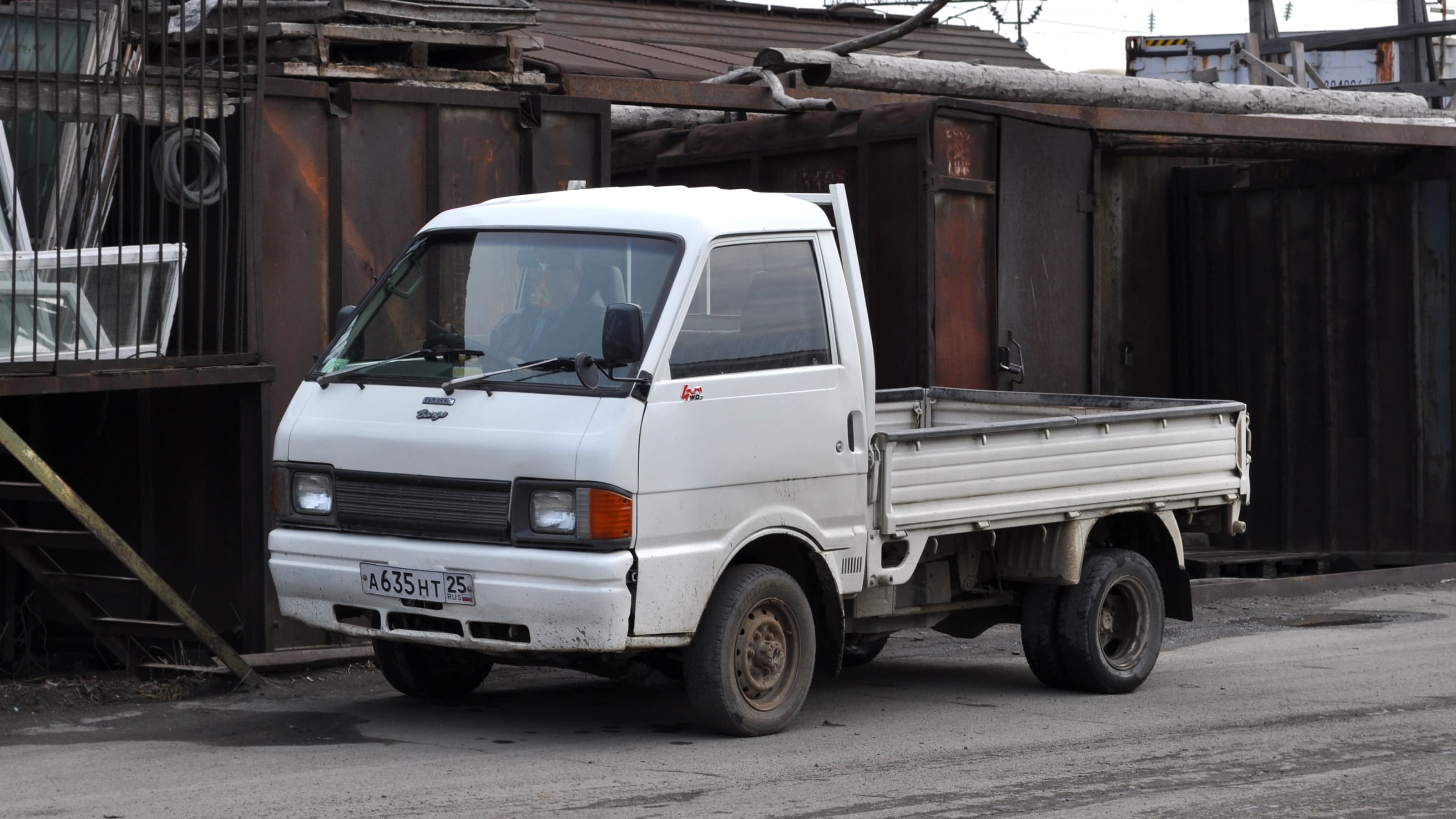
"Yeah the kei truck is cool, but could you actually DRIVE it every day?"
I daily drove Old Faithful for eight months in Boise — commuting, hauling kids to soccer, Home Depot runs, Miso riding shotgun to the coffee shop. So yeah, I can answer this from experience. But I also talked to dozens of daily drivers across the US to give you the full picture.
The short version? It depends entirely on your commute and your expectations. My 12-mile Boise commute on surface roads? Perfect. A highway slog in Sacramento? I'd feel different. Let me walk you through it.
The stuff that'll make you love it
The fuel bill is hilarious. At 35-45 mpg, you're spending $40-60 a month. That's less than most people's coffee budget. Coming from a full-size at 15 mpg, you'll feel rich.
You also become a local celebrity, and I'm not exaggerating. Daily drivers consistently report getting stopped 2-3 times a day by strangers. Thumbs up from other drivers. Notes on the windshield. One guy in Texas told me his 5-minute fuel stop takes 20 minutes now because everyone wants to talk about it.
Parking is a superpower. Old Faithful is shorter than a Civic. I nose into spots that SUVs drive past without thinking. Parallel parking? Effortless. Tight parking garages? No problem.
And there's something about the simplicity. No touchscreen to crash. No lane departure warning beeping at you. No backup camera — you can see everything anyway, the truck is tiny. Just a steering wheel, pedals, a gearshift, and the road. After eight months of that, getting back into a modern car felt like being yelled at by a dashboard.
One more thing — 4WD actually works. Boise winters are no joke, and Old Faithful with proper winter tires handles snow better than most 2WD sedans. The light weight means you float on top rather than dig in.
The stuff that'll test you
I'm not going to pretend it's all perfect. Here's the honest truth.
Highway driving is the number one complaint, and it's valid. At 60-65 mph, Old Faithful is loud. The 660cc engine is working hard. Conversation requires raised voices. Merging from a short on-ramp in a 45hp truck is genuinely stressful — you're watching that gap in traffic a lot more carefully than you would in a Camry. Crosswinds from passing semis push you around. Some trucks struggle to hold 65 on uphill grades. If your commute is highway, this will test your patience.
The ride is... agricultural. Leaf spring suspensions designed for 770 lbs of cargo mean that empty, they bounce. A lot. Rough roads transmit every crack and bump directly to your spine. Dave has some suspension mod advice that helps, but you're never going to mistake it for a Lexus.
Heat works fine (eventually — tiny engine, takes a while to warm up). AC is rare and weak. In Texas or Arizona summers, this is a dealbreaker for some.
Parts can be slow. Need a new side mirror? Two-week wait from Japan. You learn to plan ahead and keep consumables in stock. Check out our parts sourcing guide for the best suppliers.
And I'll be real about this one: the size makes you think about rear-end collisions. The back of the bed is at bumper height for most SUVs. You get very aware of your mirrors. It's not a reason not to daily one, but it's something you'll notice.
The stuff that surprised me
Insurance is shockingly cheap — $200-400 a year for full coverage through a collector insurer. My Carry costs less to insure annually than my wife's CR-V costs for three months.
Maintenance is almost nothing. Oil changes every 3-4 months ($20 DIY), tires every 2-3 years ($250-300), occasional brake work. Several owners I talked to spend under $500 a year total. These engines were built to Japanese commercial vehicle standards — they seem to run indefinitely with basic care.
And the cab is weirdly comfortable. Despite the tiny exterior, the upright seating position gives you more headroom and legroom than a lot of compact cars. You sit higher than a sedan, good visibility all around. The driving position is more van than car.
What the daily drivers recommend
I asked everyone I talked to for their top tips. Here's what keeps coming up:
Get 4WD — even if you think you don't need it. Resale is higher and you'll appreciate it the first time it rains. Upgrade the headlights to LED immediately — the stock halogens are dangerously dim. Put fresh tires on — the Japanese-market tires are usually old and hard, and new all-seasons transform the ride. A $20 FM Bluetooth transmitter makes the commute 100x better. Keep AAA — not every tow truck knows how to load a kei truck.
And wave at other kei trucks. There's an unwritten rule. If you see another one, you wave. It's like Jeep culture but smaller.
So should you daily it?
It's not about whether a kei truck can be a daily. It's about whether your daily fits a kei truck. Trust me on this one.
If your commute is under 20 miles on local roads, you have a second vehicle for long trips, and you don't mind attention — do it. You'll save a fortune on fuel, insurance, and maintenance, and you'll have more fun than anyone else on the road.
If you're doing highway commuting, need AC in a hot climate, or aren't comfortable being the smallest thing on the road — it's a great second vehicle, but maybe not your only one.
Either way, check the regulations in your state first, and run the numbers on total cost. The math is stupid simple.