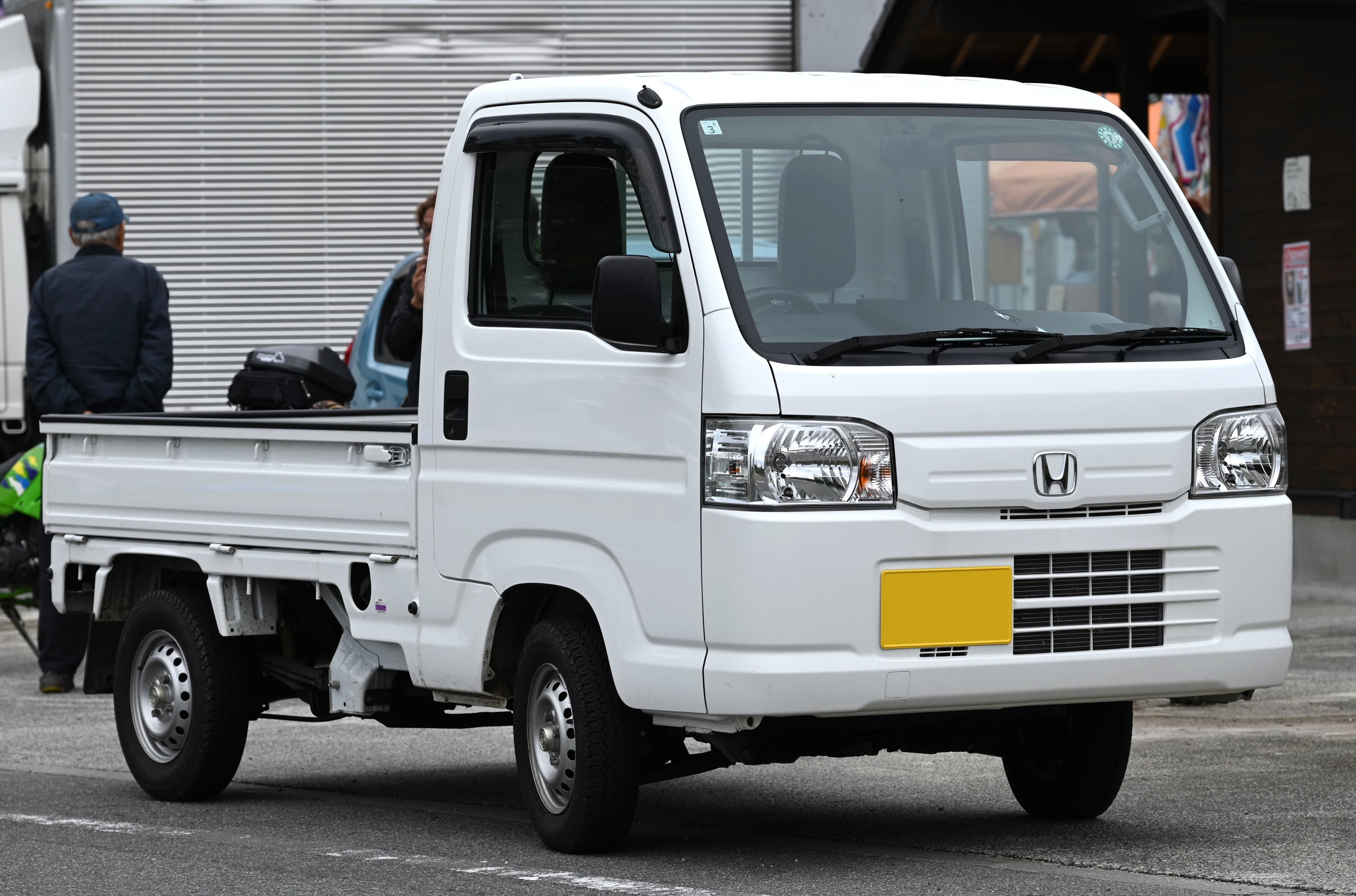
You know what nobody tells you about the Honda Acty? The first time you drive one, you think something's broken. You're sitting there, engine running, and it's just... quiet. Like, suspiciously quiet. I remember climbing into my '98 Acty Van — "The Van," as she's now known — after spending three years daily driving my '97 Carry "Old Faithful," and I genuinely checked the gauges twice. The engine was behind me, not under me, and that changes everything.
I've been daily driving The Van for over two years now. Boise commute, grocery runs, weekend camping trips, the works. And every time someone on Reddit asks "Honda Acty as a daily?" I have opinions. Strong ones.
The Mid-Engine Difference Is Real
Here's the deal. Most kei trucks — your Suzuki Carry, your Daihatsu Hijet — sit the engine under the driver's seat or up front. The Honda Acty puts it behind the cab, under the bed. That one engineering choice cascades into everything about the daily driving experience.
First: traction. With the engine weight over or near the rear axle, the Acty hooks up better in rain, gravel, and Idaho's lovely winter slush. Old Faithful would get squirrelly on wet corners. The Van just... goes. Second: heat. In a Carry, your feet are basically resting on a 660cc space heater. July in Boise hits 100 degrees and your left foot is slow-roasting. The Acty? Normal floor temperatures. Revolutionary stuff.
Third, and this is the big one: noise. The cab is genuinely quieter. You can hold a conversation at 50 mph without shouting. (Yes, my wife noticed. She will now ride in The Van but refuses Old Faithful. Her words: "I'm not screaming over an engine to ask you about dinner.")
Daily Comfort: Honest Assessment
Let's not pretend this is a Land Cruiser. The Acty cab is small. I'm 5'10" and my knees are friendly with the dashboard. But there are a few things the Acty does better than people expect.
The seating position is more upright and car-like than most kei trucks. Visibility is enormous — you can see every corner of this thing, which makes parking in tight spots almost fun. The steering is light and direct. Around town, it feels nimble in a way that makes SUVs seem absurd.
Storage is minimal. You get a small glovebox, maybe a door pocket if you're lucky, and that's about it. I bolted a small organizer to the dash. Problem solved. The heater works great — Honda overengineered the HVAC on these — and the defroster actually clears the windshield, which is more than I can say for some kei trucks Dave Russo has cursed at in his shop.
The stock Acty seats are flat and thin. A $30 lumbar support cushion and a seat cover with extra padding transform the daily driving experience. If you're commuting more than 20 minutes each way, this is non-negotiable.
City vs. Highway: Where the Acty Shines (and Doesn't)
City driving is where the Acty earns its keep. The tight turning radius, the visibility, the light controls — it's genuinely pleasant at 25-45 mph. Parking? You fit everywhere. I've parked The Van in motorcycle spots. (Not on purpose. Mostly.)
Highway driving is the compromise. The E07A makes 45 horsepower. At 55 mph, you're fine. At 60, it's working. At 65, you're at redline in fifth gear and praying nobody in an F-150 is tailgating you. I take the highway when I have to, but I've mapped out surface-street routes for my regular trips. If your commute is 70 mph interstate, an Acty daily is going to test your patience. Check out our full daily driving guide for highway strategies.
Fuel Economy: The Silver Lining
Here's where dailying an Acty gets fun to talk about. I'm averaging 38-42 mpg around town, 33-35 on the highway (because you're wringing its neck at higher speeds). At current gas prices, I fill up the 7.9-gallon tank for about $25 and drive for a week and a half. My buddy's Tacoma spends that in two days. Every. Single. Time.
Maintenance Reality
The E07A is Honda's little bulletproof motor. Same family as the Beat's engine, detuned for reliability. Oil changes every 3,000 miles with good synthetic, timing belt every 60,000 miles, and it just keeps going. I've seen these engines hit 200,000 miles with zero internal work.
Regular maintenance is straightforward — Dave Russo has a great maintenance guide that covers the basics for all kei trucks, and most of it applies directly. The mid-engine layout means oil changes require crawling under the bed or dropping a panel, which adds five minutes versus a front-engine truck. Not a big deal once you've done it twice.
The Parts Problem
Look, here's the deal. This is the Acty's biggest weakness as a daily driver. Suzuki Carry parts are everywhere — Amazon, eBay, dedicated importers, your neighbor's garage. Honda Acty parts are harder. Not impossible, but harder.
Brake pads, oil filters, belts — the wear items are available from Japanese parts importers and usually arrive within a week. But if you need a specific body panel, an interior trim piece, or an obscure electrical component, you might be waiting on a shipment from Japan. I keep a spare set of brake pads, a water pump, and an alternator belt in my garage at all times. Call it paranoia. I call it planning. Rina Hayashi ran the numbers in her Acty vs Carry comparison and parts costs run about 15-20% higher for the Acty on average.
Acty Truck vs. Acty Van: Different Dailies
The Acty truck and Acty van are the same platform but different daily experiences. The truck gives you the open bed — better for hauling, worse in rain. The van gives you enclosed cargo space and rear seats that fold flat, which is why I went van for my camper conversion.
For pure daily driving, I'd lean van. You can throw groceries in the back without worrying about weather, the enclosed space is quieter, and you get more versatility. But if you're hauling lumber, mulch, or equipment regularly, the truck bed is the obvious call.
Who Should (and Shouldn't) Daily an Acty
Daily an Acty if: your commute is under 15 miles, mostly surface streets or 55 mph roads. You like the mid-engine feel. You don't mind sourcing parts from importers. You want something that turns heads at every gas station and coffee shop. You value driving engagement over comfort.
Don't daily an Acty if: your commute is 70+ mph interstate. You need to carry passengers regularly (the cab fits two, tight). You want zero-effort parts availability. You need serious cargo capacity beyond what a 660cc engine can move.
Is it perfect? No. Is it worth it? Absolutely. The Acty has this quality that's hard to describe — it feels like Honda cared about how it drives, even though it's a tiny utility vehicle. The steering has weight. The shifter clicks into gear. The engine revs clean. It's a Honda, and you can feel it.
Two years into daily driving The Van, I still look back at it when I park. Old Faithful doesn't get jealous — she knows she's my first love. But the Acty? The Acty is the one I grab the keys for every morning.
If you're on the fence, go drive one. Then come back and tell me I'm wrong. I'll wait.