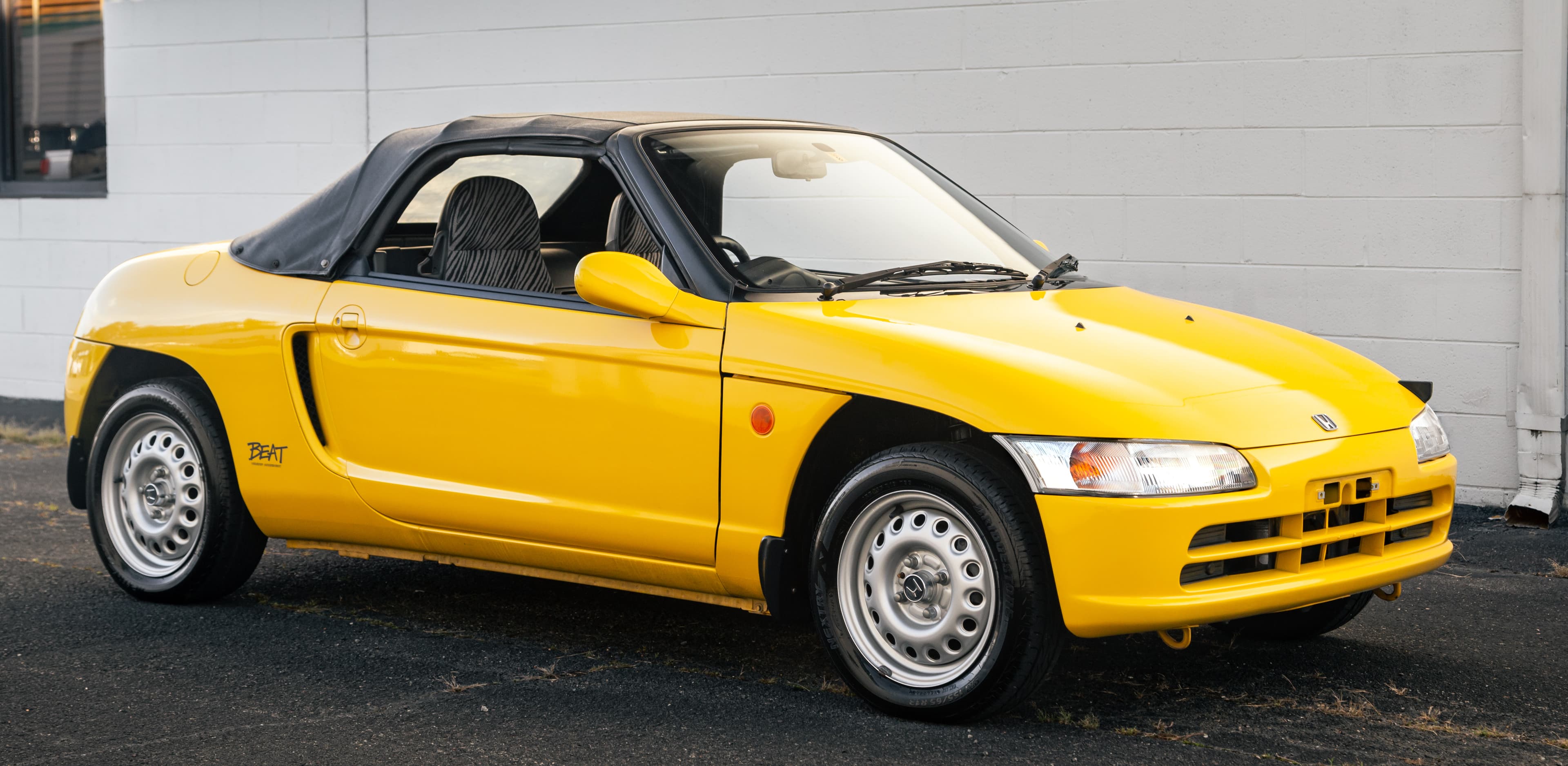
I do not own a kei truck. My dad has a '95 Carry, and what I actually want is a Honda Beat — which is why I have spent longer than is reasonable trying to work out whether I would fit in one.
The question comes up constantly. Someone on r/keitruck asked it this month in the most practical form possible: "Do you have a Beat/Cappuccino/other kei car in New Jersey? Can I sit in it to see if I fit?" They were willing to drive to a stranger's house rather than guess.
They were right to be worried, and here is the uncomfortable part: the data that would answer this does not exist in public. Japanese manufacturers did not publish US-style interior dimension tables for these cars in 1991, and nobody has measured them systematically since. So the question gets answered by strangers estimating, which is how you end up buying a car you cannot drive.
What is fixed, and cannot be shopped around
This is the single most useful thing to understand, and almost nobody says it.
Since October 1998, Japanese kei regulations cap the vehicle at 3.4m long, 1.48m wide, and 2.0m tall, with a 660cc engine and a 64PS gentleman's agreement on power. Manufacturers build to the limit, because within a class defined by a box there is no advantage in leaving space unused.
The consequence: width is the same across every modern kei vehicle. A Hijet, a Beat, an AZ-1 and a Wagon R are all 1.48m across the outside. Interior shoulder room varies only by door card and seat thickness — centimetres, not inches.
If you are broad across the shoulders, no amount of model-shopping fixes it. Every kei vehicle is the same width by law. This is worth knowing before you spend three weekends comparing models on the assumption that one of them is roomier.
Older vehicles are narrower still. The 1998 change widened the class; a car built before it was designed to a tighter limit. So a 1991 Beat is not merely at the modern limit, it predates it — which is exactly why these cars feel like wearing tight clothing.
What genuinely varies: the roof
Height is where kei vehicles differ enormously, and it is the constraint that actually stops people.
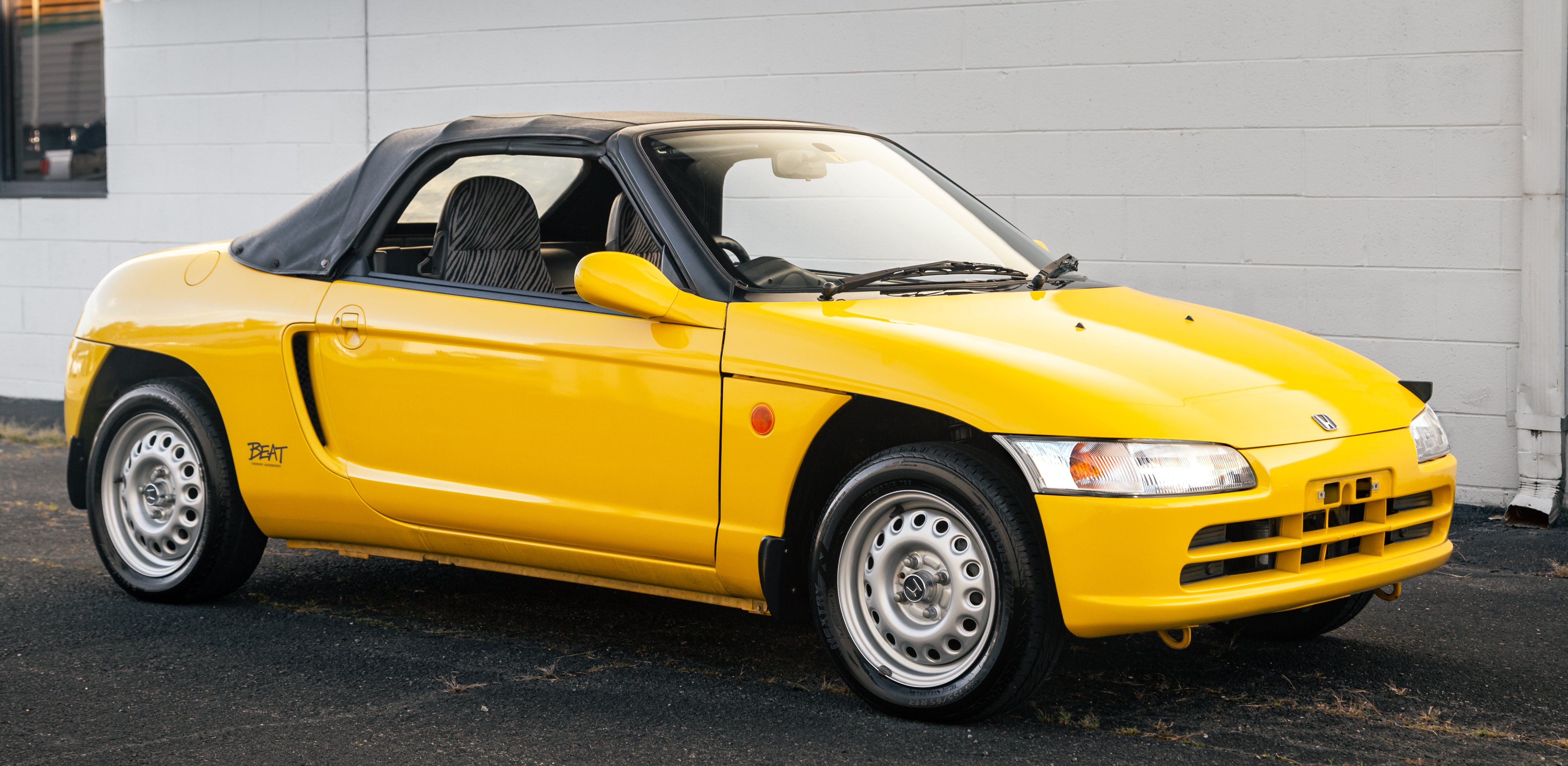
A Honda Beat stands 1,175mm tall overall. A Suzuki Cappuccino is 1,185mm. That is the whole car, roof to road — barely higher than the waistline of a modern SUV. Subtract ground clearance, floor pan, and seat, and the space left above your head is what it is.
A kei truck is a completely different proposition. Cab-over layout, engine under the seat, upright seating, and a roofline that can approach the 2.0m limit. Headroom is rarely the problem in a Carry or a Hijet. Legroom is, because there is no bonnet ahead of you to stretch into — the front axle is roughly under your feet.
So the two body styles fail tall drivers in opposite ways:
| Kei sports car (Beat, Cappuccino, AZ-1) | Kei truck / van | |
|---|---|---|
| Roof height | Very low — the binding constraint | Tall, rarely an issue |
| Legroom | Adequate for most | Short; no bonnet to stretch into |
| Fails you if | You have a long torso | You have long legs |
| Seat travel | Limited, fixed buckets in some | Usually more adjustment |
Height is the wrong question
Everyone asks "can a 6-foot person fit?" It is the wrong measurement, and it is why the answers online contradict each other.
What matters is how your height is distributed. In a car with a 1,175mm roofline, the limit is your seated torso height — hip to crown. A 6'2" driver who is mostly leg may fit a Beat better than a 5'10" driver who is mostly torso, because the legs can be angled and the head cannot.
The most specific figure I could find puts comfortable Beat legroom at around 5'10", with taller drivers fitting but cramped. Treat that as a signpost, not a threshold. It is one source, it does not say whose proportions, and it will not tell you what happens at 6'1" with a long back.
A quick proxy: sit upright on a hard kitchen chair and measure from the seat surface to the top of your head. That is your seated torso height, and it is the number a low kei car actually cares about. Someone can then measure a real car against it without you being there.
The three measurements to ask for
If you cannot sit in the car — and importing means you usually cannot — ask the seller for these, with the driver's seat all the way back:
- Floor to headliner, directly above the seat cushion. Not the highest point of the roof. The point above where your head will be.
- Seat back to the face of the pedals. This is your real legroom, and it is the number a spec sheet never gives you.
- Seat width between the bolsters, and whether the seat is a fixed bucket or slides and reclines.
Then measure the same three things in a car you already know you fit in, and compare. Absolute numbers mean nothing on their own; the difference against a known-good reference means everything.
A seller who will not spend five minutes with a tape measure has told you something useful about how the rest of the transaction will go.
Sellers routinely quote overall vehicle height when asked about headroom. A 1,175mm figure describes the outside of the car and says nothing about the space above your head. Ask specifically for floor-to-headliner.
What to do if you do not fit
Options exist, in rough order of sanity:
- Change body style, not model. If a Beat defeats you on headroom, a kei van or truck almost certainly will not. The vertical difference between body styles is far larger than any difference between two sports cars.
- Seat rails. Lowering or relocating rails buys headroom in a low car. It is common in the Beat community and it is real fabrication work, not a bolt-on.
- Thinner seat. A fixed bucket with less padding recovers a surprising amount. It also removes adjustment you may want.
- Remove the roof. Both the Beat and the Cappuccino are convertibles. Not a year-round answer in most states, but genuinely relevant to whether you enjoy the car.
What does not work is buying and hoping. These are $8,000–$20,000 cars that are difficult to resell quickly if you cannot drive them, and shipping one back is not a thing that happens.
An honest note on sources
I could not find published interior dimensions for these cars from the manufacturers, and the secondary sources contradict each other — some describe the Cappuccino as roomier overall, others give the Beat more legroom. Both cannot be the headline answer. Where sources disagree and I cannot resolve it, I would rather say so than pick one and sound confident.
That is why this guide gives you a method rather than a table. The table would look more authoritative and would be partly wrong, which is the worse outcome when someone is deciding whether to spend $15,000.
Before you buy
- Measure your seated torso height, not just your height.
- Remember width is fixed by law — do not shop for a roomier kei, there isn't one.
- Match body style to your proportions: long legs suit the low cars, long torso suits the tall ones.
- Get the three measurements from the seller, seat fully back.
- Compare against a car you already fit, not against a spec sheet.
And if there is an owner within driving distance, ask to sit in it. The person on r/keitruck who offered to drive across New Jersey had the right instinct. Fifteen minutes in someone's driveway beats every number in this article.