The Post That Broke the Internet (or at Least r/trucks)
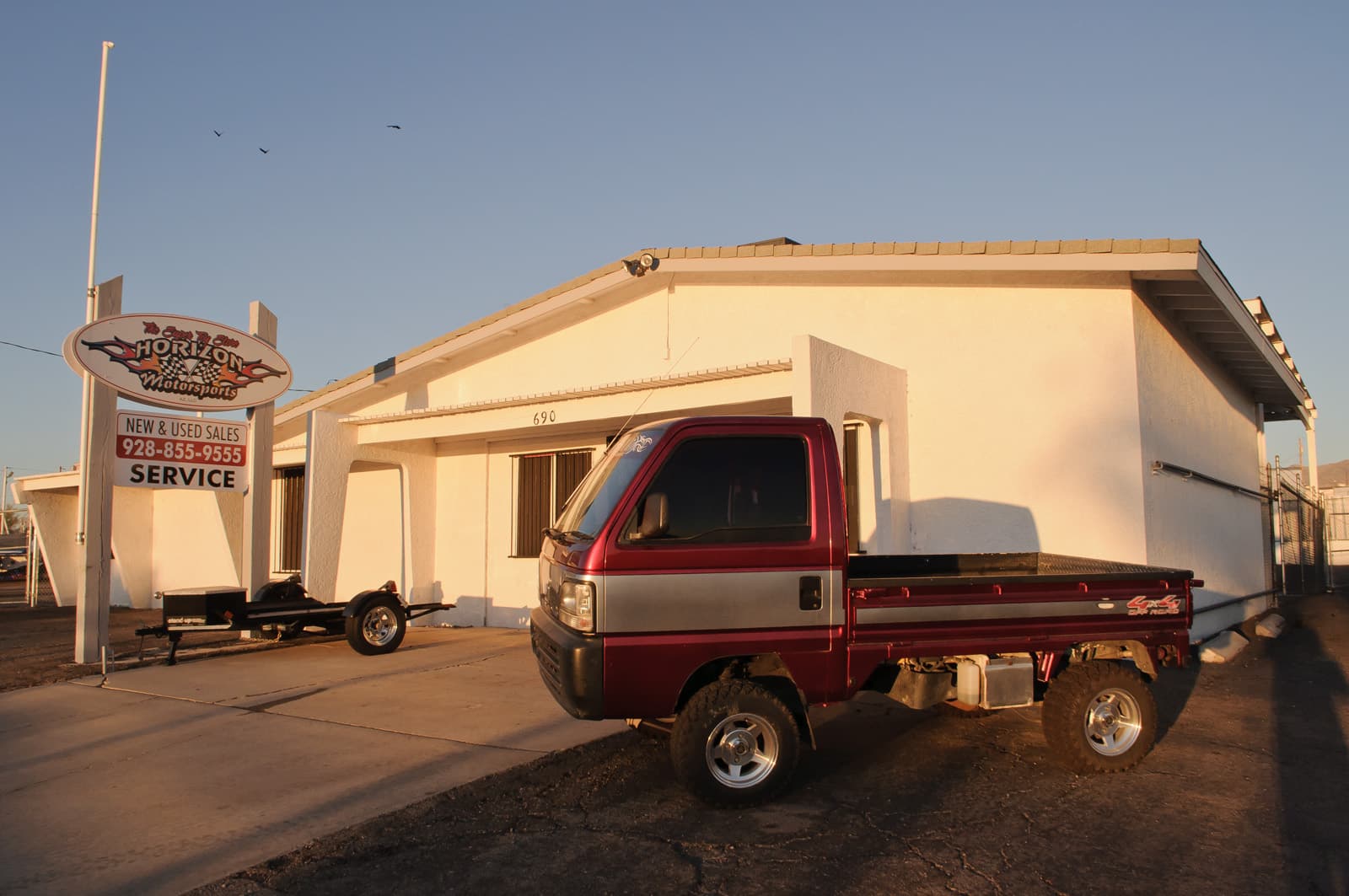
Somebody on Reddit posted a side-by-side photo of a Suzuki Carry next to a Ram 1500. The caption was something like "my kei truck has the same bed length as a Ram." It got over 3,000 upvotes and 90 comments, most of which were some variation of "no way" followed by "wait, actually..."
I saw that post and grabbed my tape measure. Because I'm the kind of guy who trusts numbers, not the internet.
They were right.
The Numbers Don't Lie
Here's the part that makes full-size truck owners uncomfortable. I've rounded to the nearest tenth of a foot — grab your own tape measure if you don't believe me.
| Vehicle | Bed Length | Bed Width | Bed Area (sq ft) |
|---|---|---|---|
| Suzuki Carry | ~6.1 ft | ~4.6 ft | ~28.1 |
| Ram 1500 Crew Cab (5'7" bed) | ~5.6 ft | ~5.4 ft | ~30.2 |
| Ford F-150 SuperCrew (5'5" bed) | ~5.5 ft | ~4.9 ft | ~27.0 |
| Honda Ridgeline | ~5.3 ft | ~4.2 ft | ~22.3 |
| Toyota Tacoma Double Cab | ~5.0 ft | ~3.8 ft | ~19.0 |
Read that again. The Suzuki Carry — a vehicle that costs less than a new set of wheels for an F-150 — has a longer bed than every crew cab pickup on the market. The Ford's bed is actually shorter. The Tacoma gets embarrassed. The Ridgeline should probably just stop calling itself a truck.
And the Carry's bed area? It beats the F-150 SuperCrew and absolutely destroys the Tacoma. Only the Ram wins on area, and that's purely because it's wider.
How Did We Get Here?
This didn't happen overnight. It happened over about 25 years, and nobody really noticed because each generation only shrunk the bed by an inch or two.
Here's the story in three sentences: Americans started using pickup trucks as family cars. Manufacturers responded by making the cab bigger and more comfortable. The bed — you know, the part that makes it a truck — got whatever space was left over.
In 1995, a standard Ford F-150 had a 6.5-foot bed and a regular cab. Today, about 80% of F-150 buyers choose the SuperCrew (four-door) with the 5.5-foot bed. That's a full foot of bed length, traded for a back seat with leather and heated cupholders.
Meanwhile, the Japanese kei truck formula hasn't changed. Cab stays small (it's a work vehicle, not a living room), and every remaining inch goes to the bed. The priorities are literally reversed.
What a Kei Truck Can't Do
I'm not going to sit here and pretend a Carry is a replacement for an F-250. Let's be honest about the limitations.
Payload. A kei truck maxes out at about 770 lbs. That's the hard ceiling. A half-ton pickup can handle 1,500-2,000 lbs without breaking a sweat. If you're hauling gravel, concrete, or a pallet of anything, the full-size wins every time. (I learned this lesson the hard way.)
Towing. Kei trucks aren't rated for towing. Some people pull small trailers at low speeds — I won't judge — but if you need to tow a boat, a camper, or a car hauler, you need a real tow vehicle.
Highway speed. A Carry tops out around 60-65 mph and it's not enjoying itself up there. Full-size trucks will cruise at 80 all day on the interstate. If your daily commute involves merging onto I-95, the kei truck is not your friend.
Crash protection. There's no getting around physics. A 1,700-lb vehicle with a 660cc engine offers less protection than a 5,000-lb truck with a V8 and twelve airbags. This is a real consideration, not something to hand-wave away.
What a Kei Truck Does Better
Now the fun part.
Maneuverability. The Carry's turning radius is about 15 feet. An F-150's is about 23 feet. That means the kei truck can U-turn on a two-lane road while the F-150 needs a three-point turn. In a parking garage, on a farm path, or in a tight alley, the kei truck goes places the full-size literally cannot.
Parking. A Carry is 11 feet long. An F-150 SuperCrew is 20 feet long. You can parallel park a kei truck in a space that a Corolla would skip. I've parked mine sideways in spots that would make a Civic driver jealous.
Fuel economy. 35-45 mpg versus 18-22 mpg. Over 10,000 miles a year at $3.50/gallon, that's roughly $500 in the kei truck versus $1,400 in the F-150. Almost a thousand bucks a year, and you still have the same bed length.
Purchase price. A decent imported kei truck runs $5,000-$12,000. A new F-150 starts around $36,000 and the average transaction price is over $60,000. You could buy five kei trucks for the price of one loaded full-size, and you'd still have bed length left over.
Registration and insurance. In most states, a kei truck costs a fraction of what a full-size costs to register and insure. Mine costs me about $400/year total. My neighbor's Ram is over $2,000.
The Philosophical Part (Bear With Me)
Here's what that Reddit post really exposed, and why it hit a nerve.
We've spent decades being told that bigger trucks are more capable trucks. That you need a $60,000, 5,000-lb vehicle to haul plywood and mulch on the weekends. The truck marketing machine — and I say this as someone who likes trucks — has been selling us size as a substitute for function.
But a tape measure doesn't care about marketing. A tape measure says the $7,000 Japanese truck from 1998 has a longer bed than the $65,000 American truck from 2025. That's not an opinion. That's geometry.
I'm not anti-full-size truck. I've owned three of them. But at some point, "truck" stopped meaning "thing that carries stuff in the back" and started meaning "big expensive vehicle that makes you feel important at Costco." The bed became an afterthought — a vestigial tail on what's essentially a luxury SUV with an open trunk.
The kei truck never forgot what it was for. It's a bed with a cab attached to it, not the other way around.
The Compensation Joke (I'll Make It So You Don't Have To)
Yes, I'm aware of what people say about guys who drive the biggest possible truck. I'm also aware that I drive a vehicle roughly the size of a golf cart with a bed the same length as theirs.
I'll let you draw your own conclusions.
What I will say is this: the most confident truck owner I know drives a 1996 Daihatsu Hijet with 140,000 kilometers on it and no air conditioning. He hauls more in a weekend than most full-size owners haul in a year. He doesn't need a 6,000-lb statement. He needs a bed, an engine, and four wheels.
He's got exactly that, and not an ounce more.
The Verdict
The bed length comparison isn't a gimmick — it's a genuine wake-up call about what modern trucks have become. A vehicle that weighs less than a Miata and costs less than a used Camry genuinely offers more cargo length than a brand-new crew cab pickup.
Does that mean everyone should sell their F-150 and buy a Carry? No. The full-size does things the kei truck can't, and vice versa. But the next time someone tells you they need a full-size truck to haul stuff, ask them what they're hauling.
Then ask them how long their bed is.
Then smile.
Curious how they actually stack up on paper? Check out our kei truck vs full-size comparison guide for the complete breakdown. For payload specifics, read the real payload guide. And if you want to put two specific trucks head-to-head, try our comparison tool.