Why Kei Vans Are Having a Moment
Something's happening in the kei vehicle world, and it's not just about trucks anymore.
I started noticing it about a year ago — more vans showing up at meets, more "kei camper" builds on Instagram, more people in the forums asking about the Sambar Van instead of the Carry. The micro camper movement found kei vans, and the match is almost too perfect. I own The Van — a '98 Acty Van — and I've watched it go from a curiosity to the vehicle people ask about most when I bring it to meets.
Think about it: a fully enclosed vehicle that gets 35+ mpg, fits in a compact parking spot, and has enough room to sleep in — for under $8,000. In a world where sprinter van conversions cost $50,000+ and van life influencers make it look like you need a rolling apartment, kei vans are the punk rock answer. They're van life on a budget. Stealth camping in something nobody looks twice at. Weekend adventure rigs that don't require a second mortgage.
But kei vans aren't just for campers. They're also killer delivery vehicles, mobile workshop rigs, and genuinely fun daily drivers. The enclosed cargo area means your stuff stays dry, secure, and out of sight — something I desperately missed during my landscaping days, hauling tools around Boise in Old Faithful's open bed while it rained.
So which one should you buy? Let me walk you through the lineup, what to look for, and how to pick the right one.
The Lineup: Every Kei Van You Can Buy in the US
Suzuki Every
The safe bet. The Every is the van version of the Suzuki Carry — the best-selling kei truck in the US. That means parts are everywhere, mechanics have seen them before, and you're never stuck waiting months for a distributor cap. It runs the same 660cc 3-cylinder (F6A or K6A) in a front-engine layout with RWD or 4WD.
The Every won't win any beauty contests, but it'll start every morning and you'll find parts at any kei vehicle dealer. If you're a first-time buyer or you need a van for delivery use, this is the one. Just try to get a K6A-era model (1998+) if you can — the older F6A is solid but less refined. There's a reason the Every is the most common kei van in America, and it's the same reason Old Faithful is the most common kei truck: Suzuki just makes things that work.
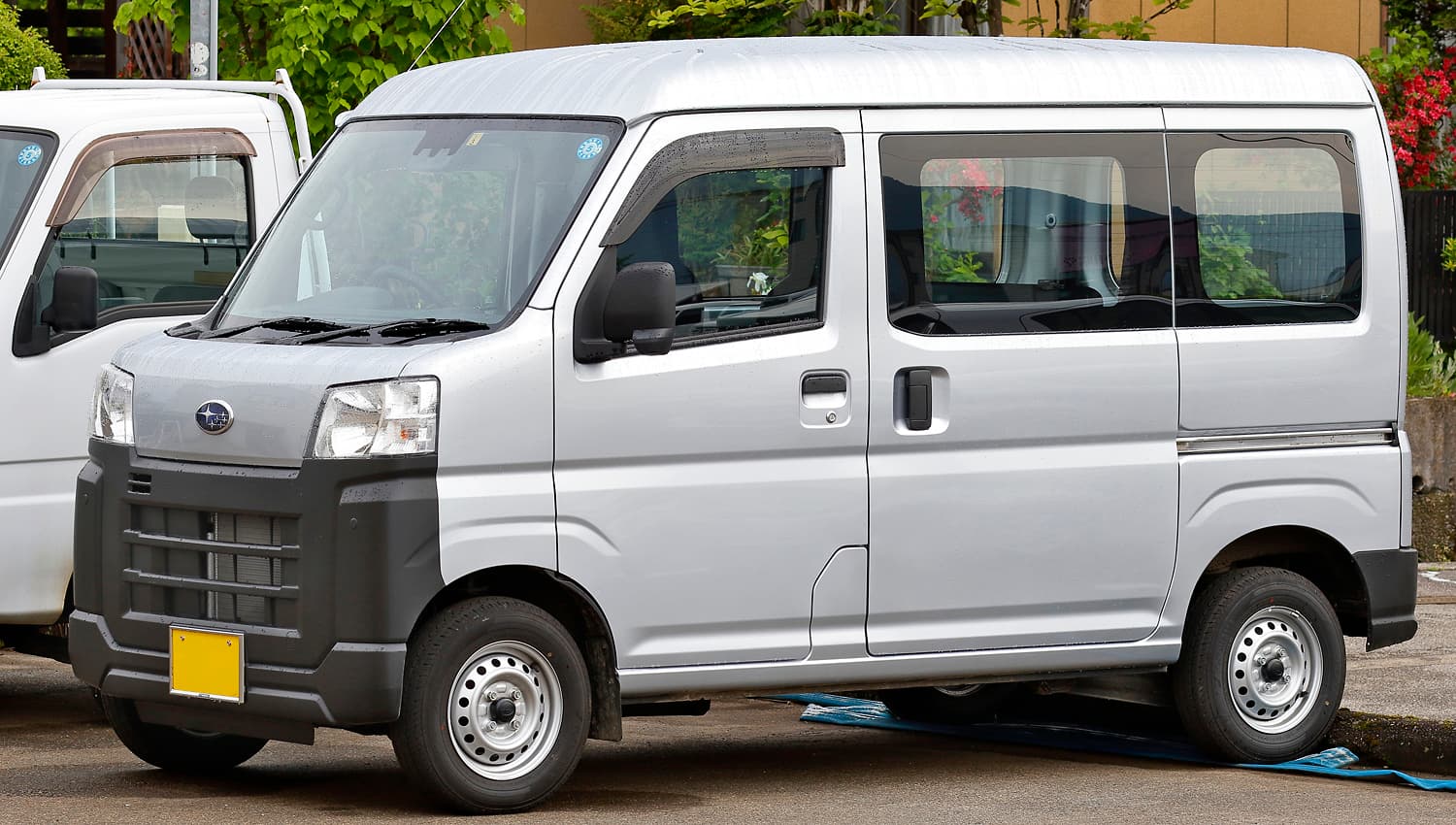
Subaru Sambar Van
The camper king. The Sambar Van has a rear-mounted engine, which means the cargo floor is completely flat from the front seats to the tailgate. For sleeping, that's everything. No transmission tunnel hump, no driveshaft running underneath — just a flat, usable floor. It runs a 660cc EN07 4-cylinder with a supercharged option available, in a rear-engine layout with RWD or 4WD.
I'm biased — my buddy's Sambar Van camper build is the reason I wrote this article. He spent $6,500 on the van and $400 on the camper setup, and he's done more weekend trips in the last year than I've done in five with Old Faithful and The Van combined. The flat floor is genuinely a game-changer for sleeping. Just watch out for engine heat in the cargo area during summer (that rear engine radiates), and if you're looking at supercharged models, check the SC for whine or boost leaks.
The Sambar Van is the best kei van you can buy for camping, and it's not even close. I'll take arguments on every other category, but not this one.
Honda Vamos
The cool one. The Vamos is what happens when Honda's designers actually tried to make a kei van look good. The boxy-but-purposeful styling, the mid-engine 660cc E07Z 3-cylinder layout, the surprisingly car-like driving experience — it's the kei van people buy because they want it, not just because they need enclosed cargo space.
The Vamos is the only kei van I'd call "cool" without air quotes. If budget isn't your primary concern and you want something that looks intentional rather than utilitarian, this is it. Prices are significantly higher though — $8,000-$14,000, and the mid-engine layout makes some maintenance tasks awkward. Fewer are available in the US too. But every time I see one at a meet, I understand why people pay the premium. Emi keeps pointing at them and saying "that one" — she might be right.
Mitsubishi Minicab Van
The value pick. The Minicab Van is the one that flies under the radar, and that works in your favor. Lower demand means lower prices, and Mitsubishi's 660cc 3G83 3-cylinder is a reliable little workhorse that doesn't ask for much. Front-engine with RWD or 4WD, same basic layout as the Every.
If your plan is "I need an enclosed kei vehicle for the least money possible," the Minicab Van is your answer. They're typically $1,000-$2,000 cheaper than equivalent Everys. Less aftermarket support and the interior trim feels more basic, but for a work van, who cares? Dave Russo's second truck is a '92 Minicab and he swears by Mitsubishi's reliability.
Daihatsu Atrai
The passenger van. The Atrai is the most car-like of the bunch. It was designed more as a people-mover than a cargo hauler, with better seats, more sound insulation, and available turbo power from the 660cc EF-DET 3-cylinder. If you want a kei van that your passengers won't complain about, this is it.
The Atrai blurs the line between kei van and kei car. The passenger-focused design means the cargo area is slightly smaller with seats up, and turbo models need more maintenance attention. Parts are harder to source in the US too. But if you're planning to carry people more than cargo, it deserves a serious look — especially the turbo models that make highway driving actually tolerable.
Van or Truck — How Do You Decide?
This is the question I get asked most, and honestly, I own both (Old Faithful the truck and The Van), so I've lived with both sides of this choice.
Pick a van when you want to keep cargo dry and secure without messing with tonneau covers or caps, when you're planning any kind of camper or sleeping setup, when you do deliveries or carry tools that need to stay out of sight, or when you drive in rain or snow frequently. That last one is bigger than people think — there were so many days in Boise where I had tools soaking in Old Faithful's bed while The Van sat in the driveway with a perfectly dry cargo area. Stealth camping is another van advantage that trucks simply can't match.
Pick a truck when you haul oversized items that won't fit through van doors — lumber, furniture, dirt. When you need a dump bed or want to hose out the bed. When you need maximum payload (trucks edge out vans slightly). When farm or ranch use means the bed gets genuinely dirty.
The real-world difference is smaller than you'd think. Most kei vehicle owners aren't hauling lumber every weekend. If your typical cargo is tools, groceries, camping gear, or boxes, the van is probably the smarter buy. If I could only keep one of my kei vehicles, I'd keep Old Faithful — but if I were buying my first kei vehicle today, I'd seriously consider starting with a van.
What to Inspect Before You Buy
Kei vans share most inspection points with kei trucks, but there are a few van-specific things that'll save you from expensive surprises.
Rust is the number one thing to check — specifically the floor pans and wheel wells. Kei vans sit low and the floor pans take a beating from road spray, especially on vans that came from Japanese prefectures that get snow. Get underneath and poke the floor pans with a screwdriver — if it goes through, walk away. Check both front and rear wheel wells for bubbling paint, which means rust is already advanced underneath. Look at the sliding door tracks where moisture collects and causes hidden corrosion. And check the rear cargo floor, especially on vans that were used commercially, under any floor mats or coverings.
Floor pan rust is the single biggest killer of kei van deals. A van can look perfect on the outside and have Swiss cheese underneath. Always check, even on low-mileage examples.
Test the air conditioning. Japanese summers are brutal, so most kei vans came with AC from the factory. But these systems are 25+ years old, and many have been converted from R12 to R134a refrigerant — sometimes poorly. Turn the AC on, let it run for 10 minutes, and verify it actually blows cold. An AC retrofit on a kei van can run $500-$800, so a broken AC should be a negotiating point at minimum.
Check the sliding doors carefully. They're the van's defining feature and also a common failure point. Open and close both sides (if equipped with dual sliders). Listen for grinding, check that the latch catches cleanly, and look at the roller mechanism at the bottom. Worn rollers make the door heavy and prone to jumping the track.
If the van has rear seats, check whether they fold flat and how flat — this matters enormously for camper builds. Make sure the seat belts are functional (some imports have had belts removed) and that the seats latch securely in both upright and folded positions.
Camper Conversion: The $500 Micro Camper Build
This is where kei vans really shine. You don't need a $30,000 conversion kit. Here's what the community has proven works:
The Essentials
| Item | Approximate Cost | Notes |
|---|---|---|
| Plywood bed platform | $50–80 | Cut to fit, hinged for storage underneath |
| Sleeping pad or tri-fold mattress | $40–80 | 2-inch foam works great for the width |
| Window curtains (magnetic or suction cup) | $30–50 | Privacy + stealth + temperature control |
| USB fan (rechargeable) | $20–30 | Clip-on style, aim at your face |
| LED strip lights | $15–20 | USB-powered, stick-on |
| Portable power station | $100–200 | 200Wh is plenty for fans, lights, phone charging |
| Organizer bins / hanging storage | $20–40 | Seatback organizers work perfectly |
| Total | $275–500 |
That's it. For under $500 you have a functional micro camper that fits in a parking spot. The Subaru Sambar Van is the best platform for this build thanks to its flat floor, but any kei van works with minor adjustments.
The secret weapon for kei van camping is the tri-fold mattress. They fold down to seat-cushion size during the day and unfold to a full sleeping surface at night. Look for one that's 24–26 inches wide — it'll fit the cargo area of most kei vans perfectly.
So which van is best for sleeping? The Sambar Van wins by a clear margin — flat floor from the rear-engine layout and the longest usable cargo length. The Suzuki Every is second with good space and only a slight floor hump from the driveshaft that's easily built around. The Minicab Van is similar to the Every but slightly narrower inside. The Atrai works but the passenger-oriented design costs you some cargo length. The Vamos is last for sleeping because the mid-engine steals some floor space, though people definitely make it work.
Pricing: What to Expect in 2026
Kei vans are one of the best-kept secrets in the kei vehicle market because they're generally $1,000–2,000 cheaper than equivalent trucks. The US market is truck-obsessed, and that demand imbalance works in a van buyer's favor.
| Model | Typical US Price Range | Notes |
|---|---|---|
| Suzuki Every | $4,500–9,000 | Most available, steady pricing |
| Subaru Sambar Van | $5,000–10,000 | Supercharged models at the top |
| Mitsubishi Minicab Van | $4,000–8,000 | Best value in the lineup |
| Daihatsu Atrai | $5,000–9,500 | Turbo models command a premium |
| Honda Vamos | $8,000–14,000 | Styling tax is real, but so is the coolness |
Prices have been climbing 10–15% year-over-year as the micro camper crowd discovers kei vans. If you're on the fence, buying sooner rather than later is the smart move — the deals are better now than they'll be next year.
The Bottom Line
Kei vans are the overlooked sibling in the kei vehicle family, and that's exactly why they're such a good buy right now. Lower prices than trucks, enclosed cargo, camper potential for pocket change, and the same bulletproof Japanese engineering underneath.
If I were buying my first kei vehicle today and didn't specifically need an open bed, I'd seriously consider a van. The Sambar Van for camper duty, the Every for reliability and parts, or the Vamos if I wanted something that makes people stop and stare.
The micro camper movement is just getting started, and kei vans are going to be at the center of it. Get one before everyone else figures that out.
Want to dive deeper into individual models? Check out our profiles for the Suzuki Every, Subaru Sambar Van, and Honda Vamos. And if you're curious about the van life culture angle, don't miss our piece on kei van life in America.