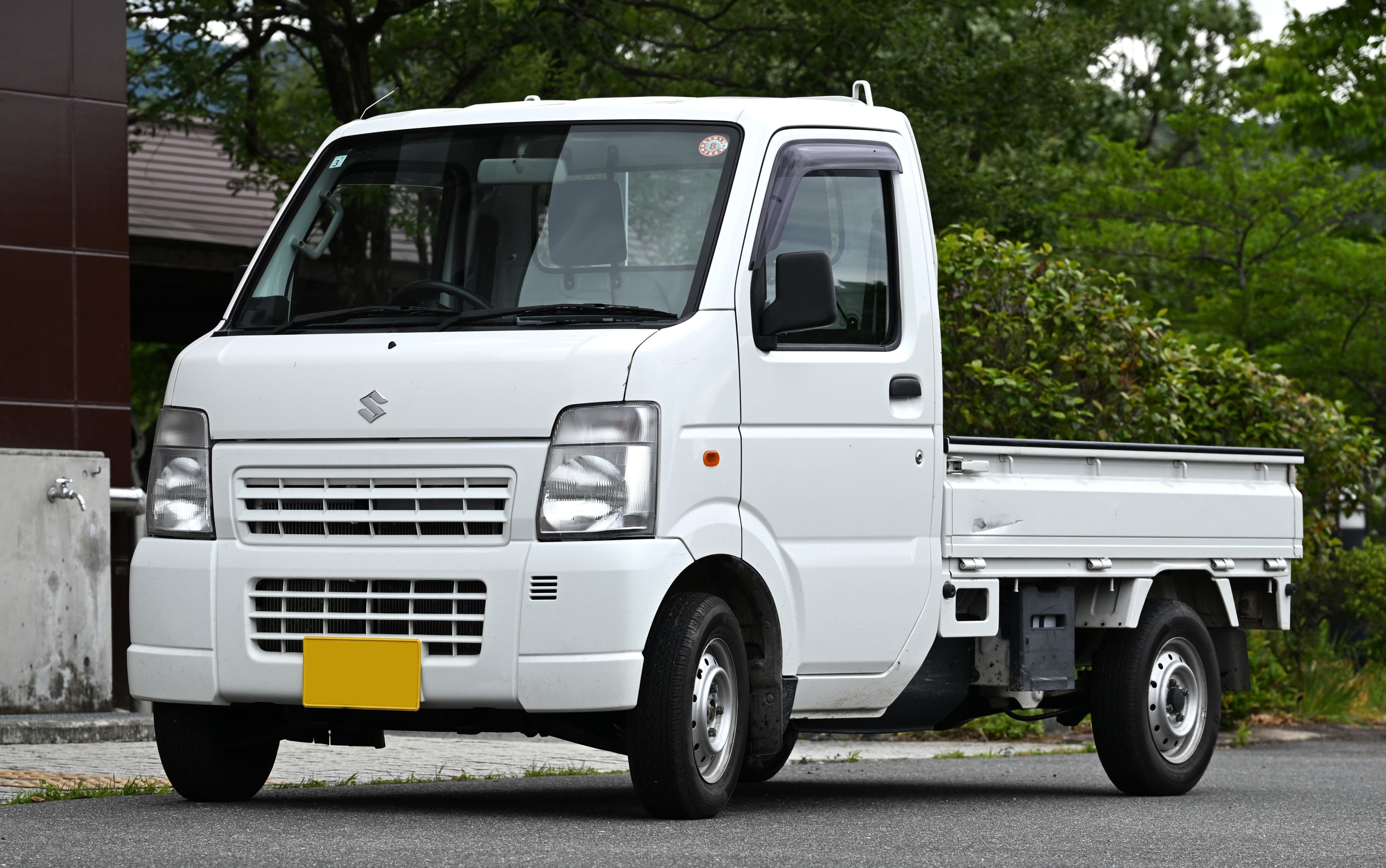
I drove Old Faithful — my 1994 Suzuki Carry — from Portland, Oregon to Bozeman, Montana. 800 miles, two days, one lane of I-84 through the Columbia River Gorge, and a whole lot of time to think about my life choices.
Here's what I learned: it was the best road trip I've ever taken, and I almost didn't survive it.
The Short Answer
Yes, you can road trip in a kei vehicle. No, it's not like road tripping in a normal car. It's slower, louder, more tiring, and requires more planning. It's also more memorable, more scenic, more social (you will be stopped at every gas station), and more fun than any road trip I've taken in a "real" vehicle.
The key insight: kei vehicles are not highway machines. They're back road machines. Once I figured that out somewhere around mile 300, everything changed. Plan your route accordingly and you'll have the time of your life.
Range and Fuel
Most kei vehicles have a 6-8 gallon fuel tank. At 35-45 mpg, that translates to somewhere between 210 and 360 miles per tank, depending on your driving. Old Faithful gets about 40 mpg on back roads and closer to 35 when I'm pushing her on the highway, which puts real-world range around 240-280 miles for me.
Plan fuel stops every 150-200 miles. Don't push it to empty — running dry in a kei vehicle on a remote highway is a bad day. I set a rule early on: fill up at half tank, no exceptions. A full tank costs $15-25 depending on gas prices, and my entire 800-mile trip used about $45 in fuel. Try that in an F-150.
Speed: Let's Be Honest
On flat highway at sea level, my Carry cruises at 55-60 mph comfortably. I can push 65 but the engine is screaming and fuel economy drops. 70 is theoretically possible but feels like the truck is trying to achieve liftoff.
Hills destroy you. Any significant grade and you're dropping to 45 mph in the right lane with hazards on. The Columbia Gorge had stretches where I was doing 40 in a 65 zone. Semi trucks were passing me. This is humbling. There's nothing quite like watching an 18-wheeler blow past you while your little 660cc engine is giving absolutely everything it has.
Wind is real too. A kei vehicle weighs 1,600 pounds and has the aerodynamic profile of a refrigerator. Crosswinds from passing semis push you a full lane width. Gusty days require constant steering correction. Emi texted me halfway through day one asking how it was going, and I sent back a photo of my white-knuckled hands on the wheel. She responded with a laughing emoji. Thanks, Emi.
The Back Road Strategy
Here's what transformed my trip from "survival" to "best road trip ever": I stopped trying to keep up with highway traffic and switched to back roads.
US-30 instead of I-84 through the gorge. Rural highways through Idaho ranch country that reminded me of the roads outside Boise where I take Old Faithful on weekends. Montana two-lanes through river valleys where the speed limit is 45 and the truck actually feels fast. Suddenly everything clicked — the scenery was incredible, I was the only vehicle for miles, and I wasn't white-knuckling anymore.
So how do you plan a back road kei trip? Plot the highway route on Google Maps first, then look for parallel back roads that follow the same general direction. Add 30-50% more time to the estimate, and accept that the journey IS the destination. That's not a bumper sticker — it's genuinely the only way to enjoy this.
What to Pack
Kei vehicles have limited space, so packing smart matters more than in a normal car. You absolutely need an extra quart of oil (these engines burn a little on long highway runs), a basic tool kit with wrenches, pliers, screwdriver, and zip ties, jumper cables or a jump starter, a phone charger, paper maps of your route (cell service dies in rural areas), and water and snacks for the stretches between towns. Dave Russo would tell you to bring a full socket set and a torque wrench — Dave brings those on trips to the grocery store — but a basic kit is fine for road trips.
For comfort, a foam seat cushion is non-negotiable. Stock kei vehicle seats are not designed for 6+ hours and your back will tell you about it. Grab a Bluetooth FM transmitter for music and podcasts, good sunglasses (no visor will save you from certain sun angles in these cabs), and ear plugs for your passenger because highway noise is genuinely loud.
Leave behind the large luggage, the big cooler, and anything that blocks your rear view. Use a gas station bag with ice instead. You're in a kei vehicle — pack like it.
Where Do You Sleep?
If you're doing a multi-day trip, your sleeping situation depends entirely on what you're driving. Kei van owners have a built-in hotel — park, fold the seats, sleep. Check out our van life guide for setup details. I've slept in The Van (my '98 Acty Van) and it's surprisingly comfortable once you get a decent sleeping pad in there.
Kei truck owners? Motel. There's no sleeping in a Carry cab unless you're under 5'2", and even then, why would you? Budget $60-80/night for roadside motels, or bring a tent and camp — the truck carries your gear to the site and you sleep under the stars. That's actually the better option if weather cooperates.
Kei car owners get the same deal as trucks — motel or tent. Though I've heard of Beat owners sleeping with the top down under the stars, which is either romantic or insane depending on your perspective. I'd call it both.
The Social Experience
I was not prepared for how social a kei vehicle road trip is. At every gas station, rest stop, and small-town diner, someone wanted to talk about the truck. Not annoying questions — genuine curiosity and enthusiasm.
A rancher in Idaho bought me coffee and spent 20 minutes asking about importing. A family at a rest stop in Montana let their kids sit in the bed for photos. A trucker at a fuel stop in Washington gave me a thumbs-up and radioed ahead to other trucks that "there's a little Japanese rig coming through, give him room." I nearly teared up at that one. Miso (my cat, not the soup) gets less affection than Old Faithful did on this trip.
By the end of 800 miles, my truck had made more friends than I had.
The Verdict
Would I do it again? Already planning the next one — thinking Boise to Yellowstone this time, all back roads.
Would I recommend it? Absolutely, but you need to go in with the right mindset. If you expect a normal road trip experience — air conditioning, cruise control, comfortable highway speeds — you'll be miserable. If you embrace the slower pace, the back roads, and the adventure of driving something absurdly small across absurdly large landscapes, you'll have a story you'll tell for years.
Here's my strong opinion: a kei vehicle road trip is better than a normal road trip. Not more comfortable, not faster, not easier. Better. Because you actually experience the road instead of just consuming miles. Every kei owner should do at least one.
The kei vehicle road trip isn't about getting there. It's about what happens along the way.