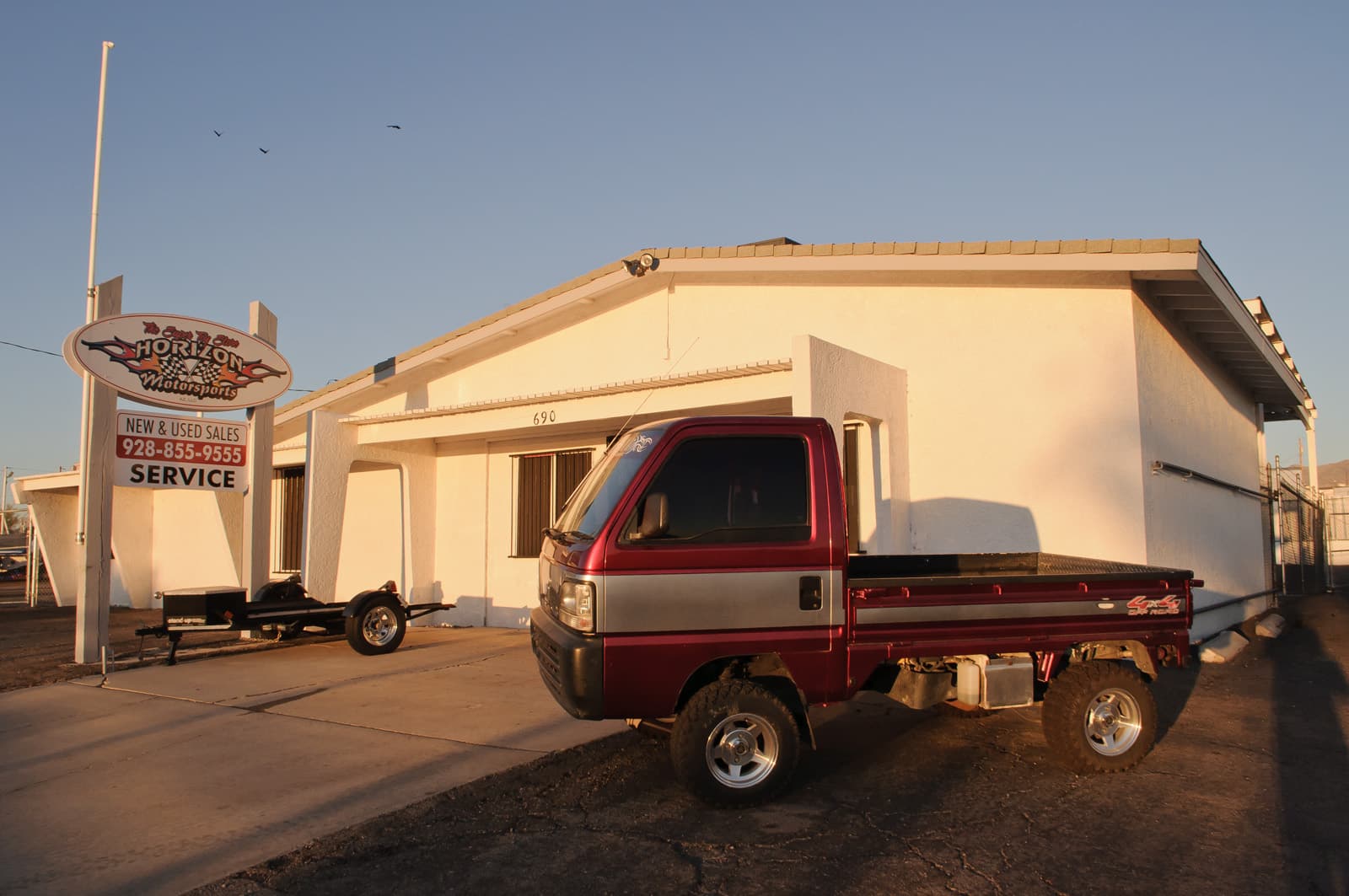
The import guides on this site end when the vehicle clears customs. The arrival checklist starts when it is sitting in your driveway. Someone on r/keitruck asked what happens in between — "documents needed for a trucker to pick up my kei?" — and the honest answer is that we had never covered it.
It is a short gap with expensive ways to get it wrong. Here is what actually happens.
You are not driving it home
Worth saying first because people plan around it. At the moment your truck clears customs it is untitled, unregistered and uninsured, and in eleven states it will never be registerable at all — check yours on the regulations tracker before you make any plans that involve driving.
Storage at the port costs money per day and feels like waste. It is still cheaper than an impound, and much cheaper than an at-fault accident in an uninsured, unregistered vehicle. Arrange transport.
What the carrier actually needs
Less than people expect, and different from what people expect.
- Release authority from whoever is holding the vehicle. The port, the customs broker, or a warehouse. This is the document that says the vehicle may leave with a third party. Your broker issues or arranges it, and it is the one thing that stops pickups.
- Your photo ID, matching the name on the paperwork. If the vehicle was imported under a slightly different name spelling than your licence, fix that before the truck is dispatched.
- The bill of lading or booking reference, so the carrier can identify the vehicle at a facility holding hundreds.
- Keys, and where they are. Frequently they are in an envelope at the broker's office rather than in the vehicle.
Note what is not on that list: a title. You will not have one, you are not supposed to have one, and it comes later from your state DMV. If a carrier insists on seeing a title before pickup, they have probably never moved an imported vehicle — which is a reason to ask more questions, not to go and find a document that does not exist yet.
The two things that actually go wrong
Everything else is paperwork. These are the failures that cost money.
The truck arrives before the vehicle is released
Customs clearance and release to a carrier are not the same event, and they do not happen at the same time. A carrier dispatched on the assumption they are will arrive, find the vehicle unreleasable, and leave — and a dry run is billable.
Confirm release with the broker before the carrier is dispatched, not before it is booked. Those are different days.
The carrier will not load a non-running vehicle
This is the one that catches kei buyers specifically. A 25-year-old vehicle that has spent six weeks on a ship and several more at a port frequently will not start, and a truck that will not start or steer needs a winch and often different equipment.
Carriers price and dispatch on the assumption a vehicle runs, drives and steers unless told otherwise. Discovering otherwise on the day means a refused pickup and a rebooking.
Declare it as non-running if there is any doubt. It costs more up front and less overall. A carrier that arrives expecting to drive your truck onto a trailer and cannot is entitled to leave and charge you, and you are then rebooking from a standing start with storage still accruing.
Open, enclosed, or collect it yourself
Open transport is the default and much cheaper. These trucks were built to work outdoors; a few days of weather is not the concern.
Enclosed is worth it for a restored or unusually valuable vehicle, and rarely otherwise.
Collecting it on your own trailer is entirely viable and the cheapest option — kei trucks are light, and most half-ton pickups will tow one comfortably. Check the port's rules for private collection first, since some facilities require an appointment and specific equipment, and confirm your own trailer's rating against the vehicle's weight rather than assuming.
Photograph everything before it leaves
The carrier will do a condition report. Do your own as well, before loading: all four corners, the bed, the interior, the odometer, and anything already damaged.
Imported vehicles arrive with existing marks, and a shipping claim comes down to whether a scrape happened at sea, at the port, or on the trailer. Timestamped photos taken before loading are the only thing that settles it.
What happens next
Once it is home, the Just Landed checklist takes over — chassis code, state rules, insurance before titling, then the DMV, then a baseline service. That order matters, and the checklist explains why insurance comes before the counter.
Before you book
- Confirm your state will register it — regulations tracker. If it will not, that changes where the truck should go.
- Ask the broker for the release document and the expected release date.
- Book transport for after the release date, not the clearance date.
- Declare non-running if there is any doubt at all.
- Confirm where the keys are.
- Photograph the vehicle before it is loaded.
The paperwork is genuinely simple. The scheduling is where money gets lost — a carrier dispatched two days early costs more than every document on this page put together.