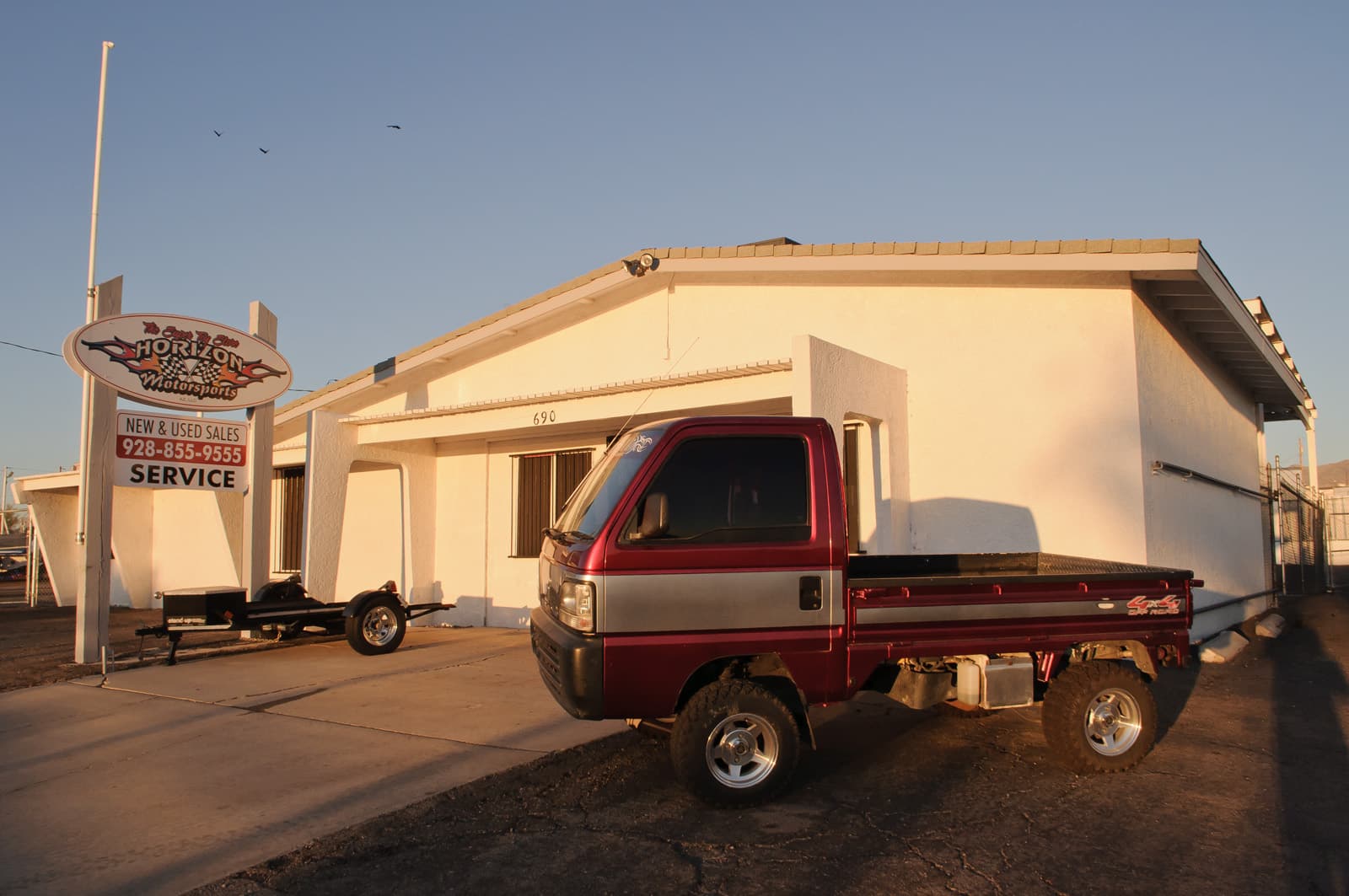
A buyer emailed me two quotes for what was, as far as either of us could tell, the same 1998 Suzuki Carry. One exporter said $3,200. The other said $4,650. He wanted to know what the second company thought it was selling him.
Nothing. They were quoting the same truck. One was quoting FOB and the other was quoting CIF, and nobody had told him those are different products.
This is the most avoidable mistake in kei importing, and it catches people who have done their homework on everything else. You can read about the 25-year rule and the Chicken Tax and still get blindsided here, because the trap isn't a regulation. It's a vocabulary problem.
The three letters that decide what you're actually buying
These aren't marketing terms. FOB, CIF and C&F are Incoterms — standardised international trade definitions with specific, agreed meanings. An exporter using them correctly is telling you precisely where their responsibility ends and yours begins.
FOB — Free On Board. The vehicle, plus transport to the Japanese port, plus loading it onto the ship. That's the entire scope. The moment the truck is aboard, everything after is yours.
C&F or CFR — Cost and Freight. FOB plus the ocean voyage to a named US port. No marine insurance.
CIF — Cost, Insurance and Freight. C&F plus marine insurance for the crossing.
EXW — Ex Works. Rarest of the four and the one to watch for. The price is the vehicle sitting where it currently is. You are paying for domestic Japanese transport, export clearance, and everything else. If you see EXW, the number is even less complete than FOB.
Almost every price you see on a Japanese exporter's public listing is FOB. That is the convention, it isn't deceptive, and it's why the listing price and your final cost are never close.
What none of them include
Here is the part that surprises people: even a CIF quote is not a landed price. CIF ends the moment the ship docks. Still outstanding at that point:
- US customs entry and duty. Either 2.5% or the 25% Chicken Tax, depending on how your truck is classified at entry. This is not a small variance on a $4,000 vehicle, and it is not waived by the 25-year rule.
- Terminal handling and port fees. Charged by the terminal, not the exporter.
- A customs broker, if you use one. Most first-time importers should.
- Domestic transport from the port to you. Unless you live near Tacoma, Jacksonville, Baltimore or another entry port, this is a real line item, and it's its own logistics problem.
- State title and registration — assuming your state registers kei trucks at all, which eleven of them don't.
None of that is hidden. It's simply not part of what a CIF quote is for.
"Door to door" is not a defined term
FOB and CIF mean something specific. "Door to door" means whatever the person writing the email wants it to mean. Some exporters use it to describe everything through to your driveway including duty and inland transport. Others use it to mean "we'll get it to the port and arrange onward shipping, which you pay for."
That doesn't make it a bad quote. A genuinely all-in door-to-door number from an exporter who handles US customs is often the easiest way to buy. But you cannot compare it to a CIF number without knowing what's inside it.
Ask them to itemise. A good exporter will do this without complaint — the strong ones already break it out as vehicle, freight, duty, inland transport, and insurance. An exporter who won't itemise a door-to-door figure is either disorganised or hoping you won't notice where the number came from, and neither is who you want handling a five-figure international purchase.
How to actually compare two exporters
The fix takes one sentence in an email:
"Could you quote this CIF to [your port], and separately give me your best estimate of duty and inland transport to [your city]?"
That does three things. It forces both exporters onto the same term so the numbers are comparable. It separates what they control (vehicle and freight) from what they're estimating on your behalf (duty and inland transport). And it tells you something about them: an exporter who answers precisely is one who has done this for US buyers before.
Then run the total through the import cost calculator to sanity-check it. If an exporter's all-in number is well below what the calculator suggests, the gap is usually duty — either they've excluded it, or they're assuming the 2.5% classification and you may not get it.
Before you send money
One more thing that belongs in the same conversation, because it happens at the same moment.
Payment to a Japanese exporter is normally a bank wire. That's standard and not a red flag by itself.
An exporter asking to be paid by Western Union or MoneyGram is a red flag. Those services are built for sending cash to individuals, they are effectively irreversible, and legitimate exporters running a business with US customers do not ask for them. The same goes for gift cards, cryptocurrency, or a request to wire to a personal account with a name that doesn't match the company.
Even with a normal bank wire, understand what you're doing: an international wire has no chargeback. There's no dispute button. That is not a reason to avoid importing — thousands of people do this successfully every year — but it is the reason to check who you're dealing with before the money moves, not after. Our dealer and importer directory exists for exactly that check.
The short version
The listing price is FOB and it is not what you will pay. CIF is a more complete number and still stops at the US dock. "Door to door" means nothing until someone itemises it.
Ask every exporter for the same term, get duty and inland transport as separate estimates, and compare landed totals. Do that and the $1,450 gap between two quotes usually turns out to be nothing at all — just two companies answering slightly different questions.