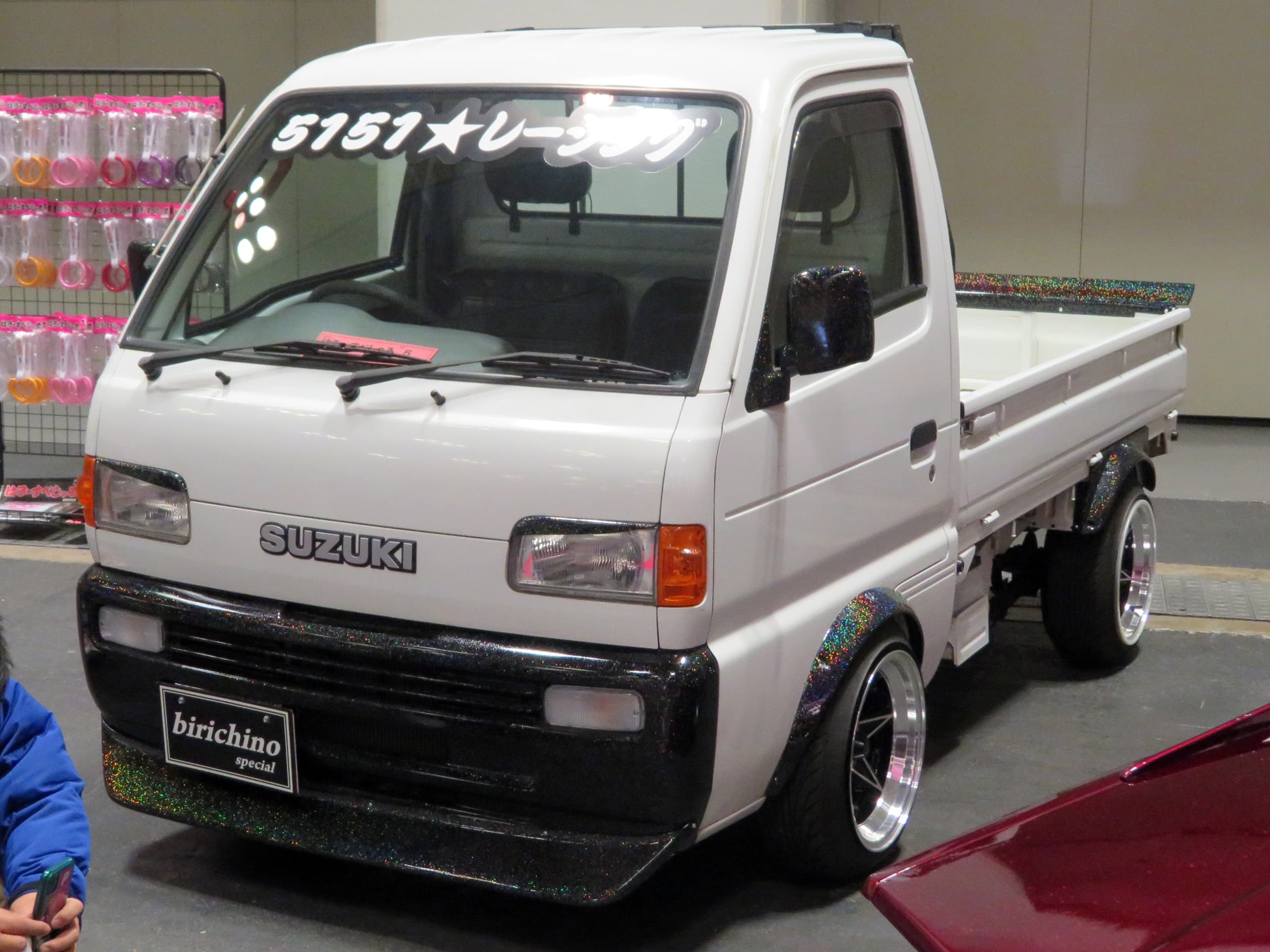
Overview
Gary called me last Tuesday. "Dave, how do I make my Hijet faster?" I told him the honest answer: buy a faster truck. He didn't like that. So here's the real answer — the whole spectrum from bolt-on basics to full engine swaps, what actually works on a 660cc platform, and where the money-to-fun ratio falls off a cliff.
Let's be clear about what we're working with. A stock kei truck makes somewhere between 38 and 50 horsepower. It weighs about 1,600 lbs. That power-to-weight ratio is actually not terrible — it's roughly the same as a base model 1990s Civic. The problem isn't the ratio. The problem is that the power is produced by an engine the size of a large coffee can, spinning at 7,000 RPM to make those 50 horses. There isn't a lot of headroom.
But there is some. And I've spent the last two years finding it on the Hijet.
Tier 1: Bolt-On Basics ($300-800)
These are the mods that give you noticeable improvement without touching internals. I've done all of these on the Hijet.
Intake + Exhaust Combo
The factory airbox on most kei trucks is designed for noise reduction, not airflow. Replace it with a pod filter or a proper cold air intake — I covered this in the air filter guide. Pair it with a cat-back exhaust upgrade. Together, you're removing restrictions at both ends of the engine.
Real-world gain: 3-8 horsepower. You'll feel it most in throttle response. The truck won't feel faster on paper — it'll feel more willing. That hesitation between pressing the pedal and things happening gets shorter.
Cost: $150-300 for both. Time: a Saturday afternoon.
ECU/Ignition Tuning
Here's where it gets model-specific. If your truck has electronic fuel injection (most post-1990 models), the ECU is conservative from the factory. Japanese manufacturers tune for emissions compliance and longevity, not performance.
Options vary by model:
- Suzuki Carry (F6A/K6A turbo): Aftermarket ECUs exist. HKS and A'PEXi made piggyback units for the kei car market. They work on trucks with the same engine.
- Subaru Sambar (EN07): The supercharged versions respond well to boost controller adjustments. The NA versions don't have much to tune.
- Daihatsu Hijet (EF-SE/EF-DET): The turbo EF-DET engine has the most aftermarket ECU support of any kei engine.
For carbureted trucks (pre-1990), your tuning is mechanical — jet sizes, needle position, timing advance. I adjusted the timing on The Cab's carb last month. Gained maybe 2 horsepower. Gained a lot of satisfaction.
Cost: $200-500 for a piggyback ECU. Free if you're just advancing timing on a carb engine.
Tier 2: Factory Turbo Swap ($800-2,500)
This is the sweet spot. This is what I recommend to most people who ask me "how do I make it faster."
Many kei truck models had factory turbo variants sold in Japan. The engines bolt into the same chassis as the naturally aspirated version. Same mounts, same transmission bolt pattern, same wiring harness (mostly).
Best Factory Turbo Engines
| Engine | Found In | Output | Notes |
|---|---|---|---|
| EF-DET | Daihatsu Hijet/Atrai turbo | 64hp | Most aftermarket support. IHI turbo. |
| F6A Turbo | Suzuki Carry/Every turbo | 64hp | Reliable. Parts cross-reference with Alto Works/Cappuccino. |
| EN07 Supercharged | Subaru Sambar SC | 58hp | Technically supercharged, not turbo. Instant response. |
| 3G83T | Mitsubishi Minicab turbo | 64hp | Shares parts with Pajero Mini turbo. |
The magic number is 64. Japanese kei regulations cap power at 64 horsepower (47kW) — a gentleman's agreement among manufacturers. Every factory turbo kei engine officially makes exactly 64hp. In practice, with a proper exhaust and intake, most make 70-75hp. Some owners report more with a boost controller.
How to Do the Swap
- Source a complete turbo engine from a Japanese dismantler. I use Yokohama Engine Sales and JDM Engine Corp. Expect $800-1,500 for a complete motor with turbo, manifold, and ECU.
- Pull your NA engine. This is a full day on the Hijet — engine comes out the top. The Cab's Minicab engine comes out the bottom. Know your model before you start.
- Swap the turbo engine in. Engine mounts are identical on same-model swaps. Wiring is 90% the same — the turbo ECU has extra pins for boost control and knock sensor.
- The remaining 10% of wiring is where you'll spend 60% of your time. Ask me how I know. Specifically: the boost solenoid, knock sensor, and intercooler fan (if your truck didn't come with an intercooler). I spent two evenings with a wiring diagram and a test light on the Hijet.
- Intercooler. Factory turbo models came with a small front-mount intercooler. You need this. Without it, intake temps spike and the ECU pulls timing. I fabbed my own intercooler piping from 1.5" aluminum tubing. Total cost for the piping: $60.
Total cost for a same-model turbo swap: $1,200-2,500 including the engine, intercooler, and miscellaneous parts. Total time: 2-3 weekends if you've done engine work before. Difficulty: 8/10.
Tier 3: Engine Swaps ($3,000-8,000+)
This is where we leave "practical upgrade" territory and enter "because I can" territory. I respect it. I haven't done one. I want to. Maria says no. Maria is usually right about these things.
Popular Swap Platforms
Suzuki Hayabusa engine into a Carry/Every: This is the famous one. The Hayabusa 1.3L four-cylinder makes 175hp in stock form. In a 1,600-lb truck. The math is terrifying and wonderful. There's a whole community around this swap — Kei Performance builds are all over YouTube. Requires: custom engine mounts, transmission adapter or motorcycle sequential gearbox, custom driveshaft, upgraded brakes (this is not optional), a roll cage (also not optional), and extensive fabrication.
Suzuki G13B/G16 (1.3L/1.6L): From the Suzuki Swift/Sidekick. Shares the same manufacturer, so some mounting points are close. More streetable than a Hayabusa swap — 85-100hp, torquey, easy to get parts for.
Honda motorcycle engines (CBR600/1000) into Acty: The Acty is mid-engine, and Honda motorcycle engines are mid-mount too. The packaging actually works surprisingly well. Several builders have documented this swap.
What People Don't Tell You
Every engine swap video on YouTube shows the final product — the truck ripping down a drag strip, the builder grinning. Nobody shows the 200 hours of fabrication, the three times the engine didn't fit, the custom mounts that cracked, the transmission adapter that cost $800 and took 6 weeks to arrive.
And nobody talks about the brakes. Stock kei truck brakes are designed to stop 1,600 lbs at 60mph. If you double the horsepower, you need to seriously upgrade the braking system. Bigger rotors, better pads, braided lines at minimum. A Hayabusa swap without brake upgrades is genuinely dangerous. My brake upgrade guide covers the basics, but a swap car needs more.
Also: your registration and insurance situation changes. Rina covered this in her regulation articles — engine swaps can complicate your title and inspection status depending on your state. Check before you build, not after.
What I Actually Recommend
For 90% of people who want a faster kei truck, here's what I'd do in order:
- Performance exhaust — $200-400
- Intake upgrade — $80-150
- Lightweight wheels + proper tires — $400-800 (see tire guide)
- If you want more: find a factory turbo engine for your model and swap it in
That sequence gets you from ~45hp to ~70hp, better throttle response, better grip, and a truck that genuinely feels quick for what it is. Total investment: under $2,500. Total time: a few weekends.
For the 10% who want to go further — Hayabusa swaps, sequential gearboxes, caged track trucks — you already know who you are, and you're not reading this guide for permission. You're reading it to see if I missed anything. I probably did. Email me at keijirateam@gmail.com.
Total time for this guide: 0 hours. I just talked about trucks for 1,500 words. That's not work. Post-writing Yuengling. Earned it.